





Mamallapuram, Tamil Nadu, India (info)
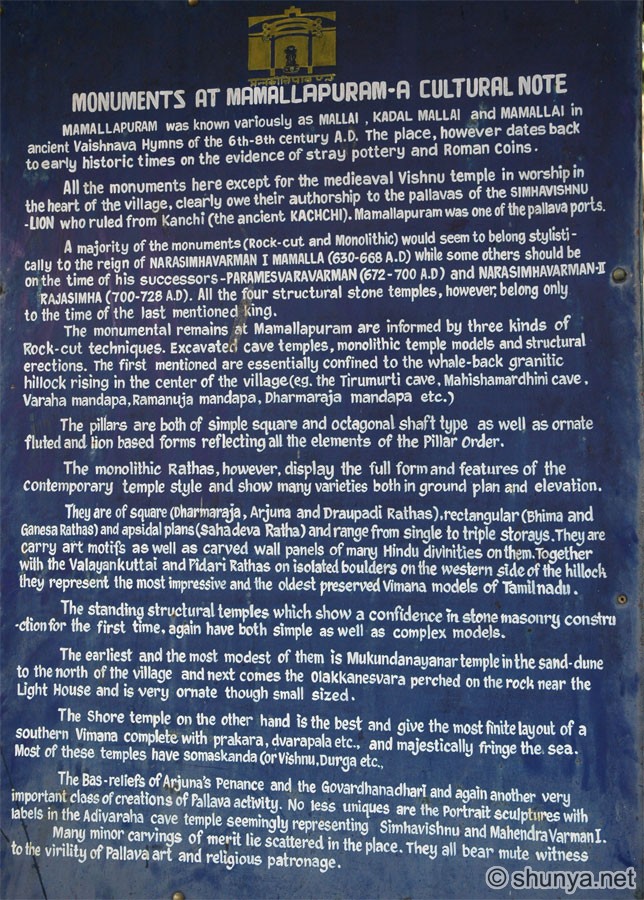
The religious centre of Mamallapuram (formerly, Mahabalipuram) was founded by a 7th-century CE Pallava king, Narasimhavarman, also called Mamalla ("great wrestler"), for whom the town was named. The Pallavas, a 4th-9th-century dynasty, began as indigenous subordinates of the Satavahanas in the Deccan, moved into Andhra, and then to Kanchi (Kanchipuram today), where they rapidly adopted Tamil ways. Their genealogy and chronology, however, are highly disputed. Their rule was marked by commercial enterprise and a limited amount of colonization in Southeast Asia. Ancient Chinese, Persian, and Roman coins found at Mamallapuram attest to a flourishing seaport.
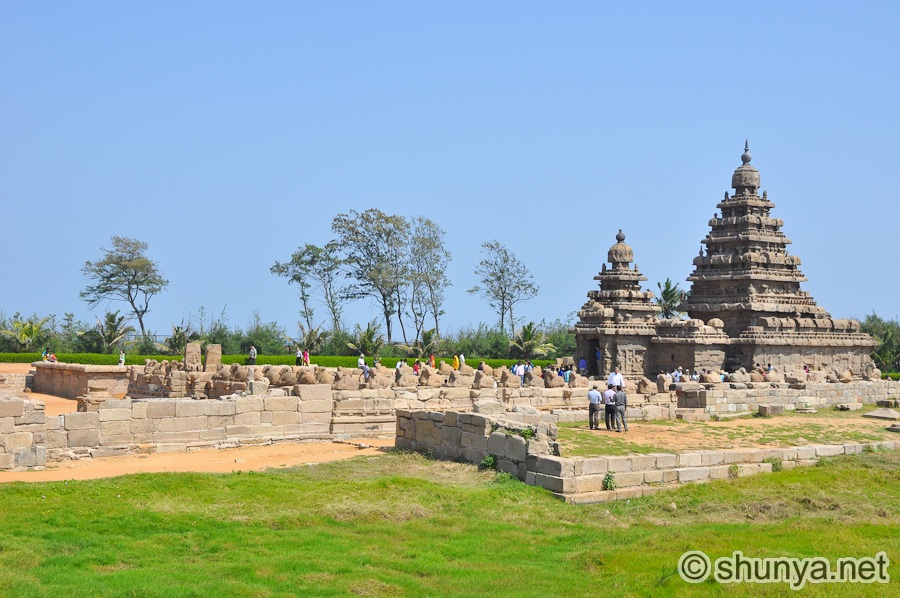
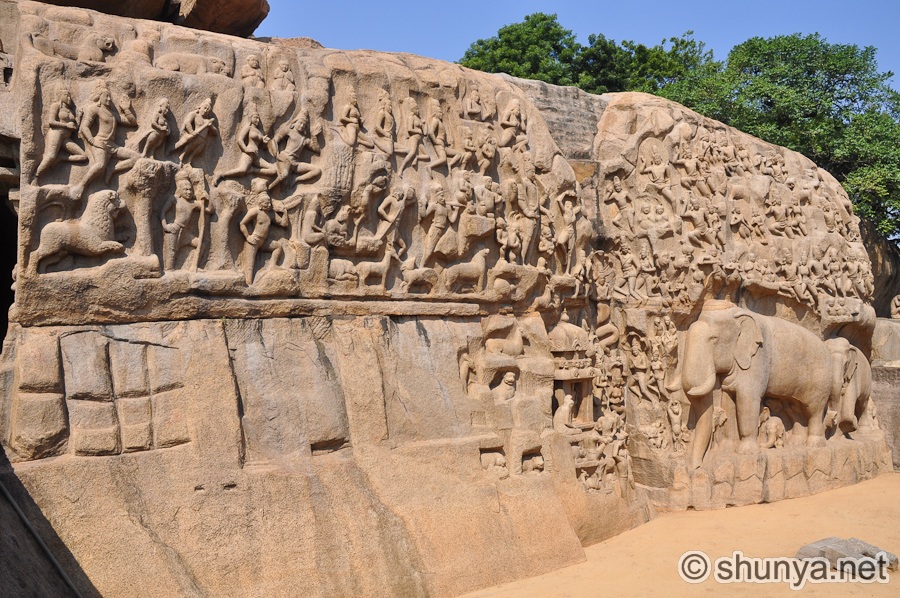
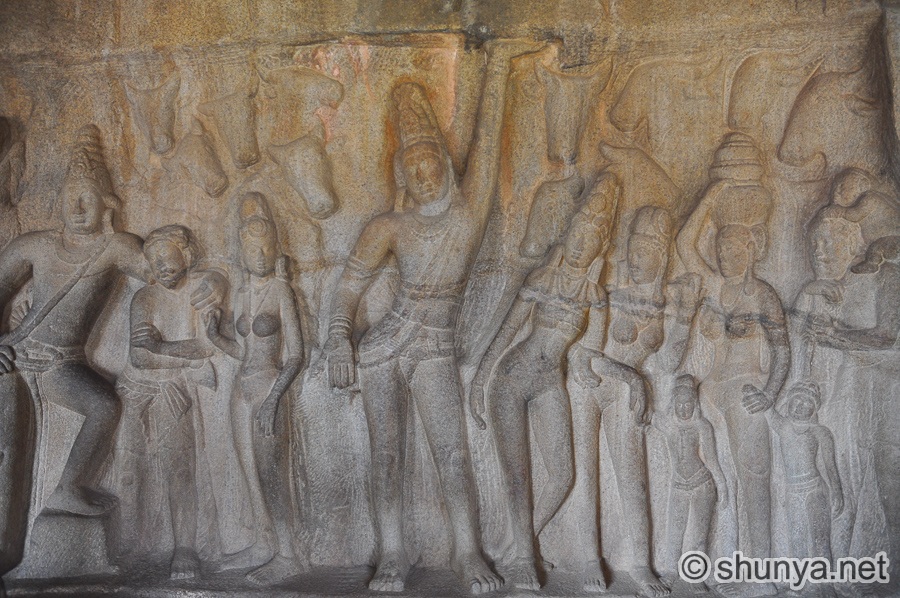
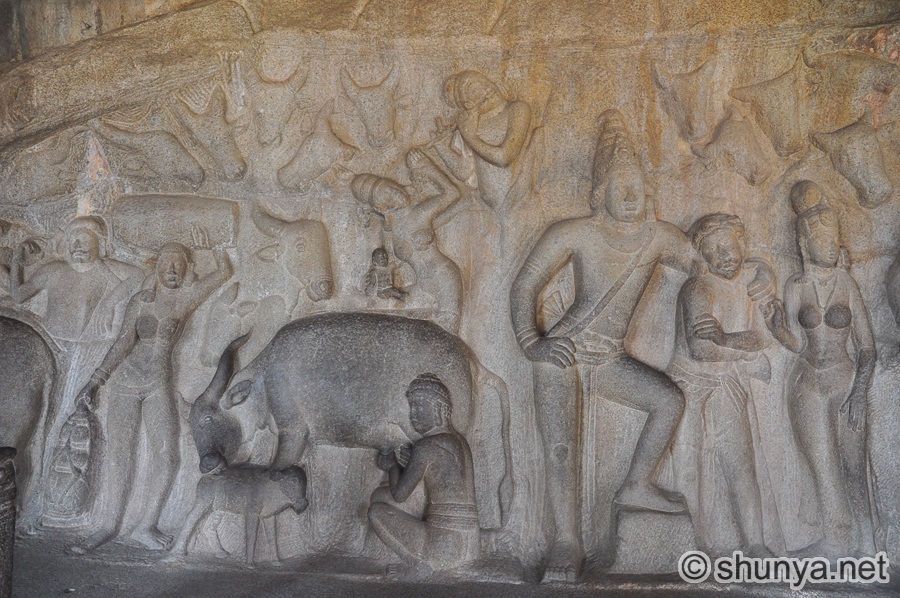
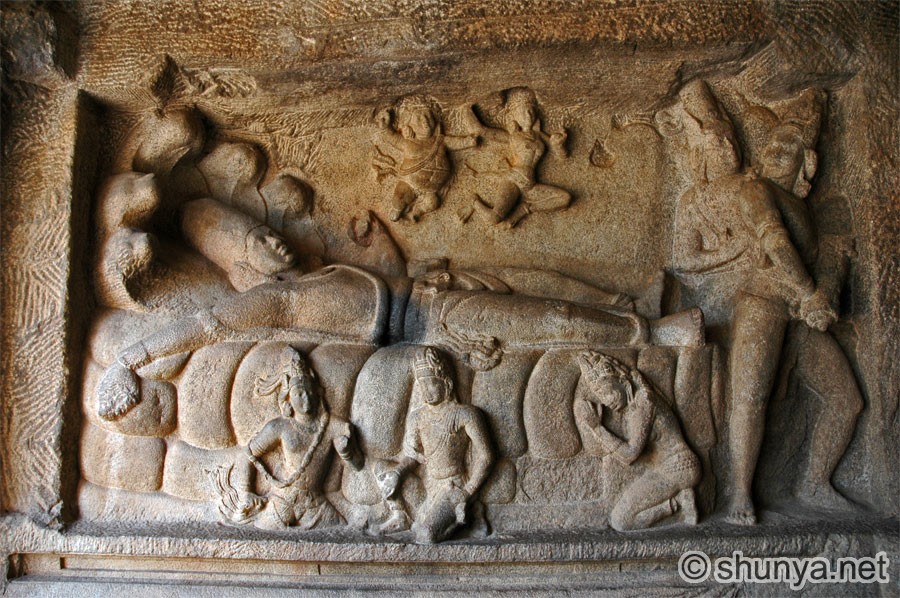
The Pallavas supported Buddhism, Jainism, and Brahminism, and were patrons of music, painting, and literature. But they were, in the end, ineffective in withstanding military pressure from the Western Chalukya dynasty, and their feudatories, the Cholas, gradually ousted them from power. About 880 CE, the Pallava dominions passed to the Chola kings. The best surviving Pallava monuments in Mamallapuram are the Shore temple, the sculptured rock relief known as Arjuna's Penance, temples carved from granite monoliths (Five Rathas), and numerous cave temples. Today the town is a resort and tourist centre, with a college offering instruction in architecture and temple sculpture. [Adapted from Encyclopedia Britannica]
|
Coromandel coast 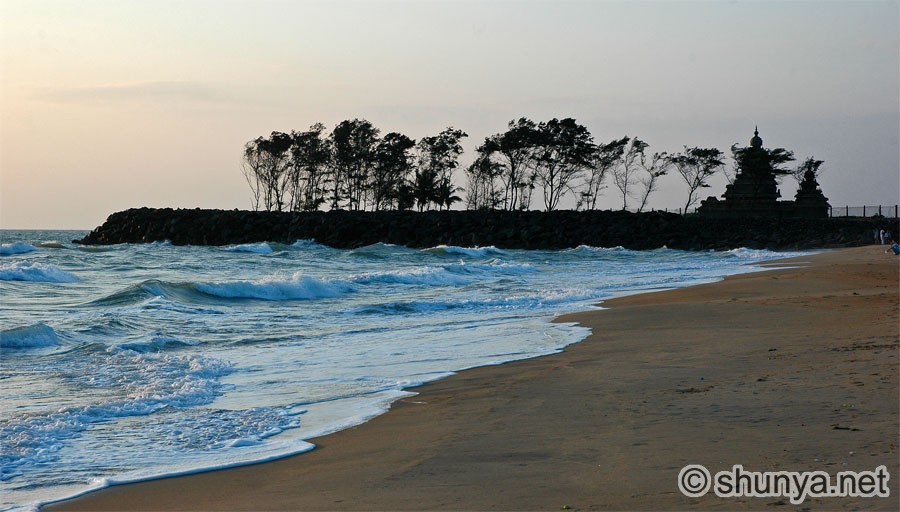 |
Sunrise 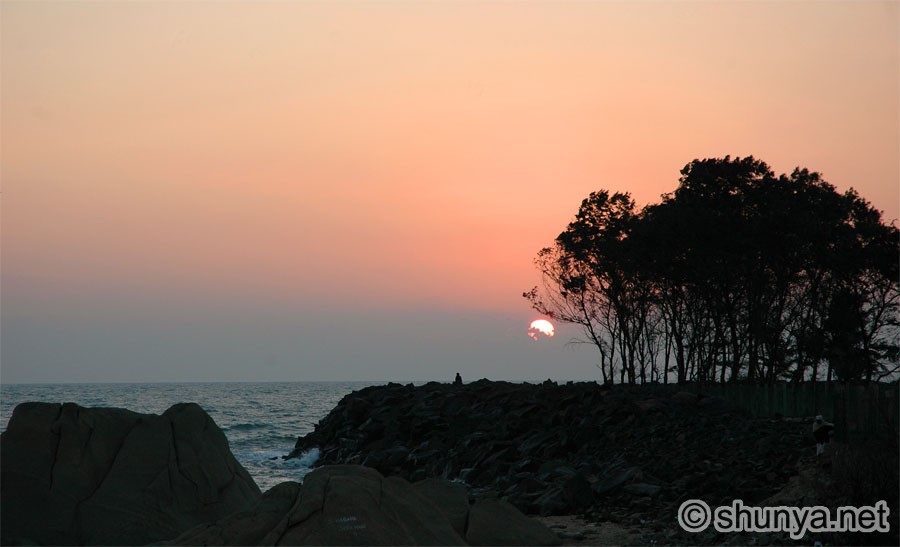 |
Sunrise 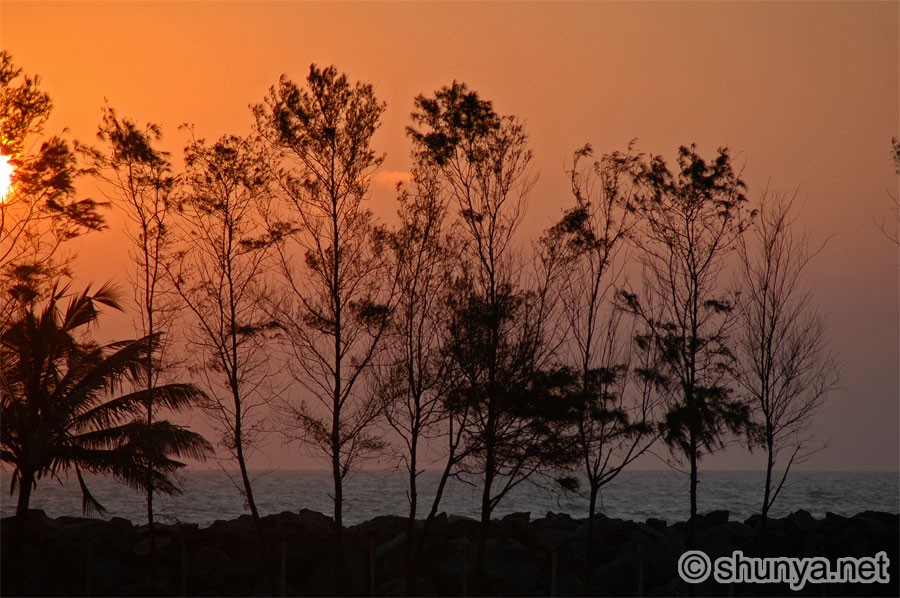 |
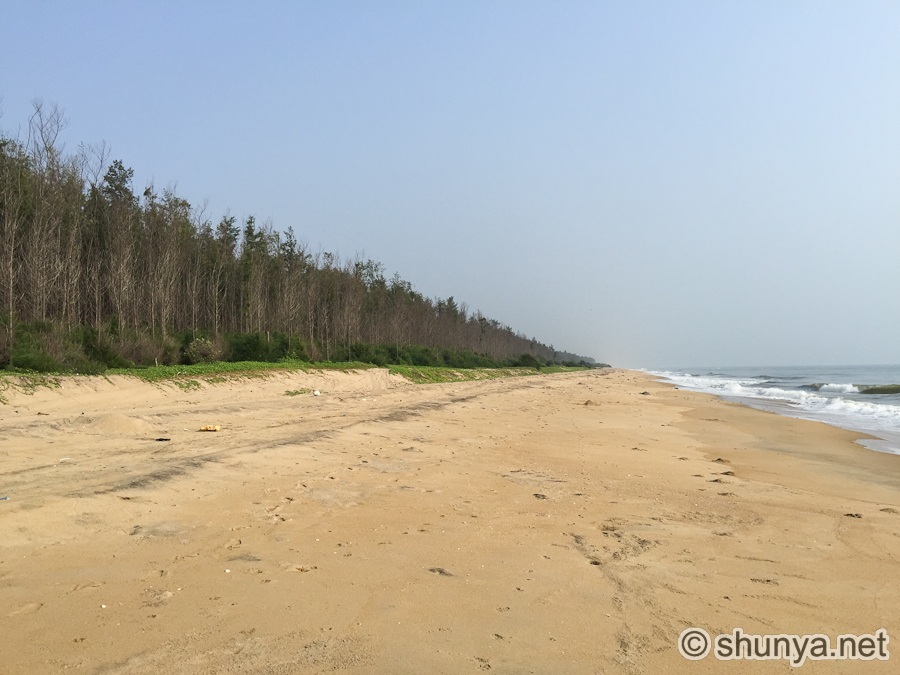
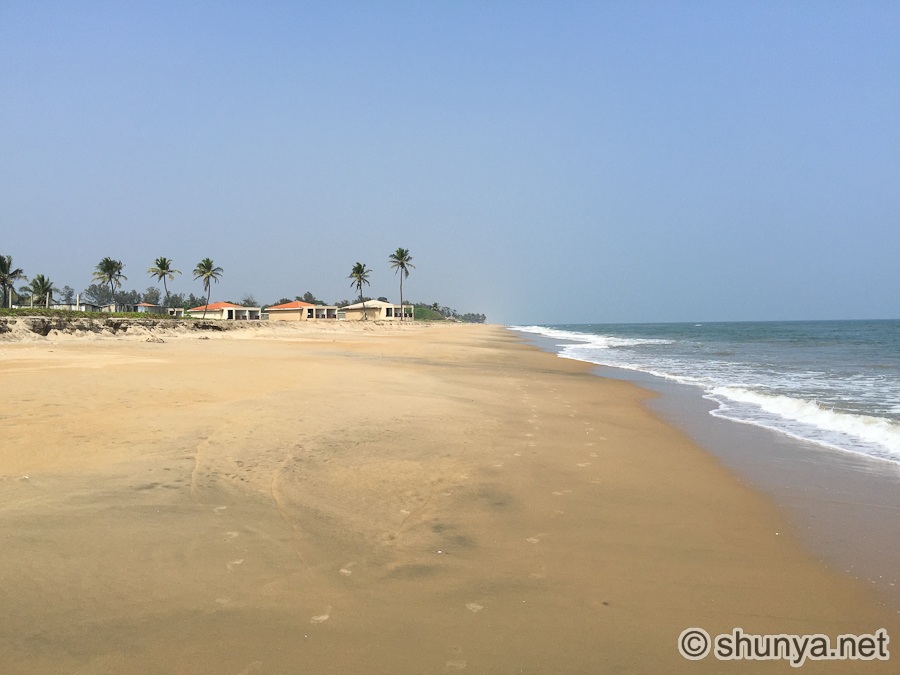
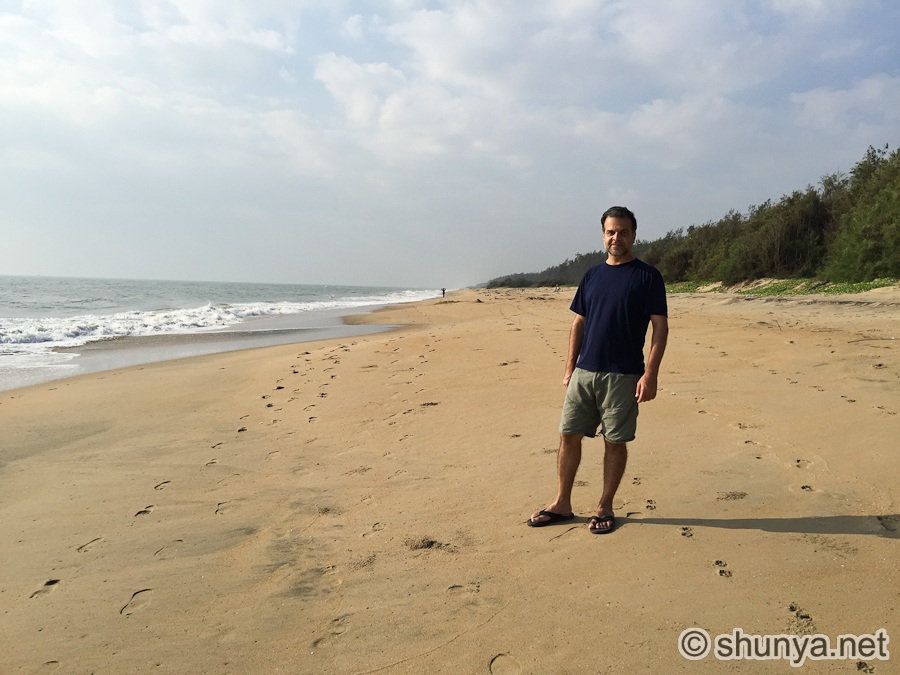
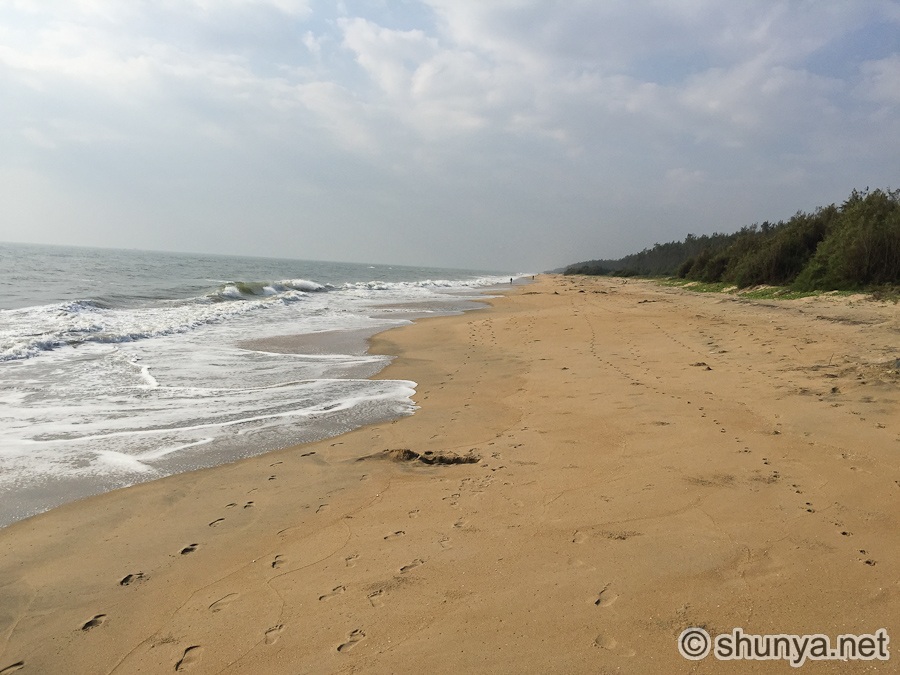
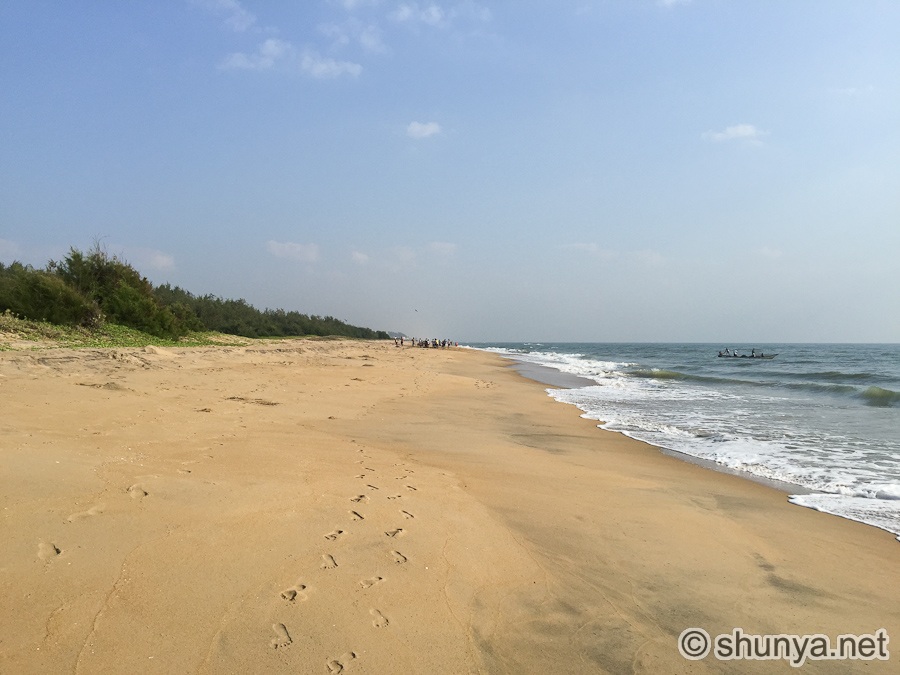
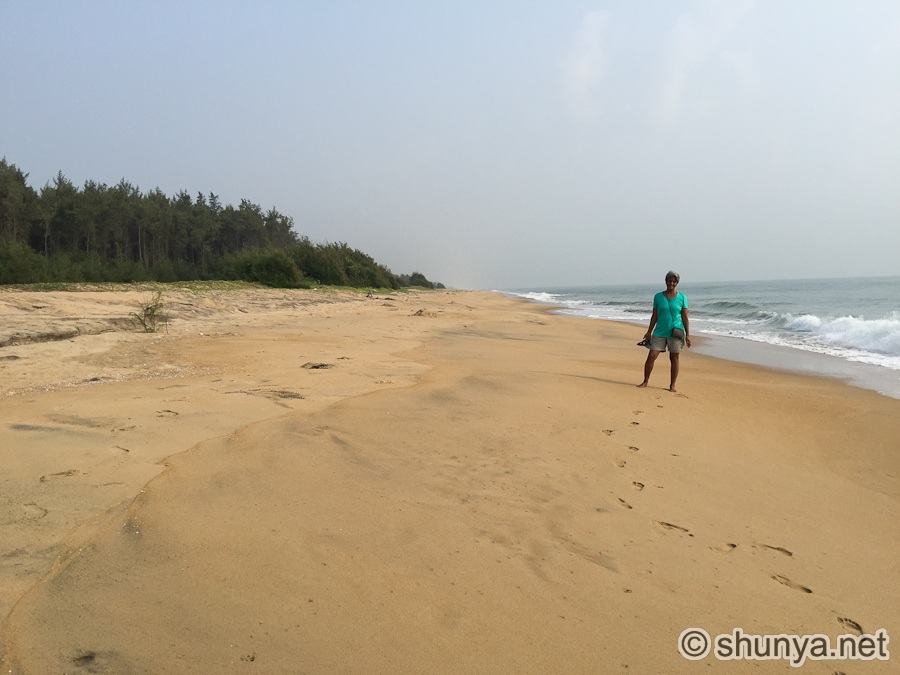
Morning on the beach 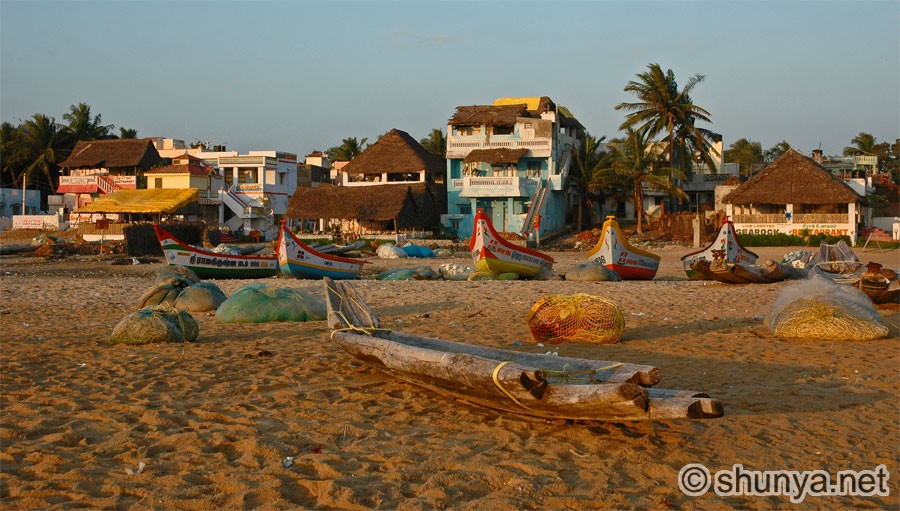 |
|
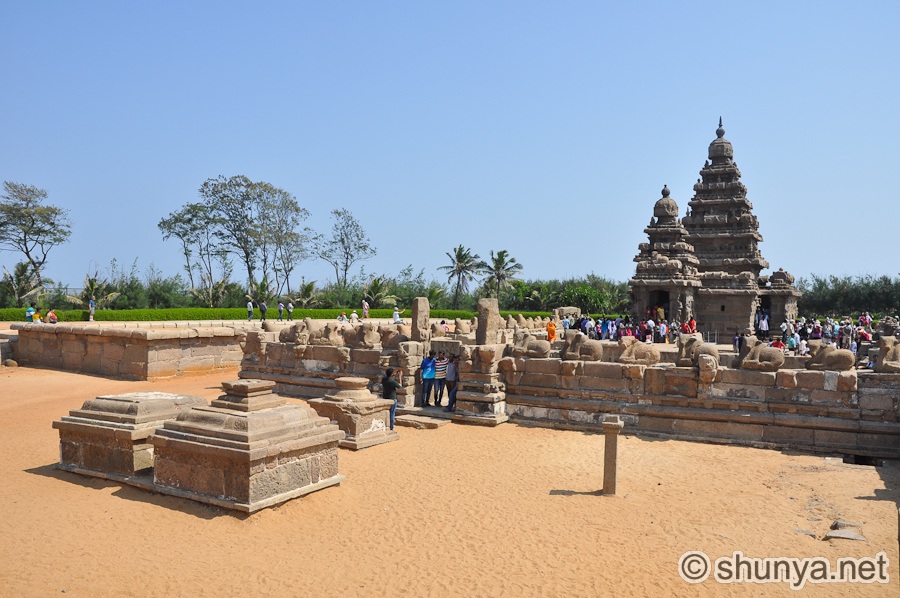
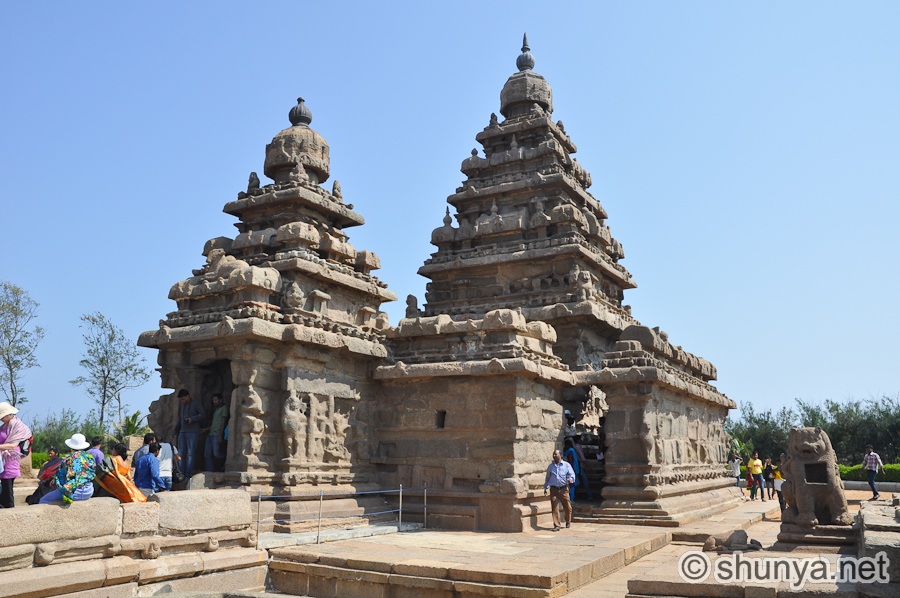
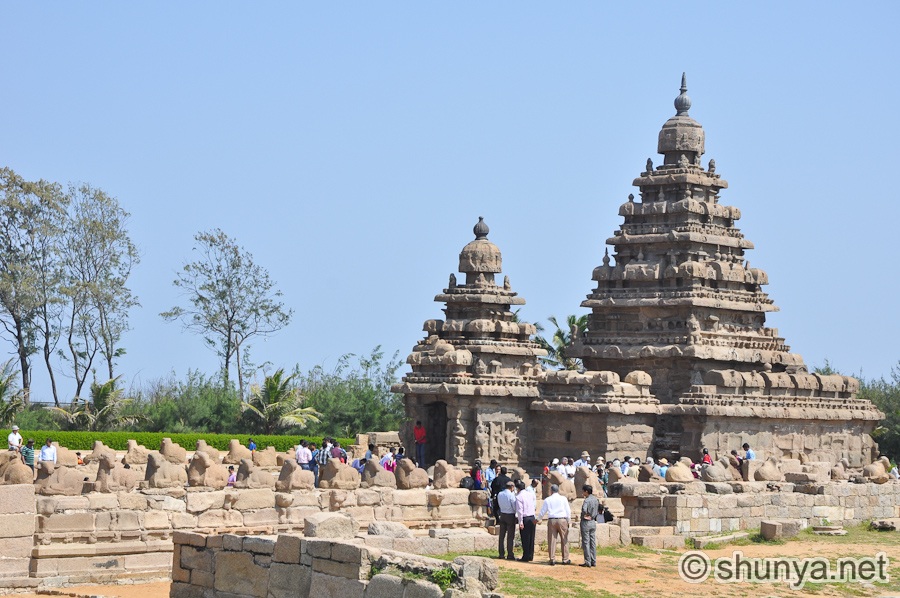
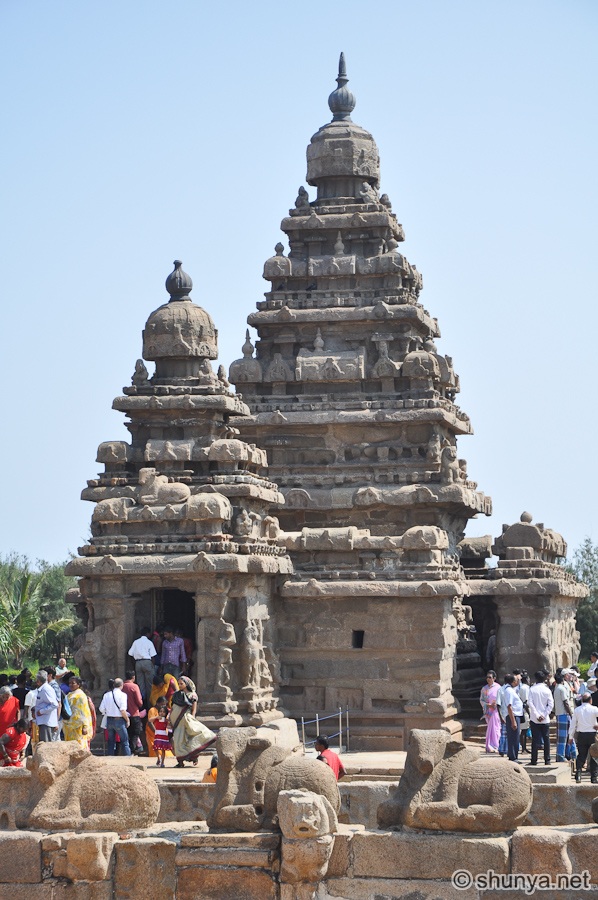
Shore temple ▒ 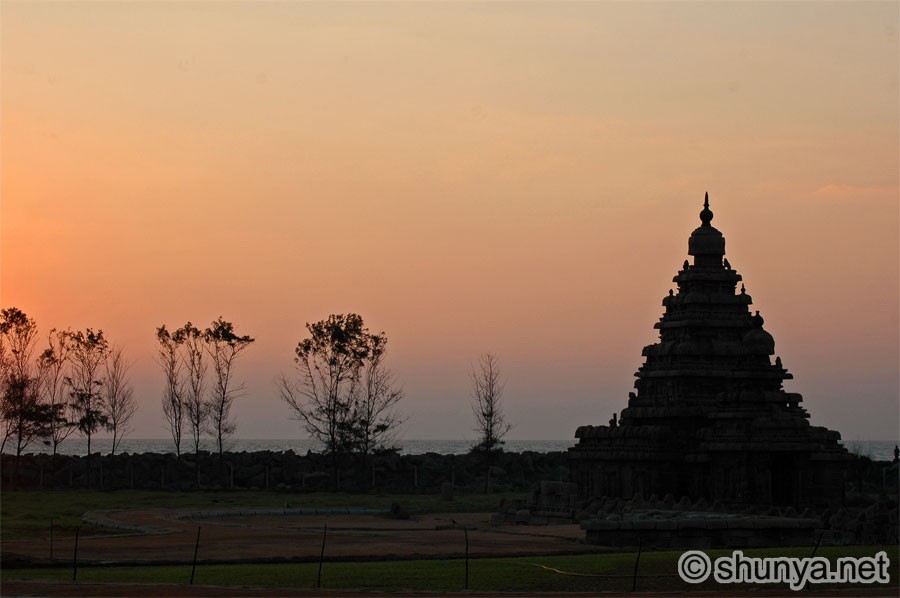 |
Weathered by wind and sea 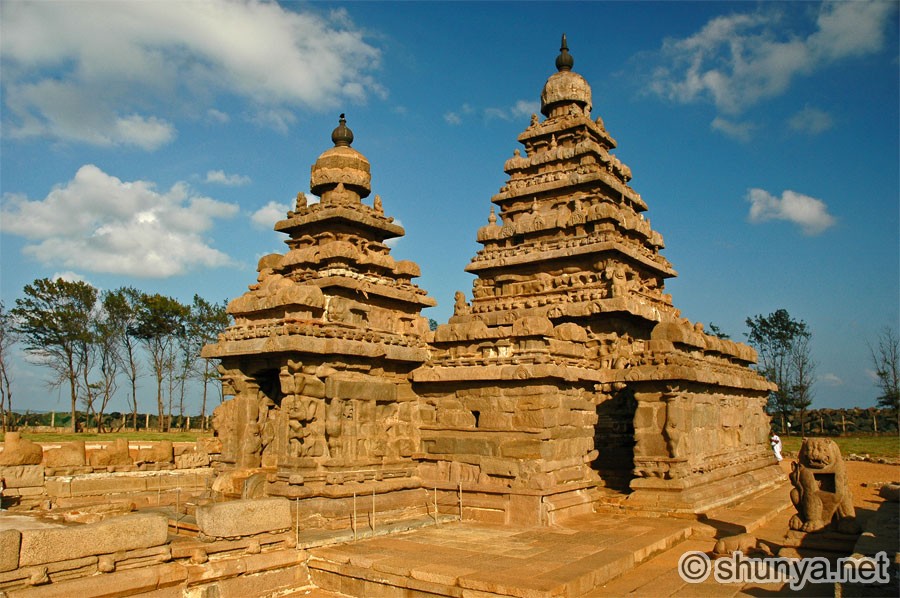 |
||
|
Pallava art, 6th century CE 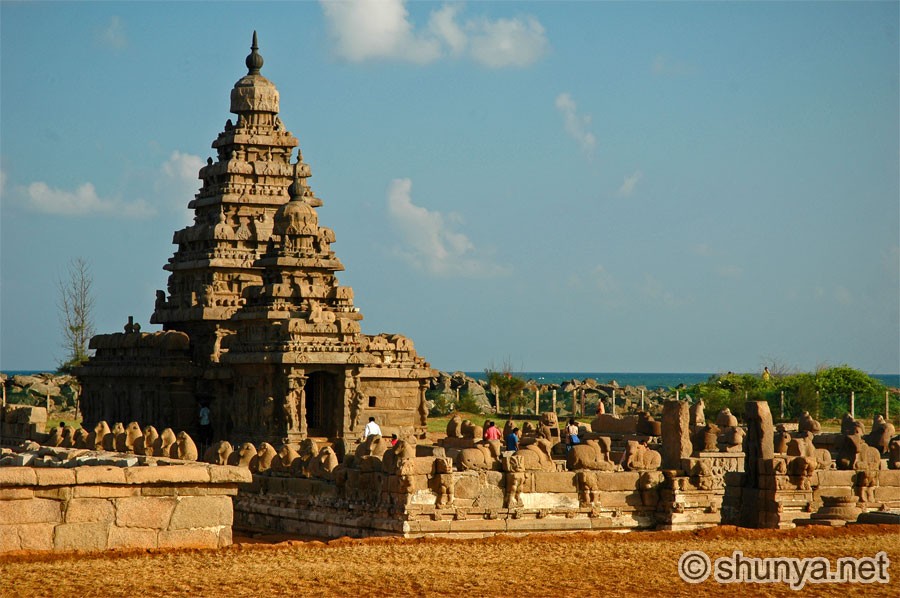 |
 |
||
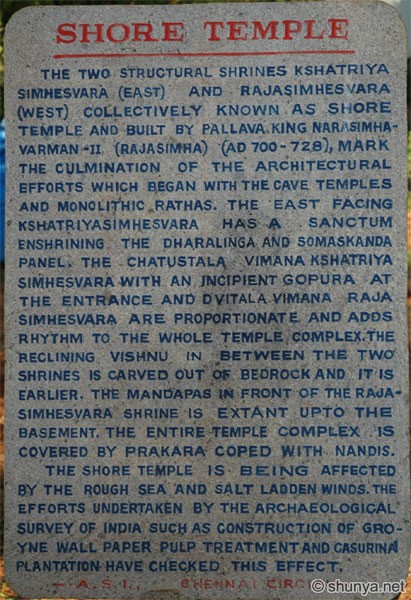
A complex of three temples
|
One large, two small temples
|
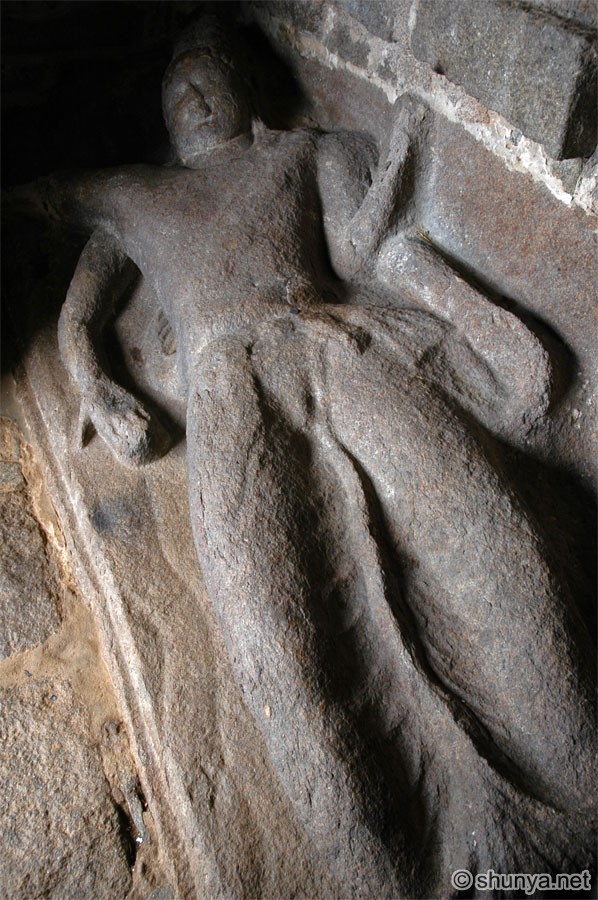
One Vishnu, two Shiva temples
|
Built of granite (more)
|
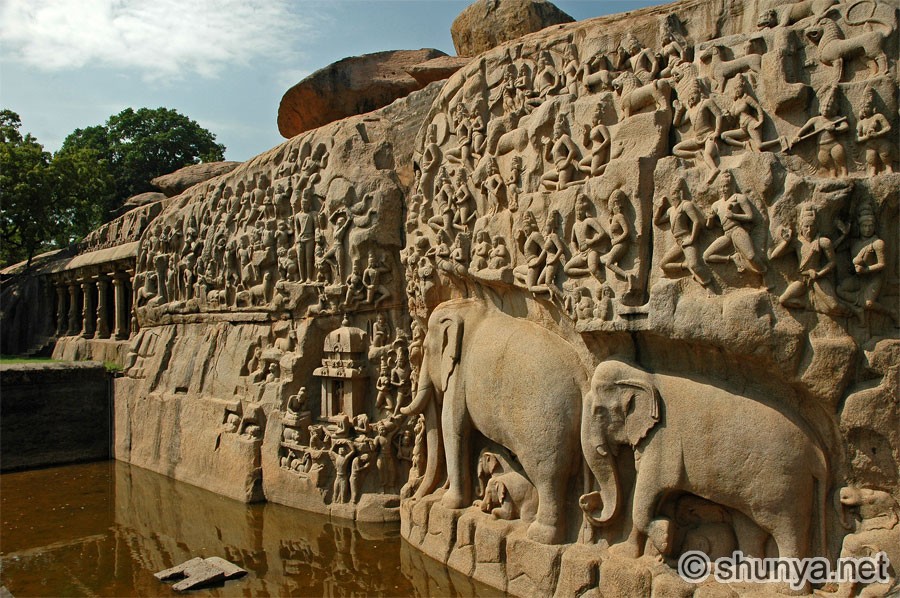
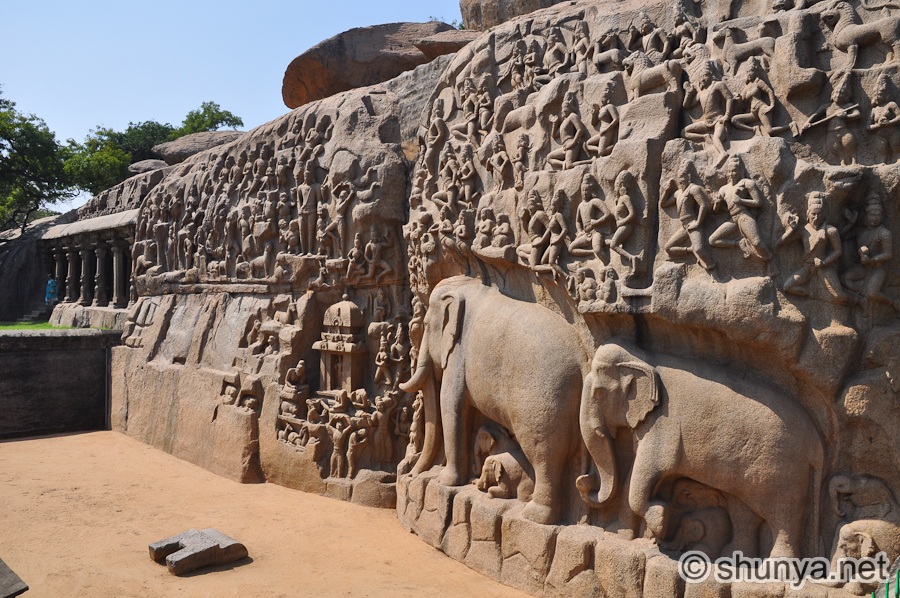
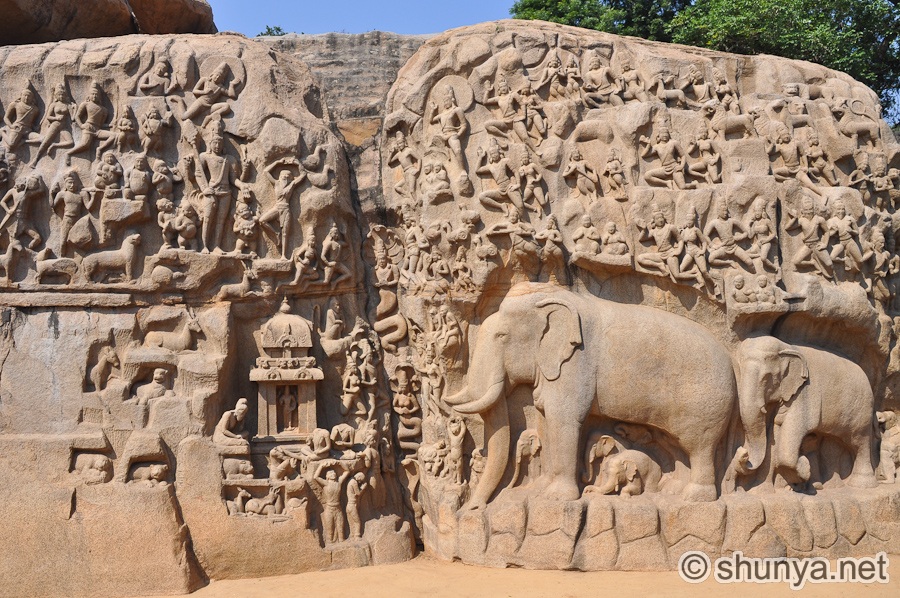
Arjuna's Penance (more) |
Monolithic carvings (more)
|
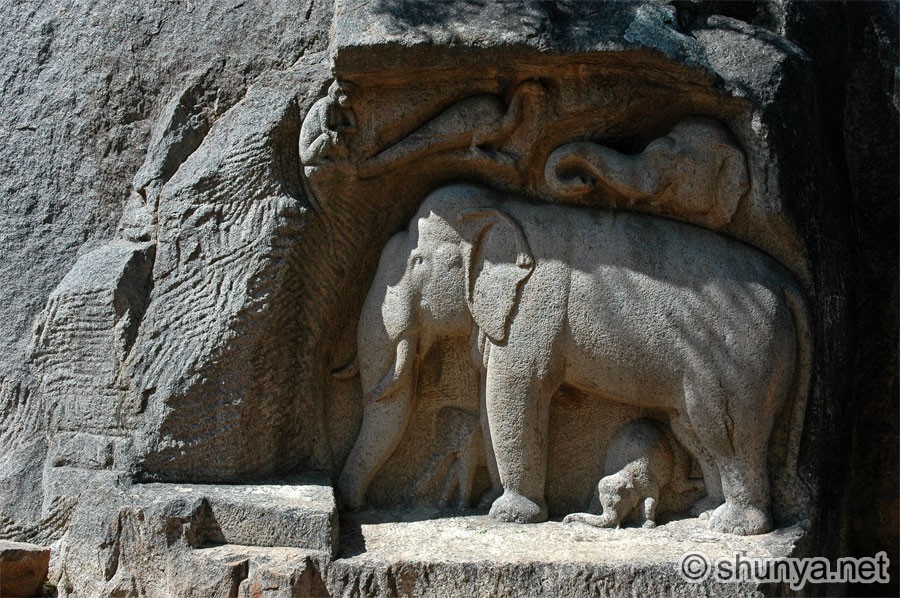
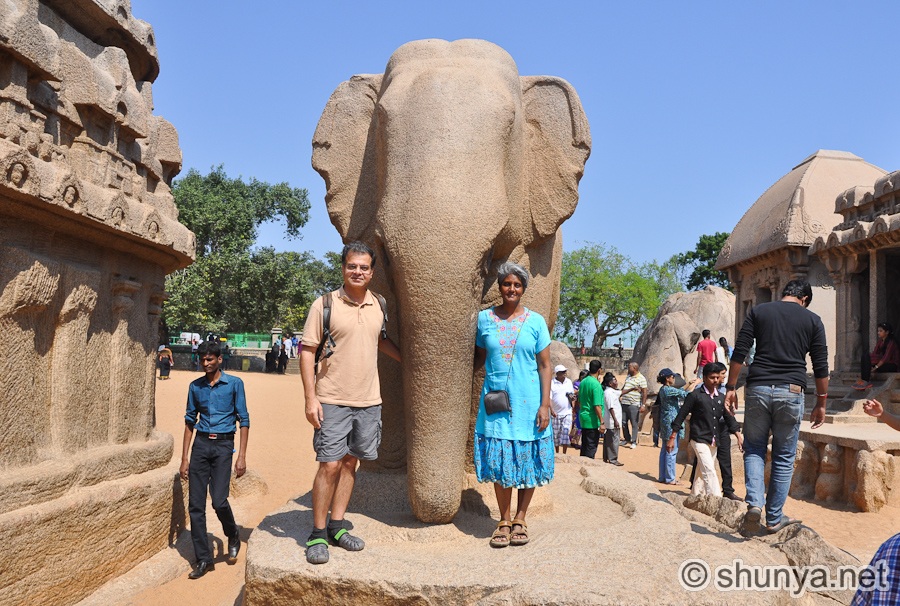
Rock-cut elephant |
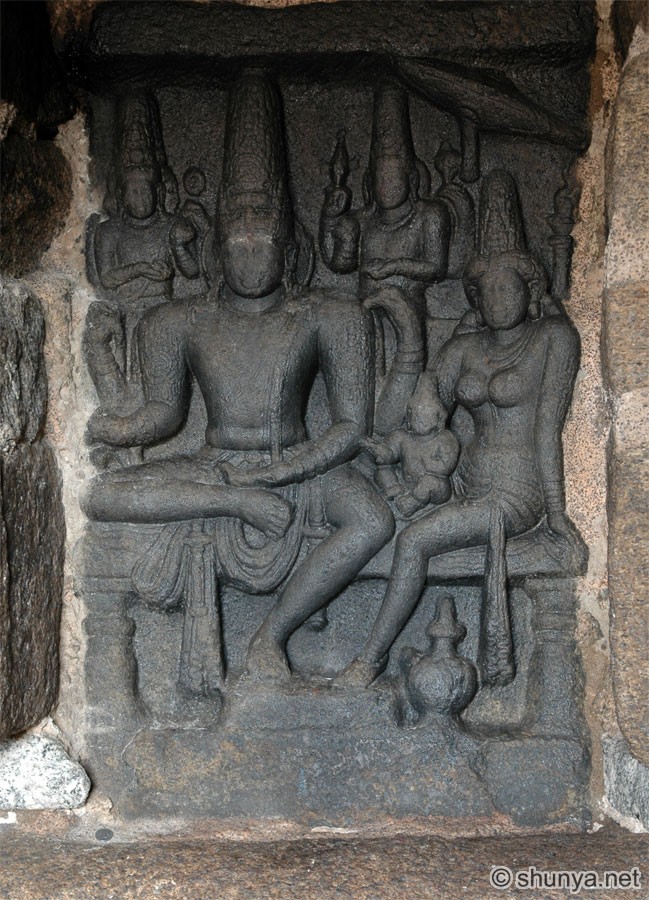
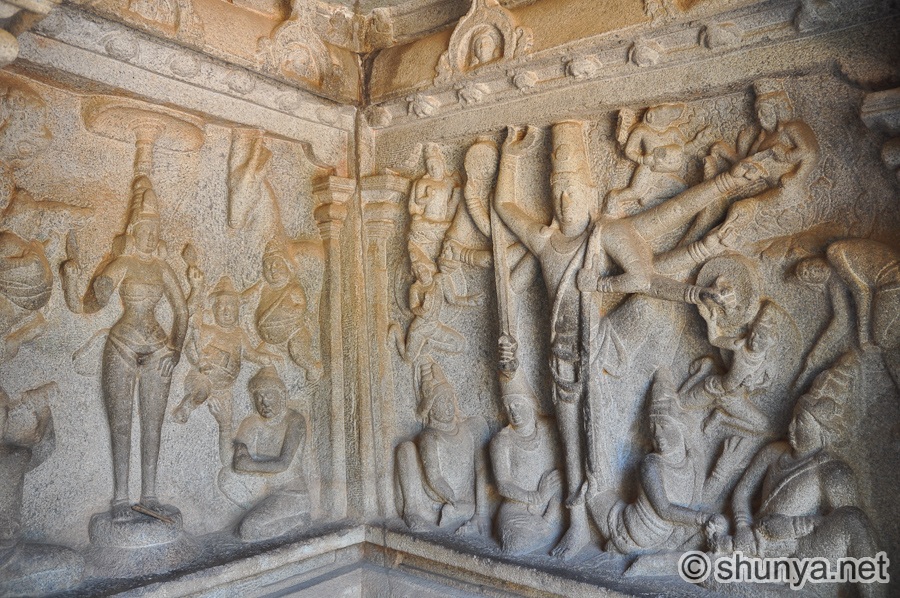
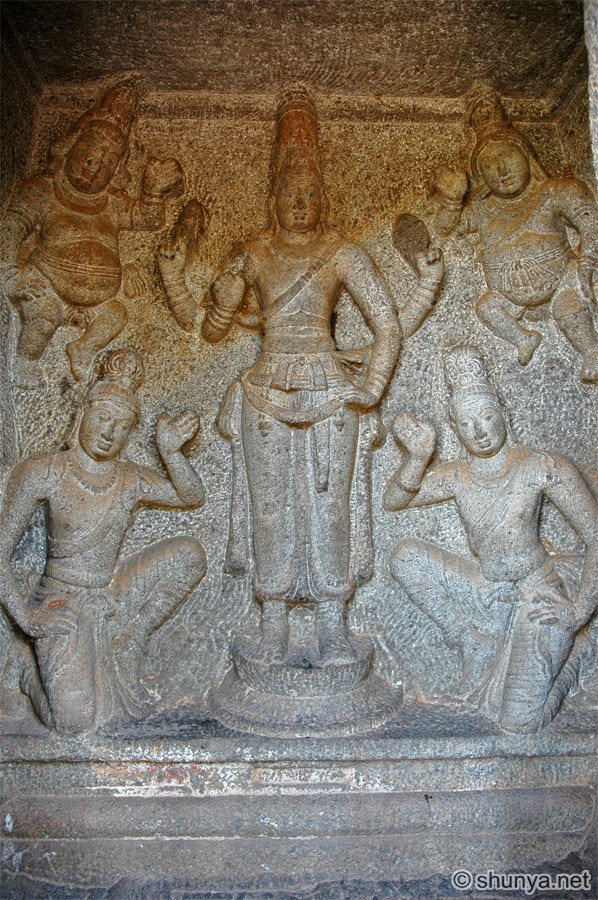
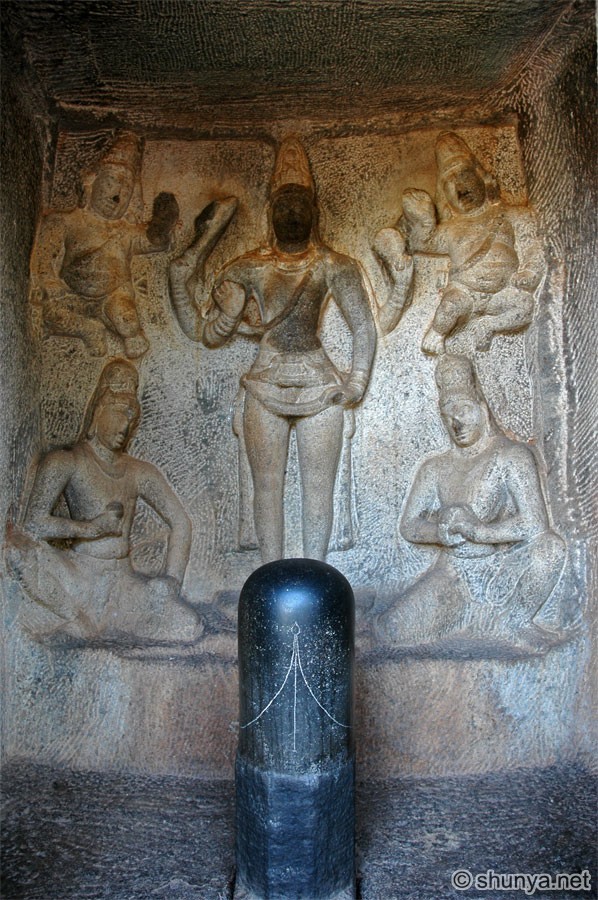
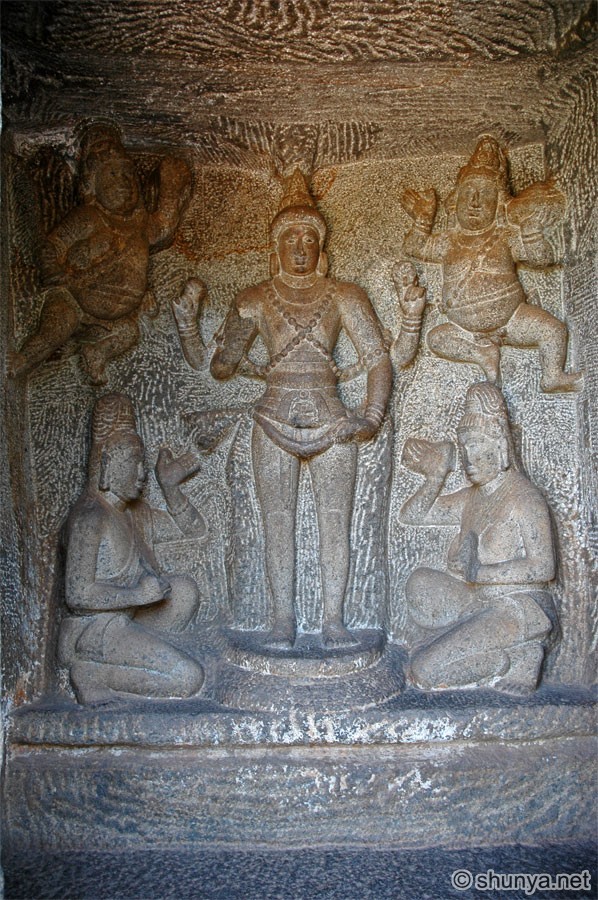
Trimurti cave temple (1, 2, 3) |
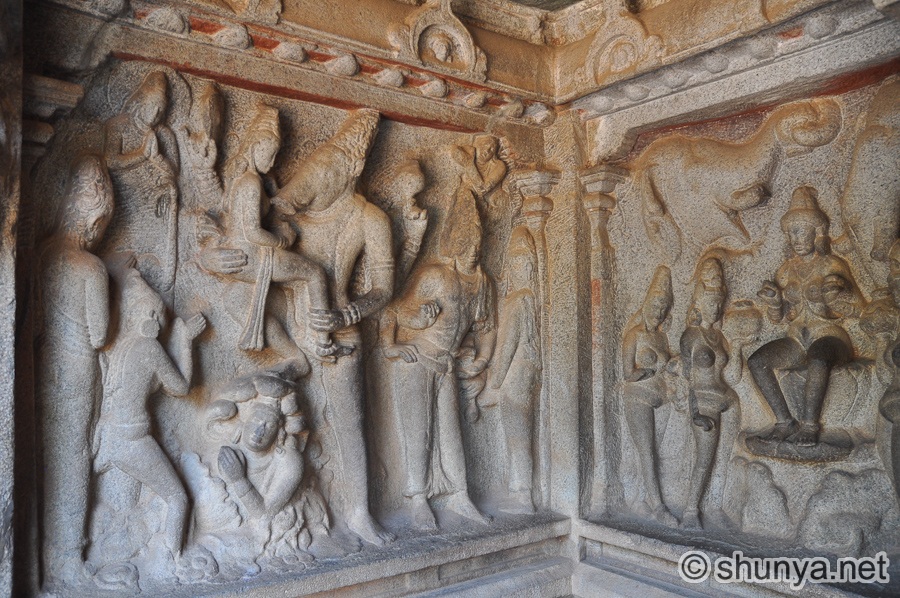
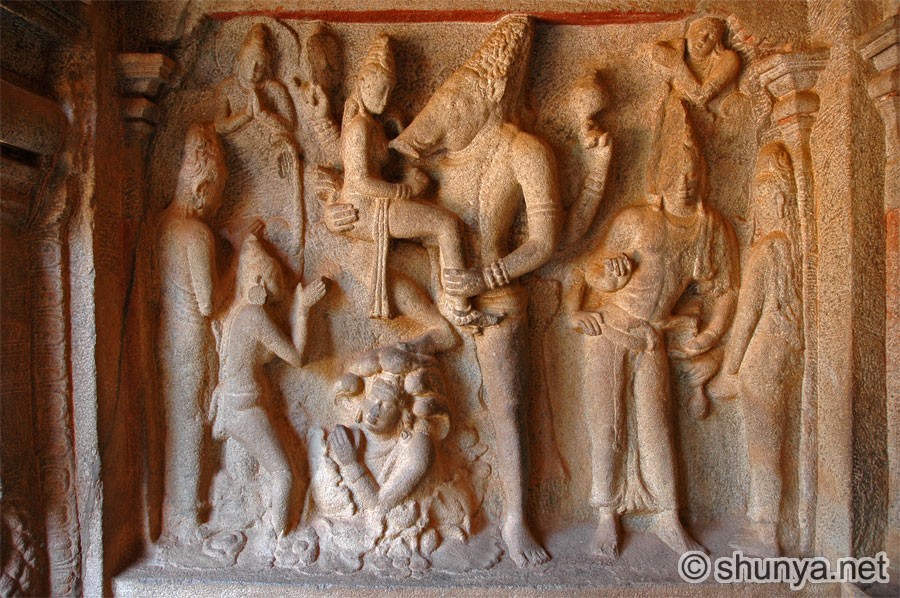
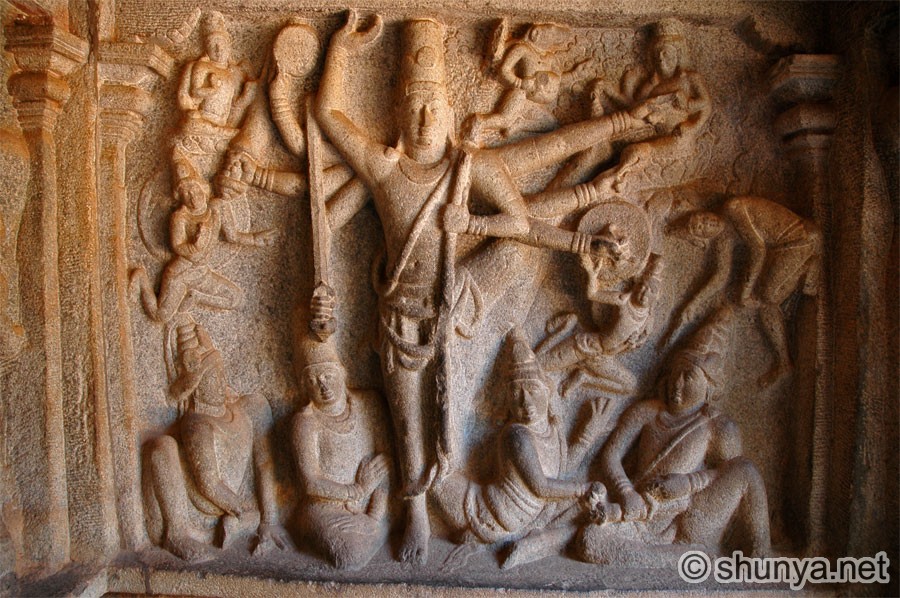
Varaha cave temple |
Varaha lifting Bhu Devi, or
|
Shiva as Gangadhara, standing
|
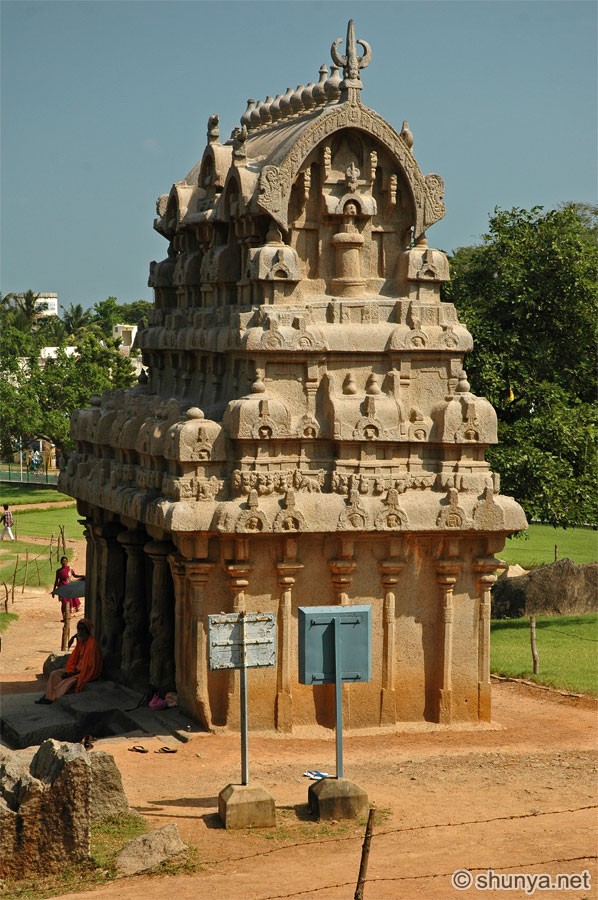
Ganesh Ratha (more) |
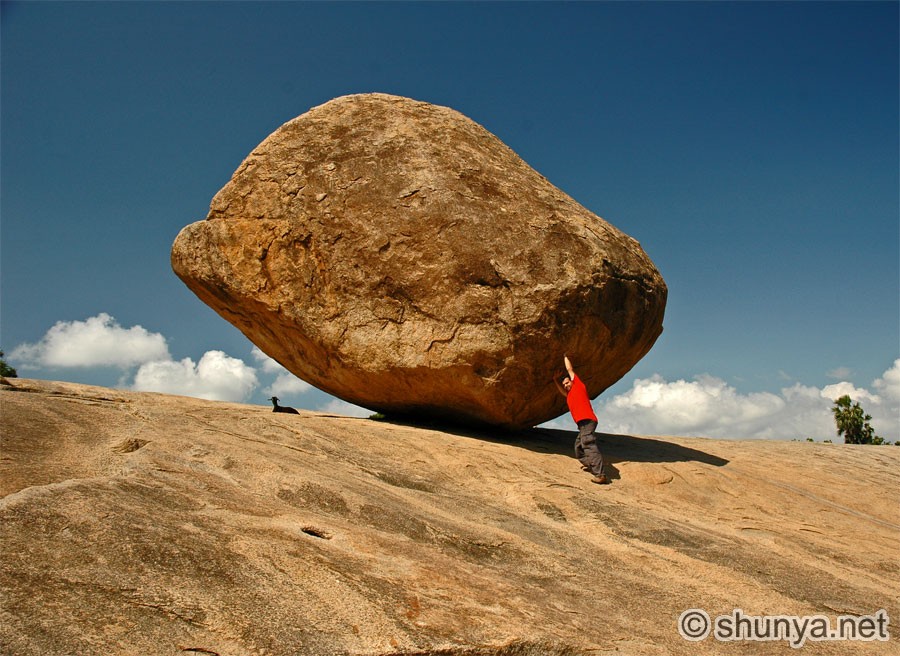
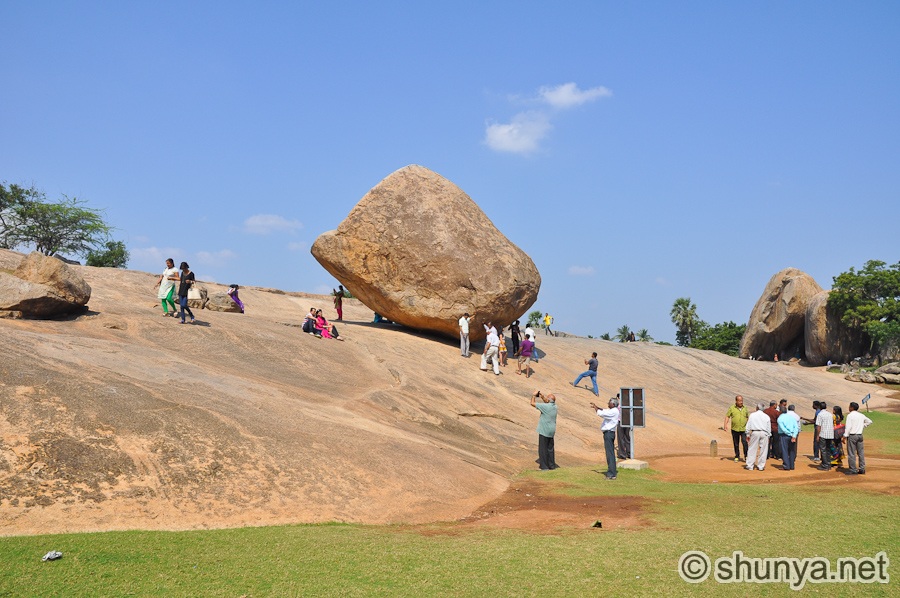
Sisyphean labor? (more) |
Rayar gopuram |
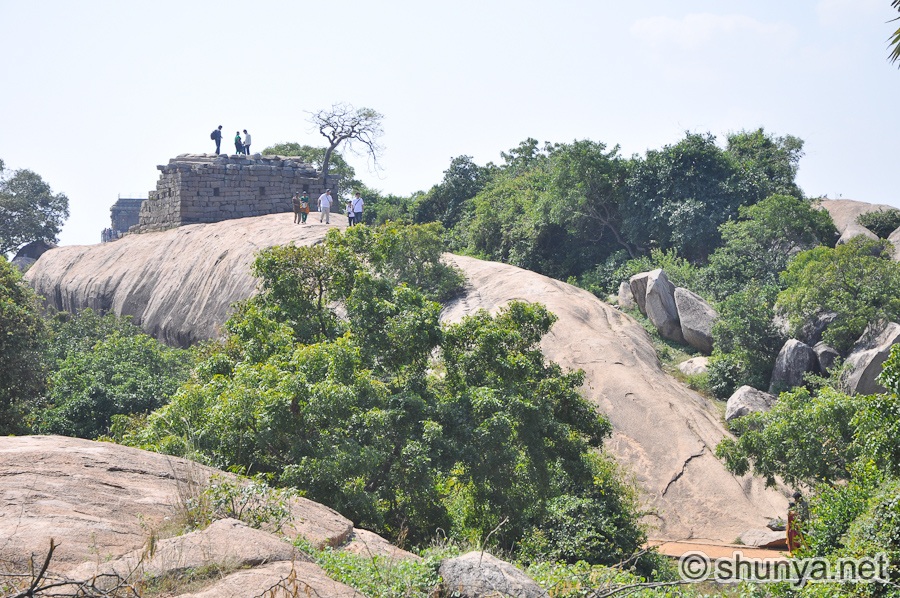
More ruins on the hill
|
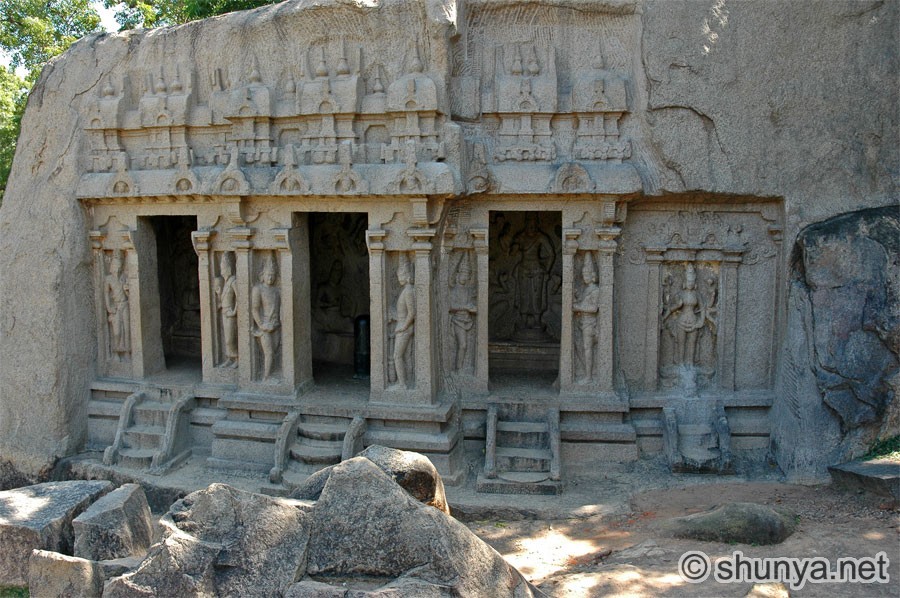
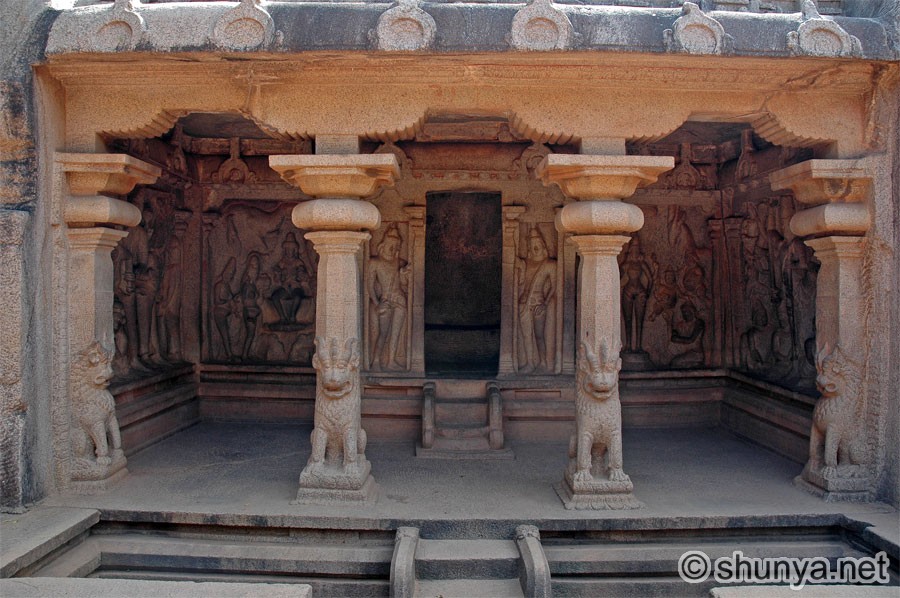
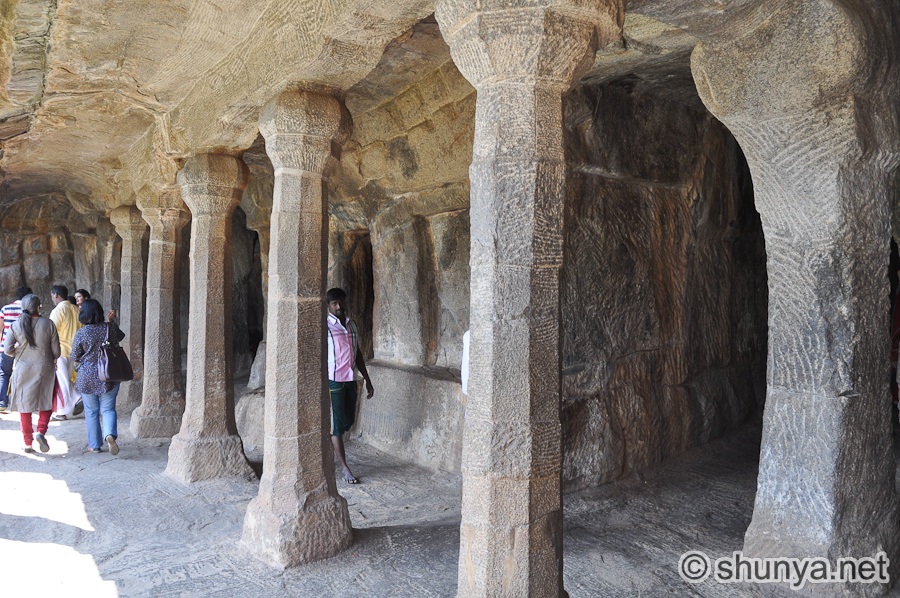
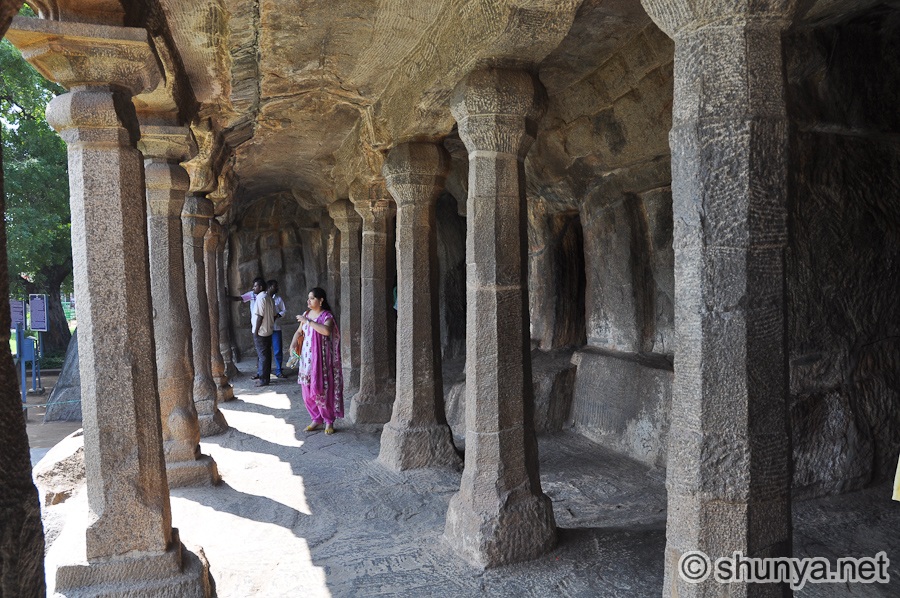
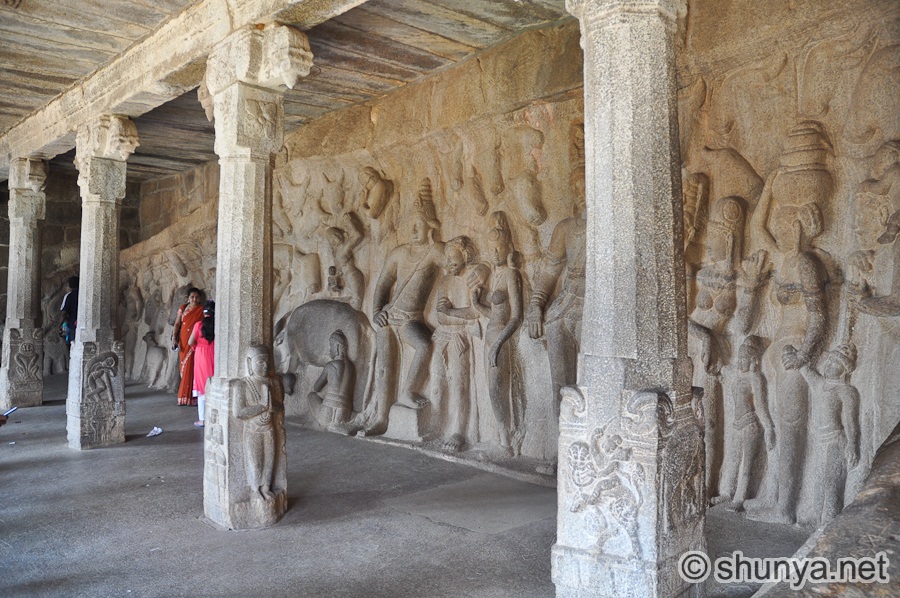
Cave temples (more)
|
|
Morning on the beach 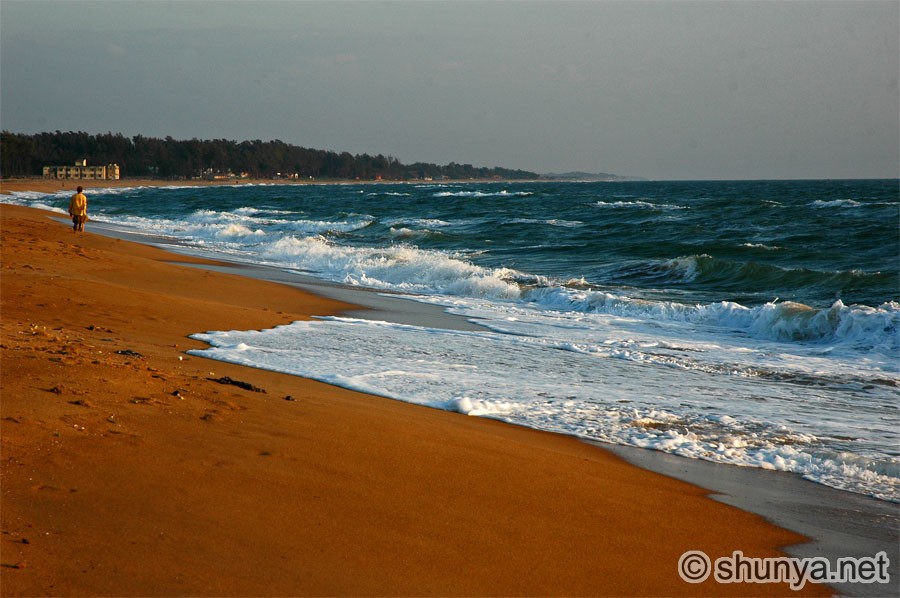 |
Cave shrine on the beach 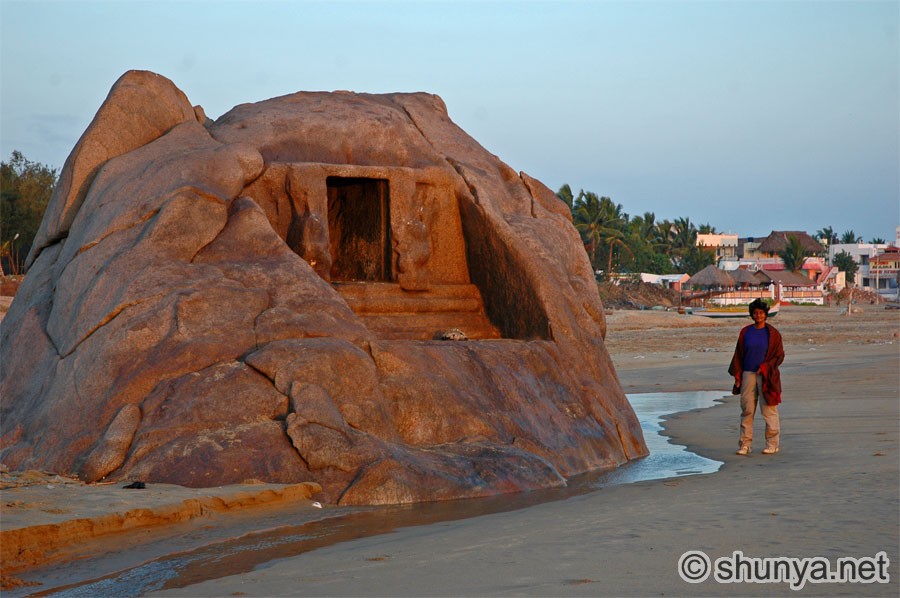 |
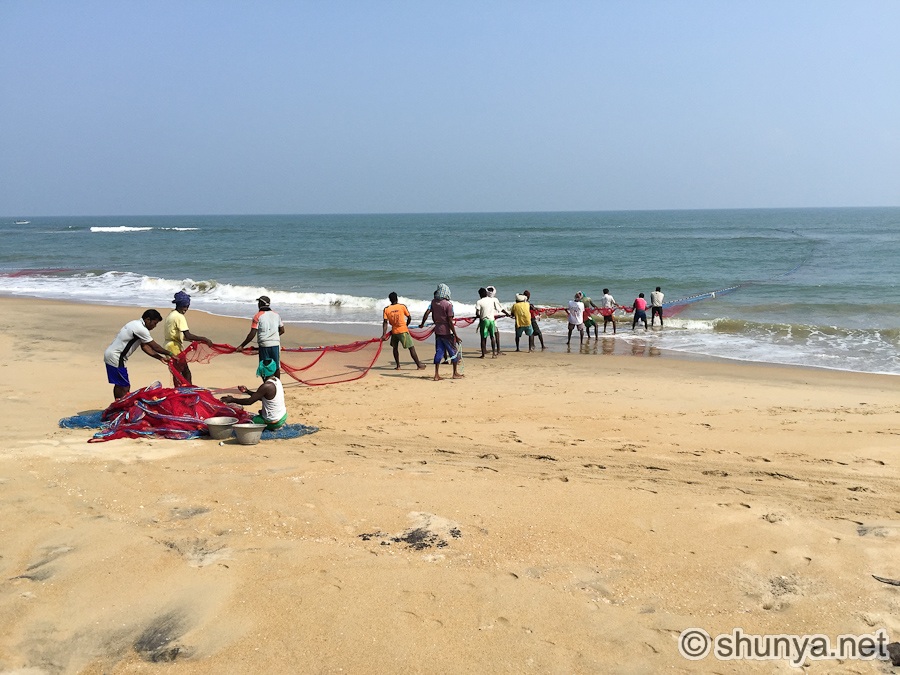
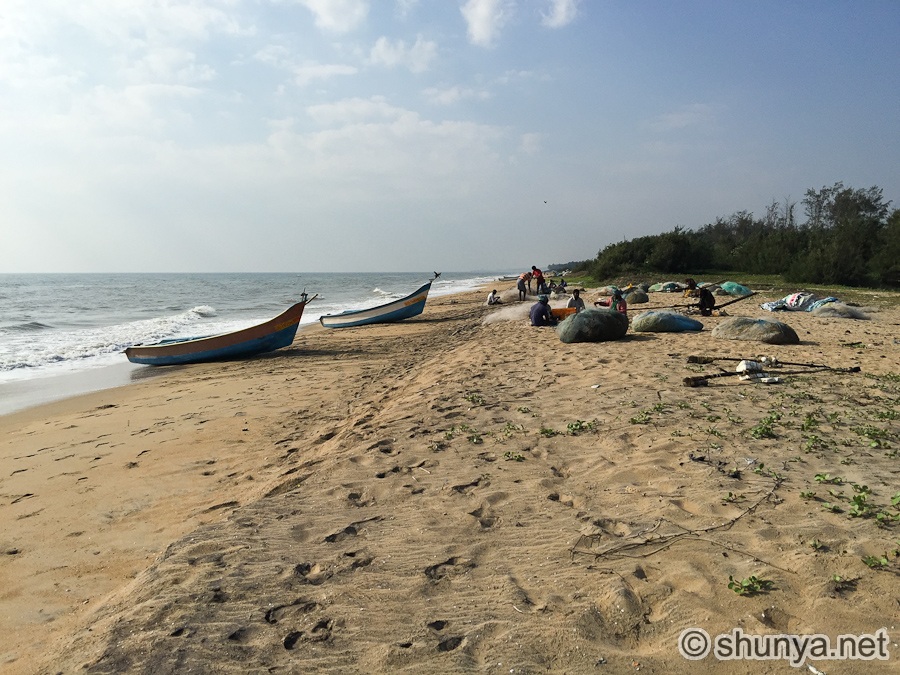
Fishing boats and nets 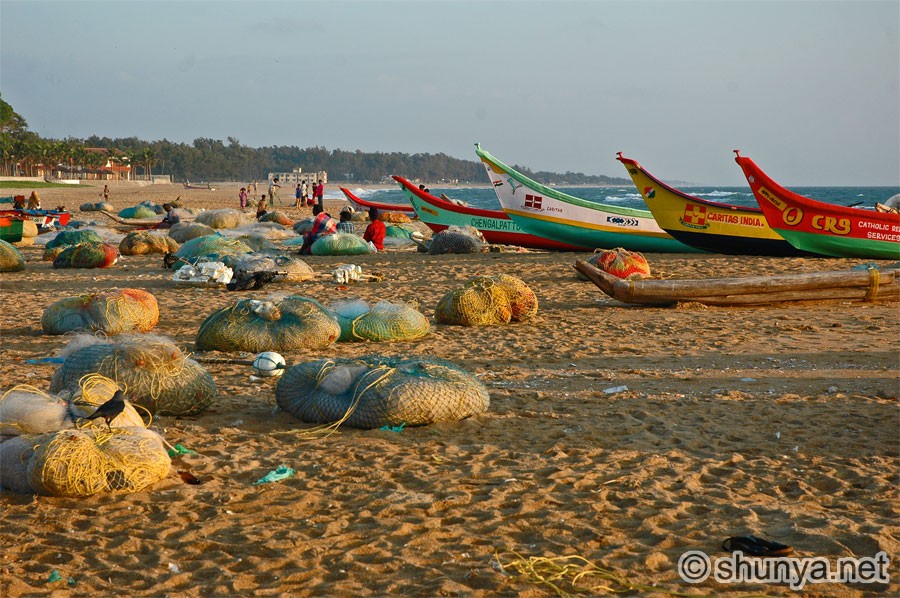 |
Seafood restaurants 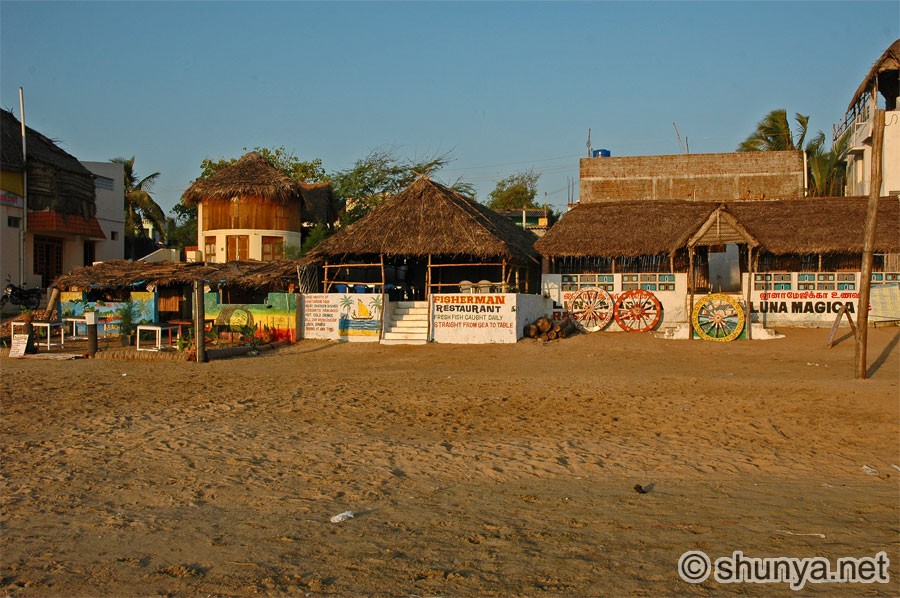 |
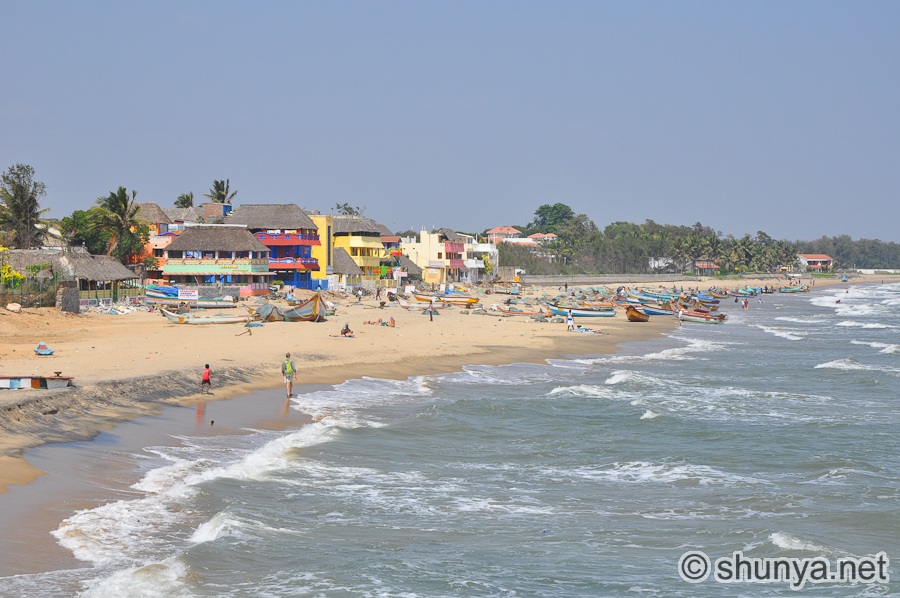
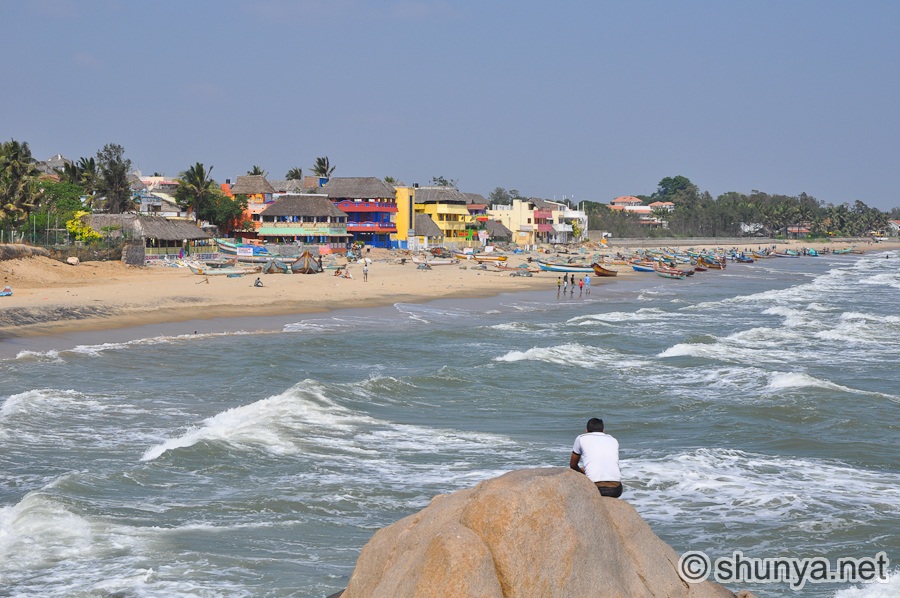
Mahabalipuram beach (more)
|
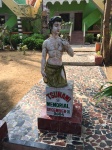
Tsunami memorial
|
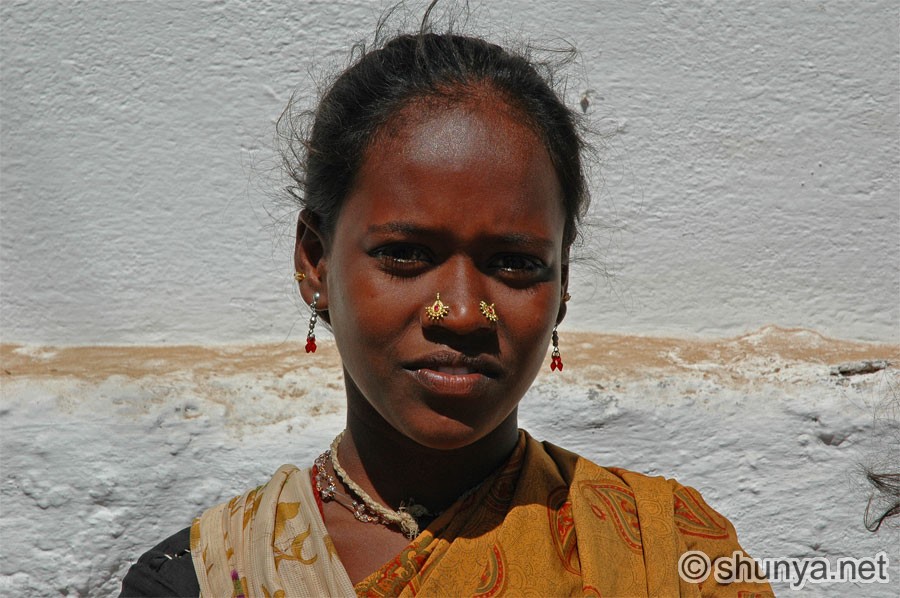
Girl selling trinkets |
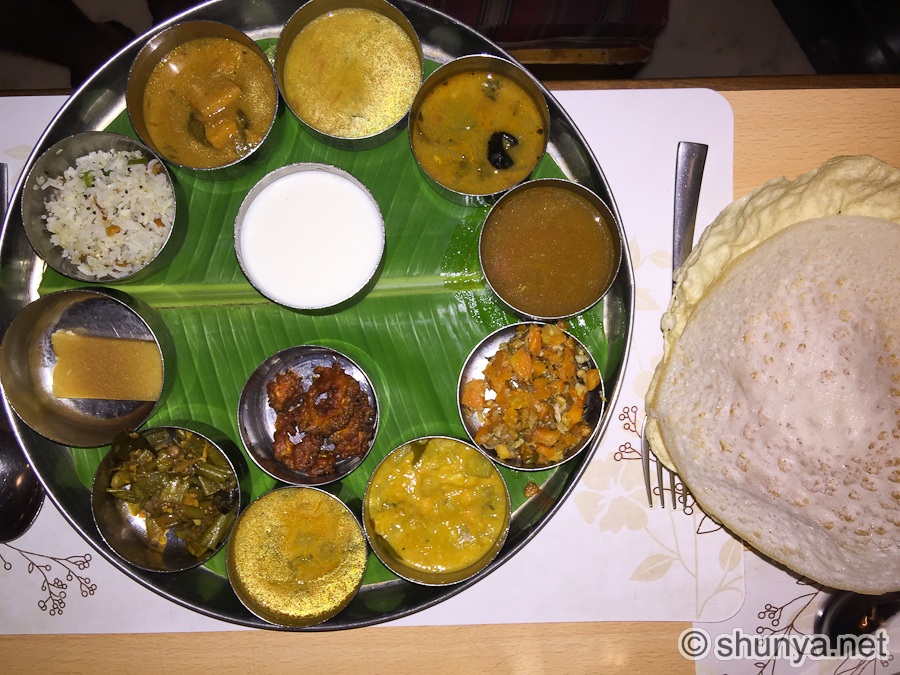
Lunch in town
|
|
Tourist hordes 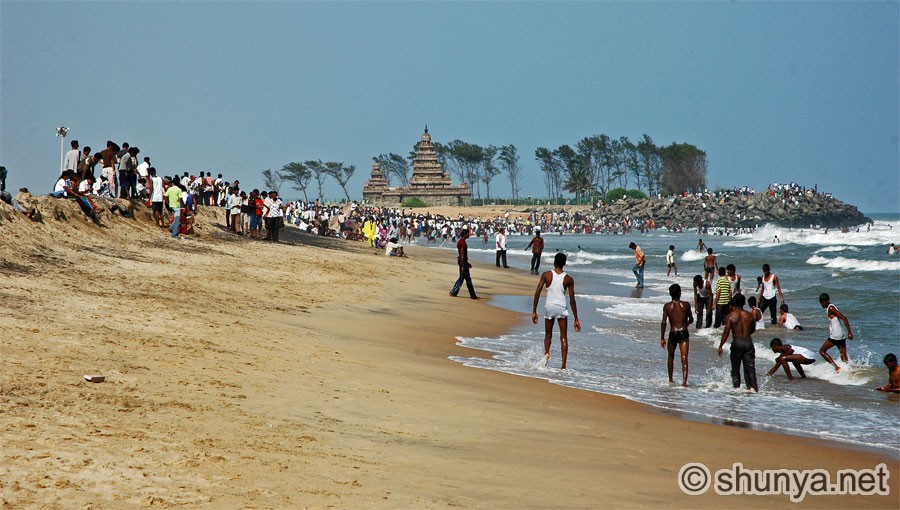 |
Fresh shrimp 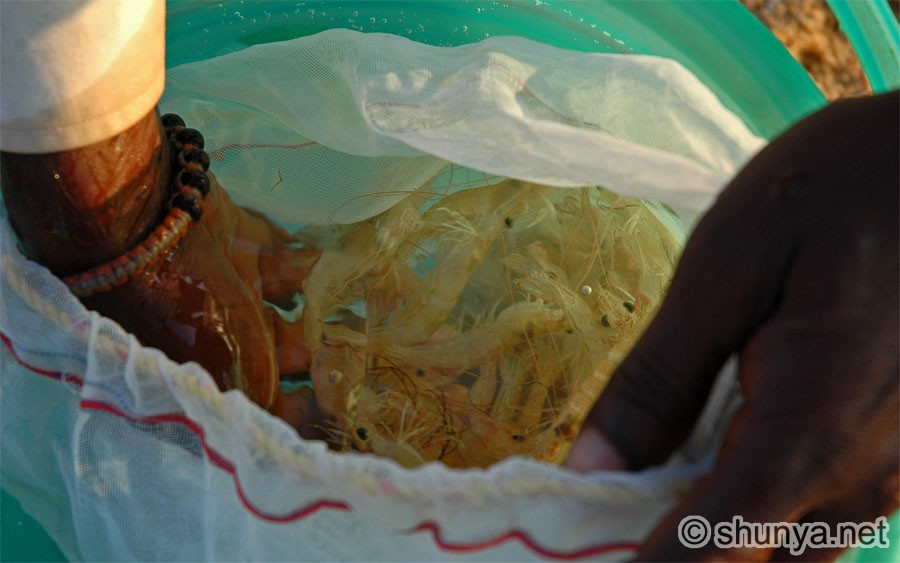 |
Coral fragment 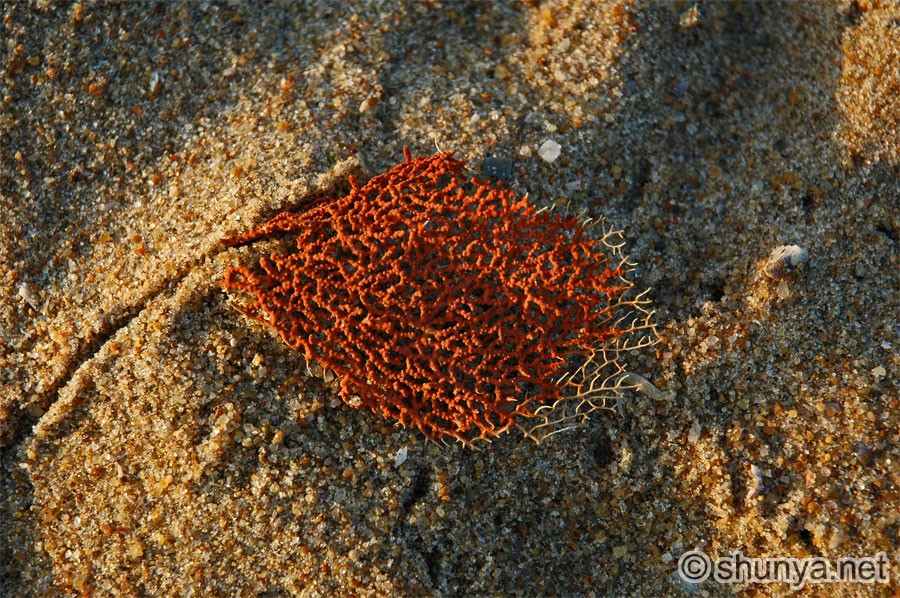 |
Night on the beach 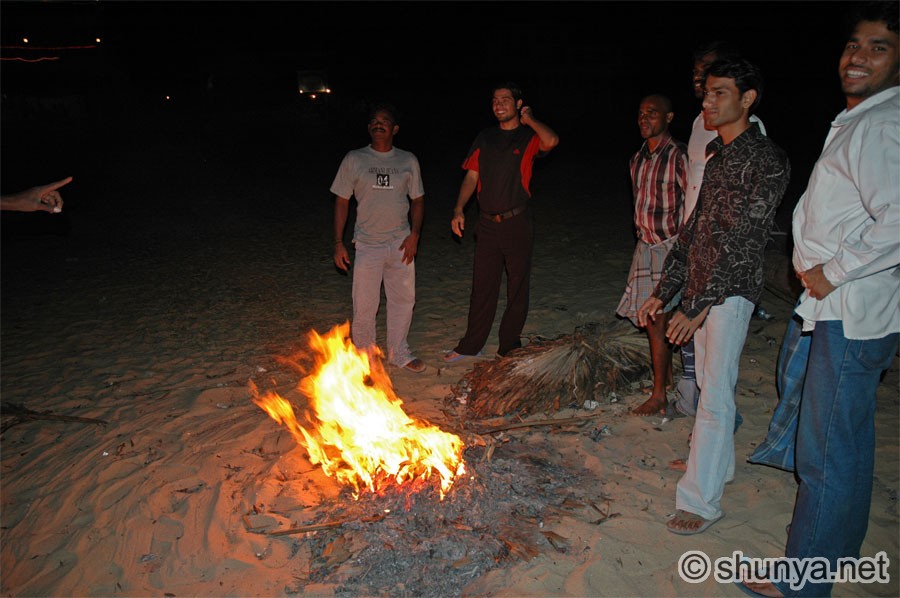 |
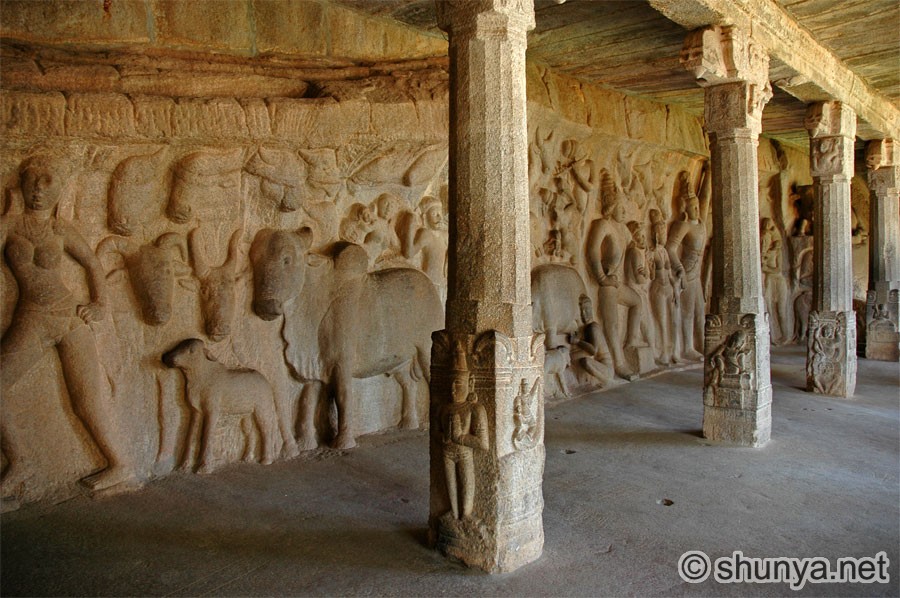 |
Left panel 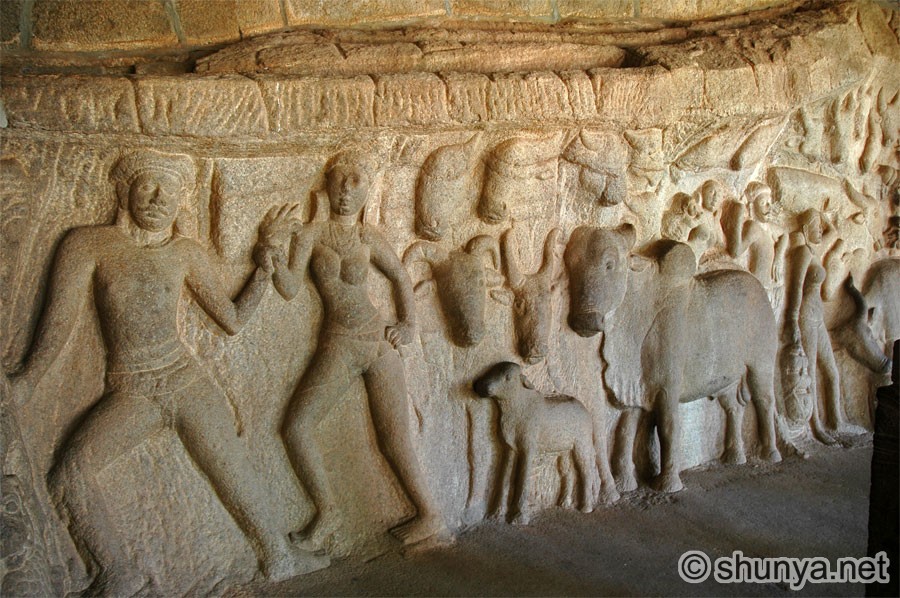 |
Middle panel 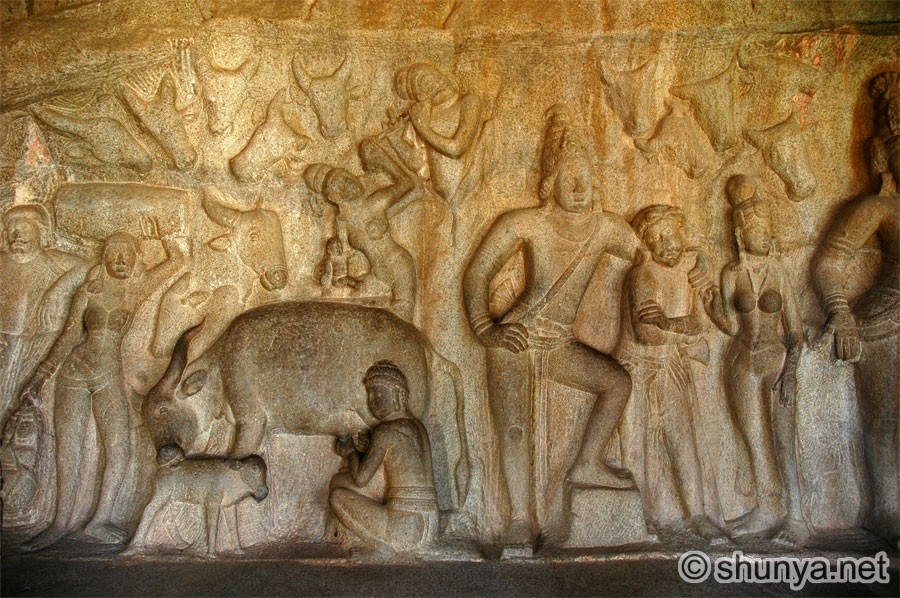 |
Right panel 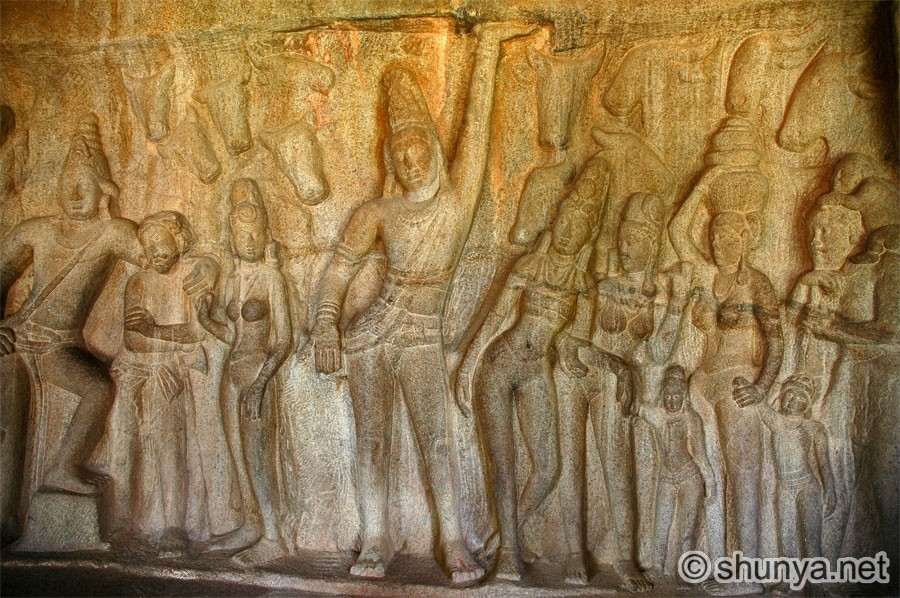 |
|
A tsunami memorial 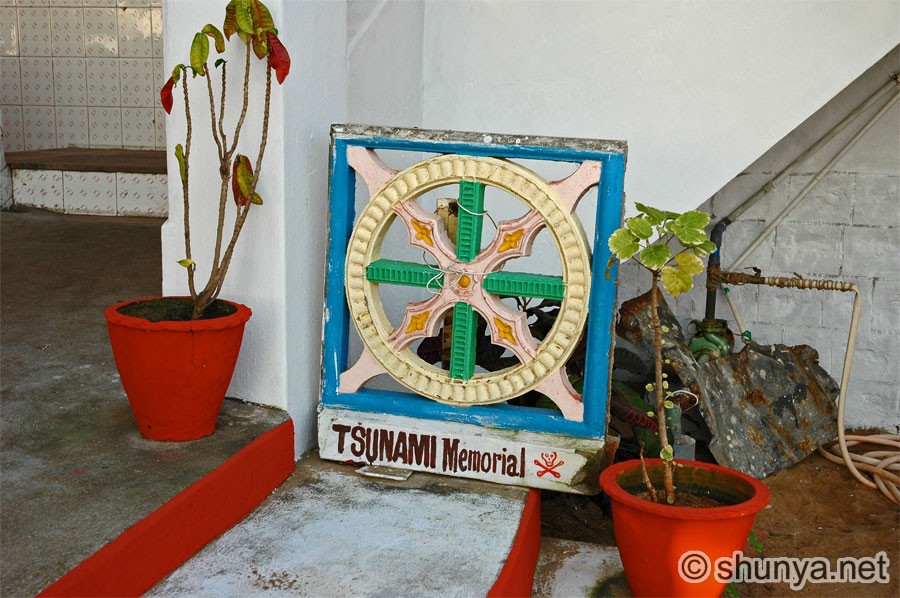 |
Higher secondary school 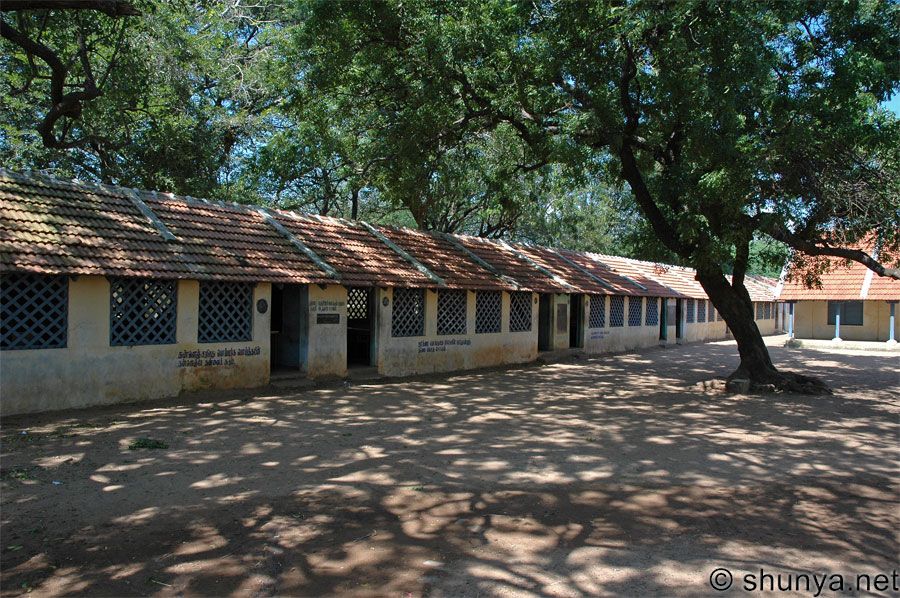 |
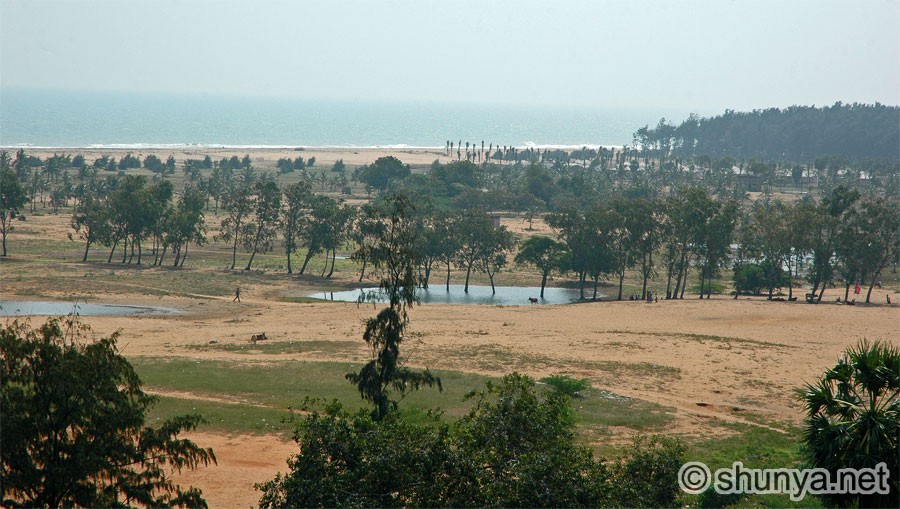
Landscape (more) 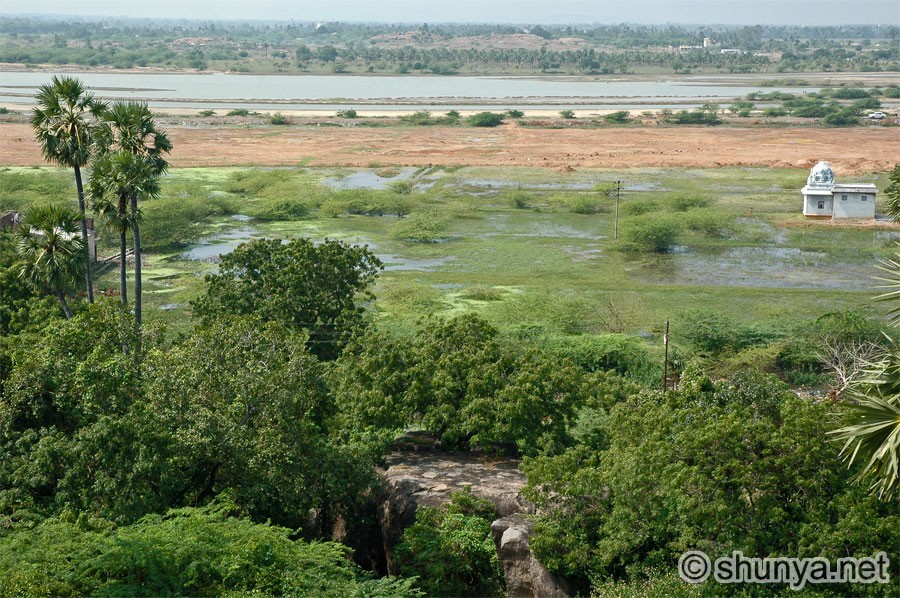 |
Writing on the wall 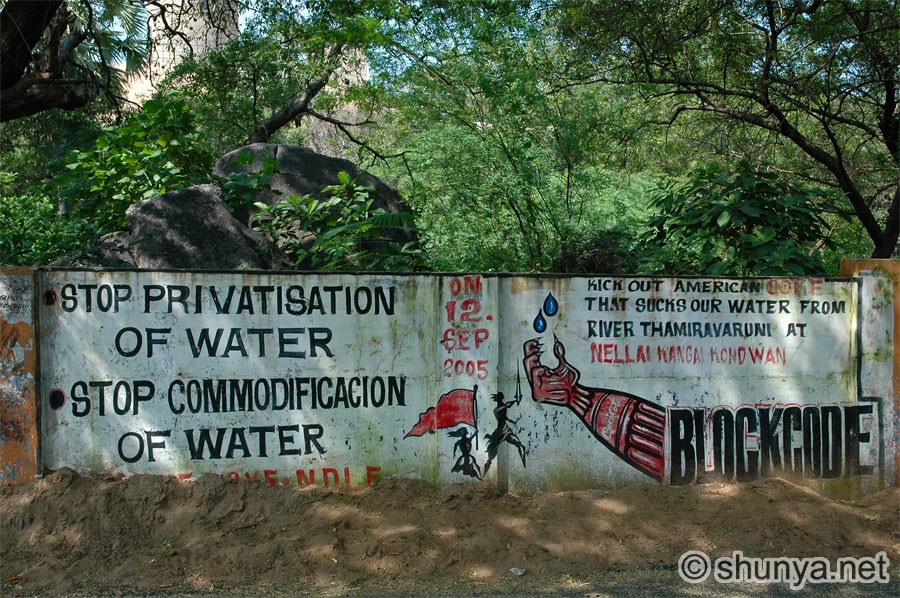 |
|
Mahishamardini mandapam 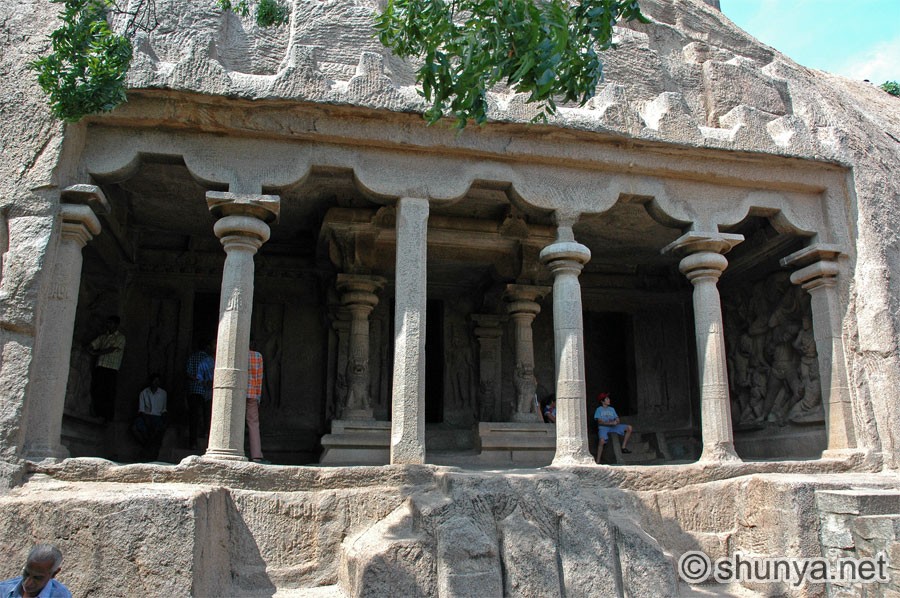 |
Cave wall detail (more) 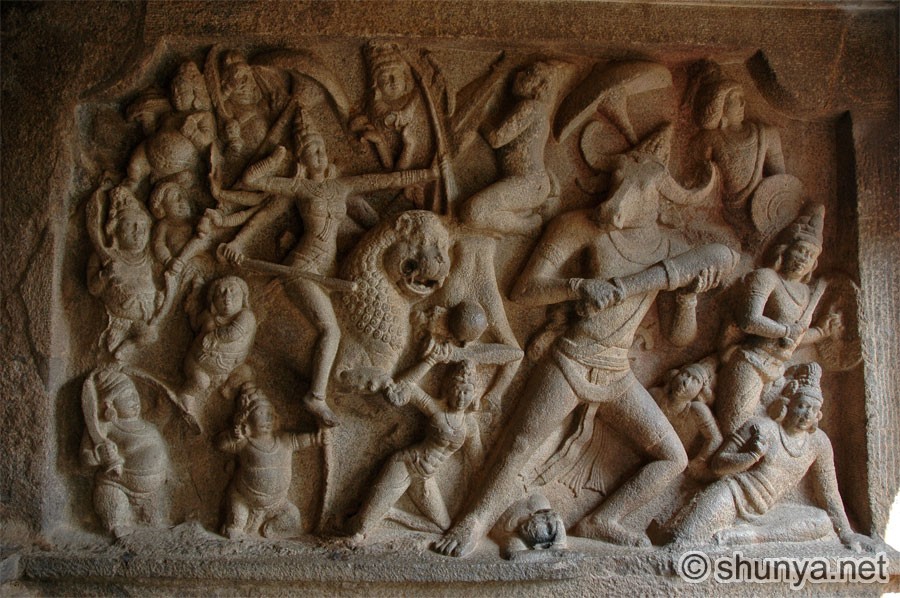 |
Olakkanneshvara Temple 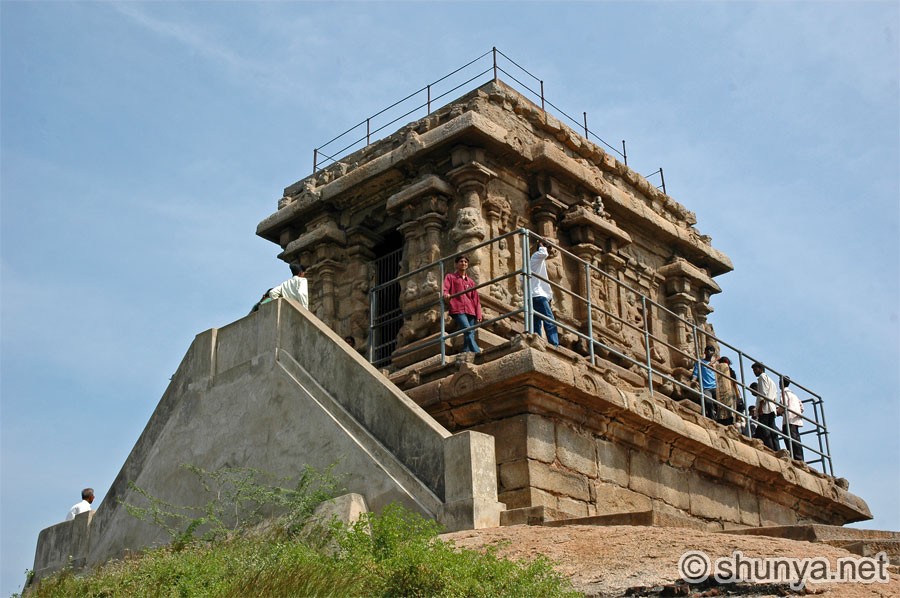 |
Bharatanatyam dance 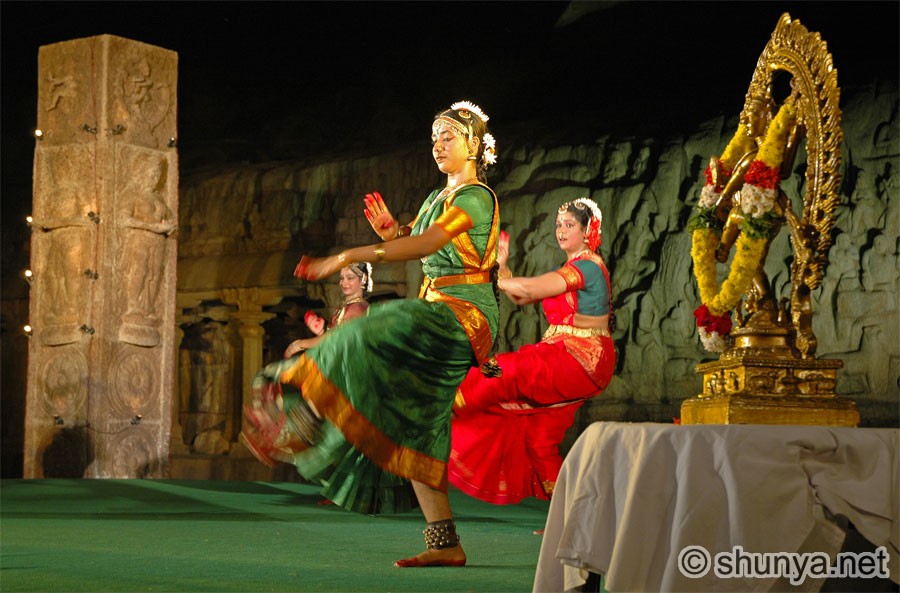 |
Mamallapuram lighthouse 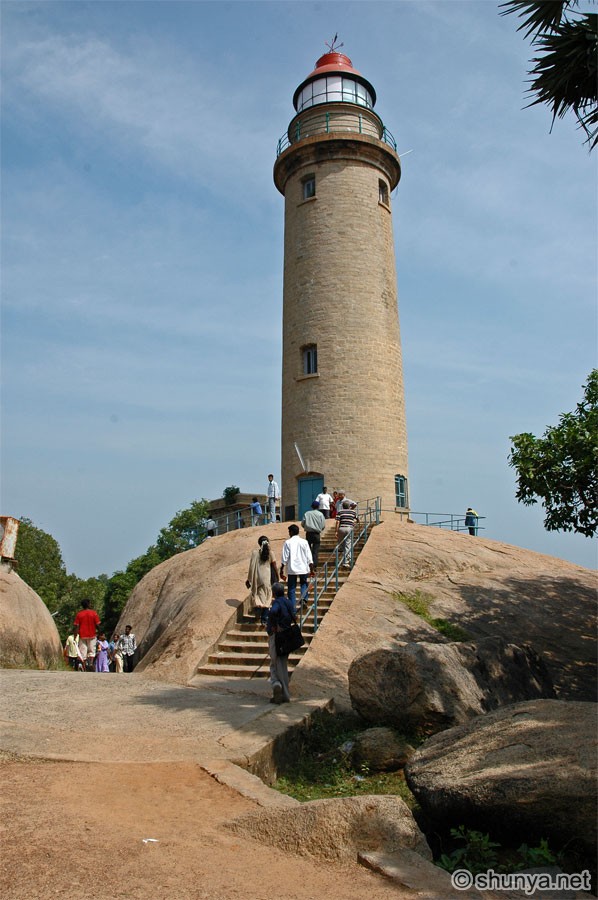 |
Rangoli 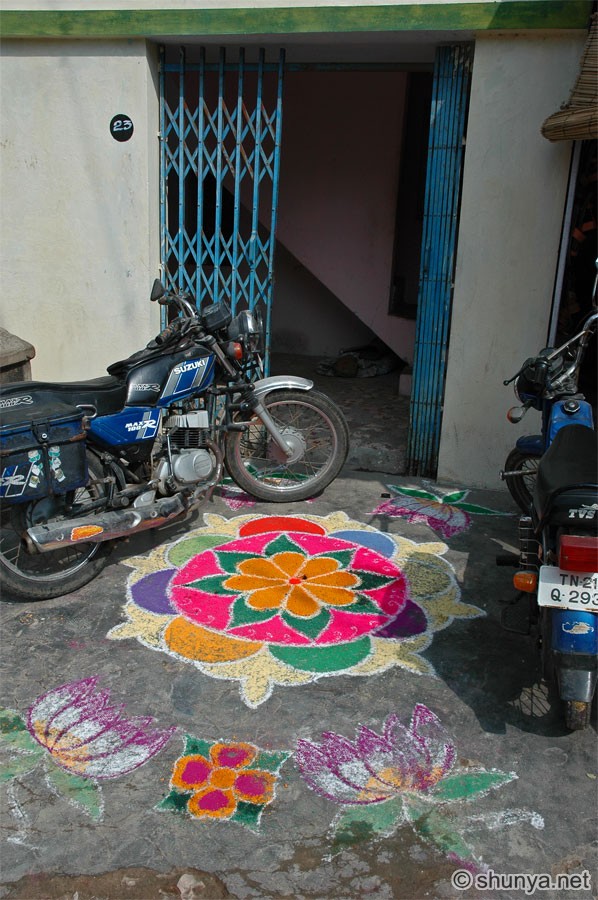 |
Rangoli 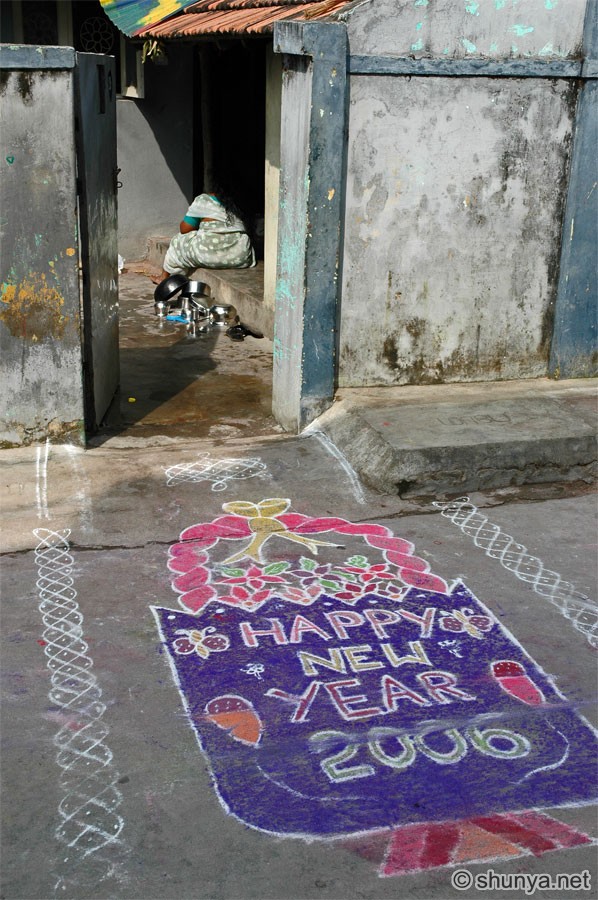 |
Mahabalipuram girl 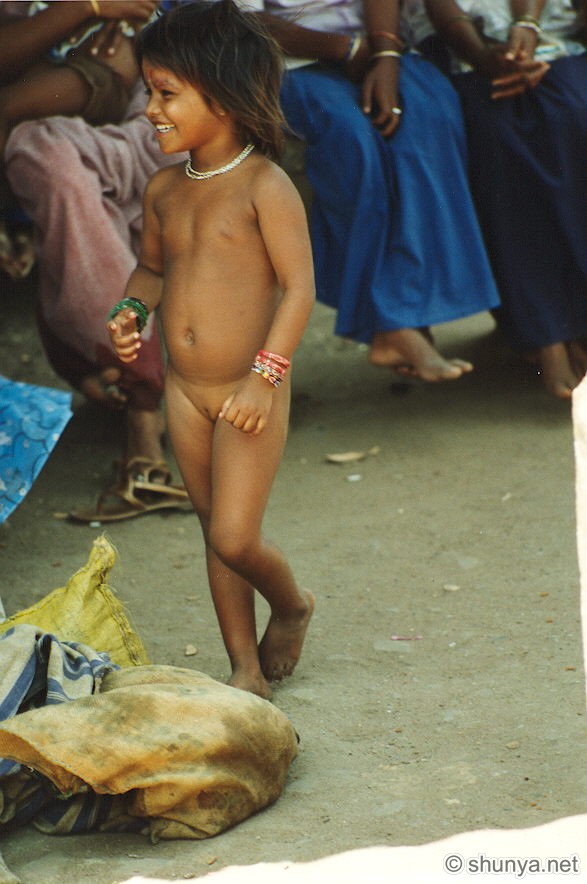 |
|
|
|
Visitor (more)
|
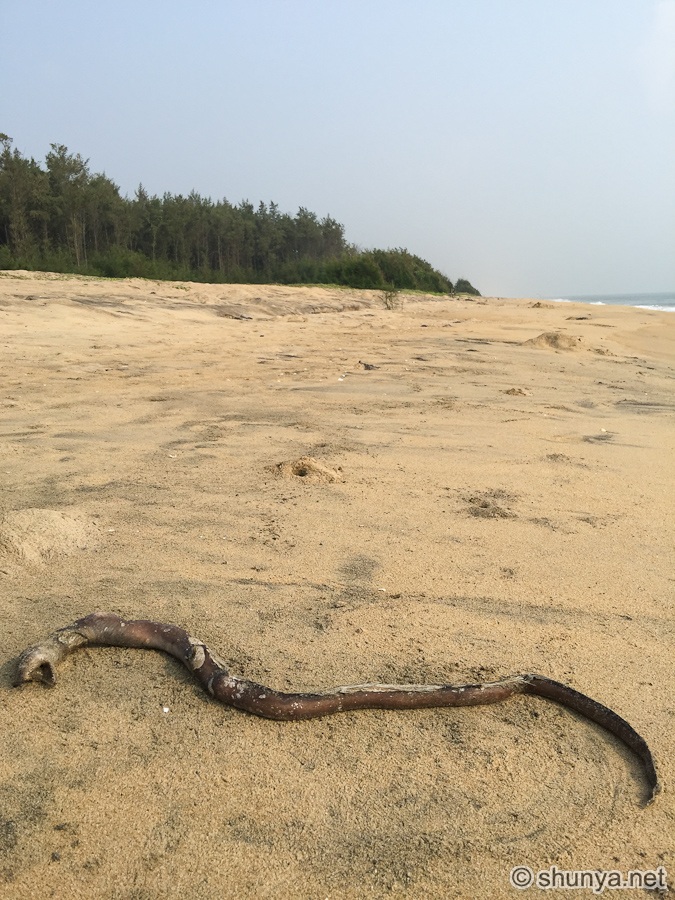
Dead Eel
|
|
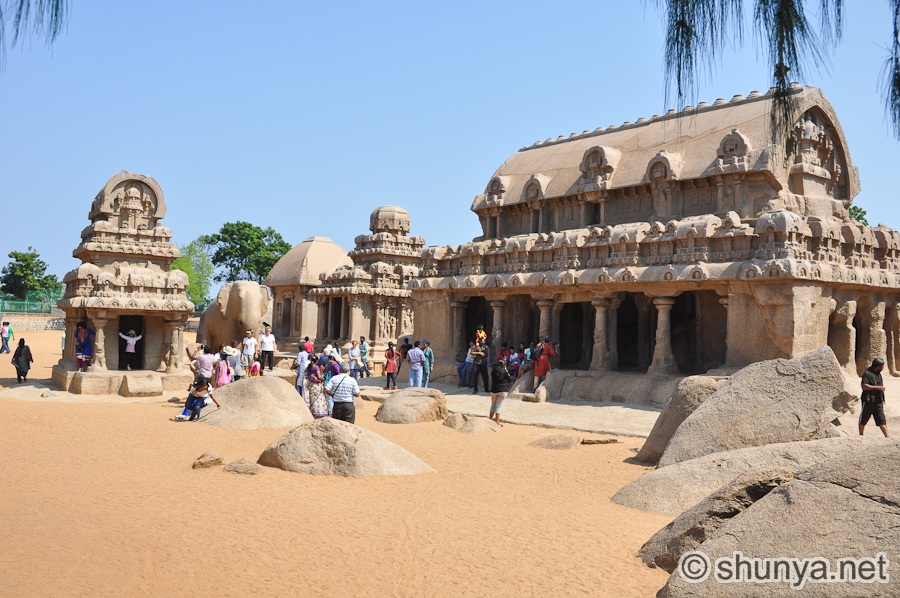
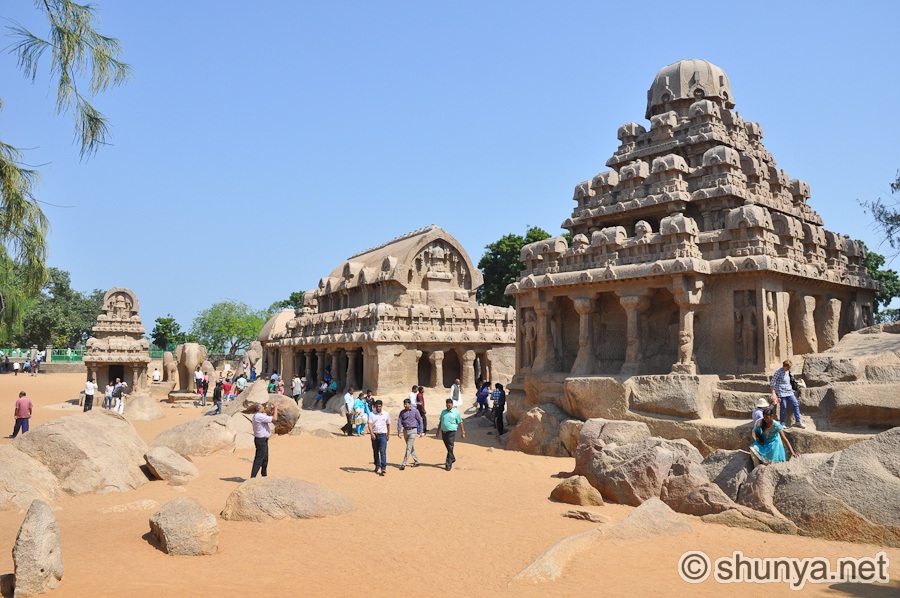
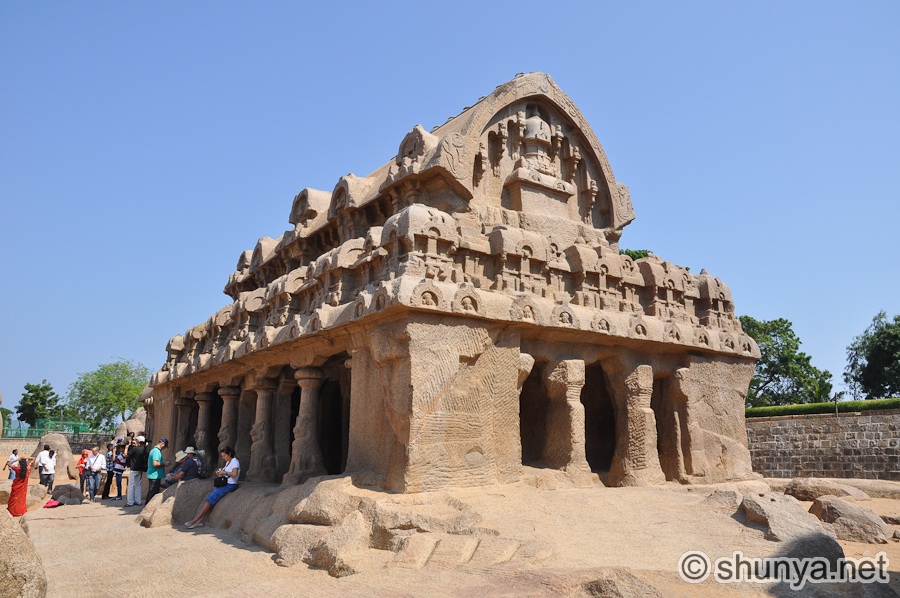
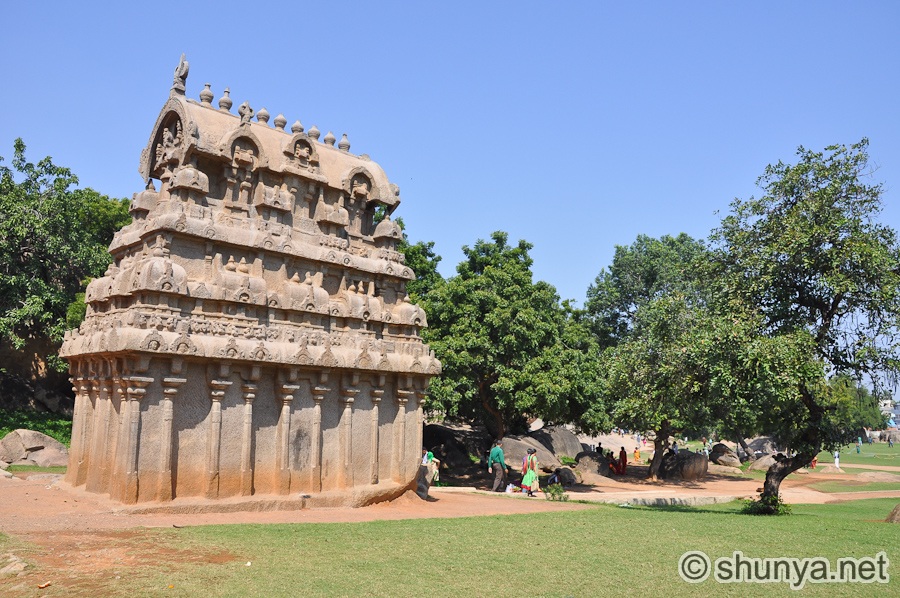
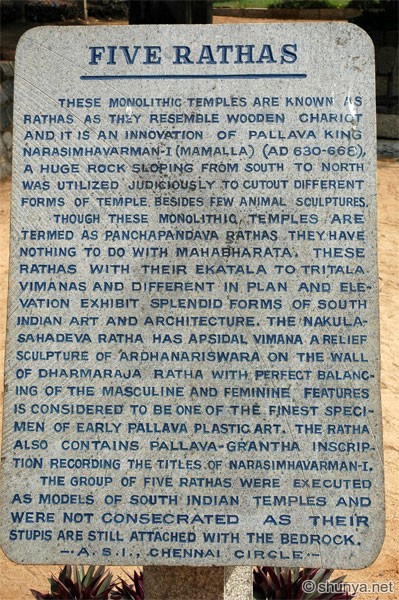
Five Rathas |
|||
Temples are
named after the 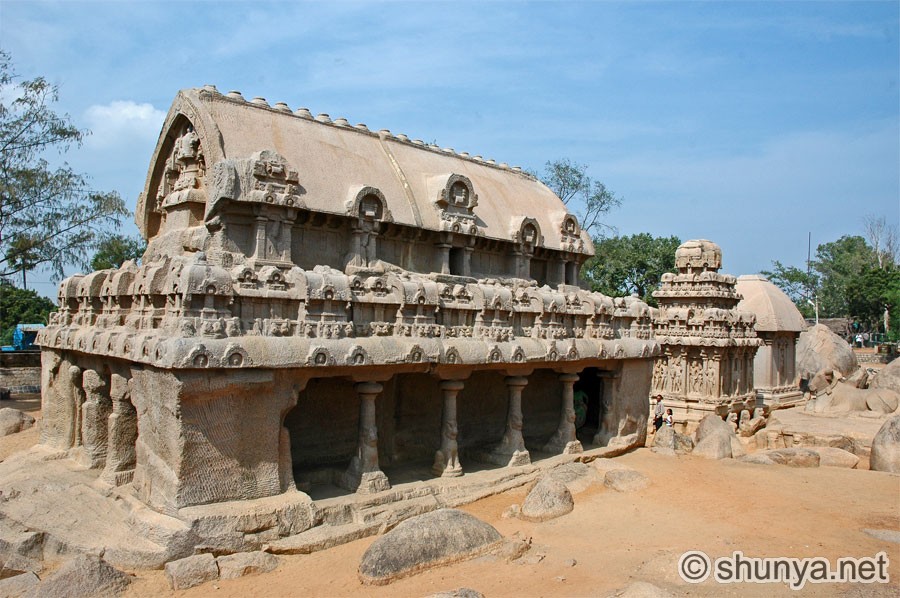 |
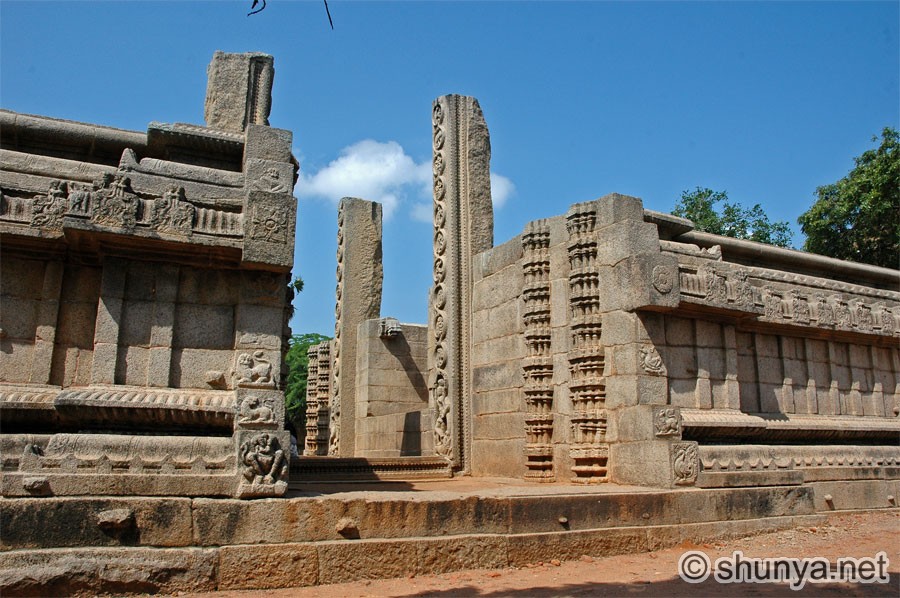
Chariot-like temples ▒ 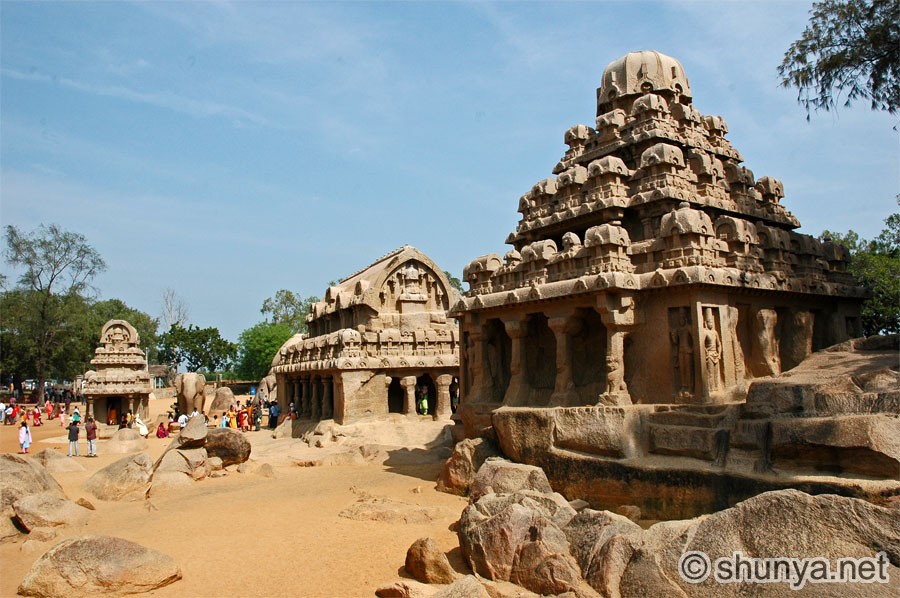 |
Hewn in situ from a rock cliff 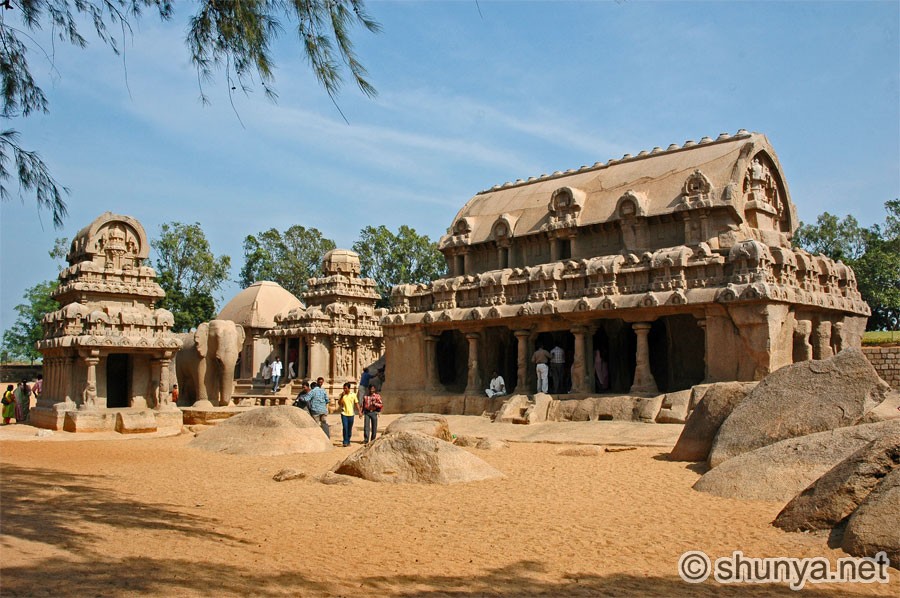 |
Pallava art and architecture 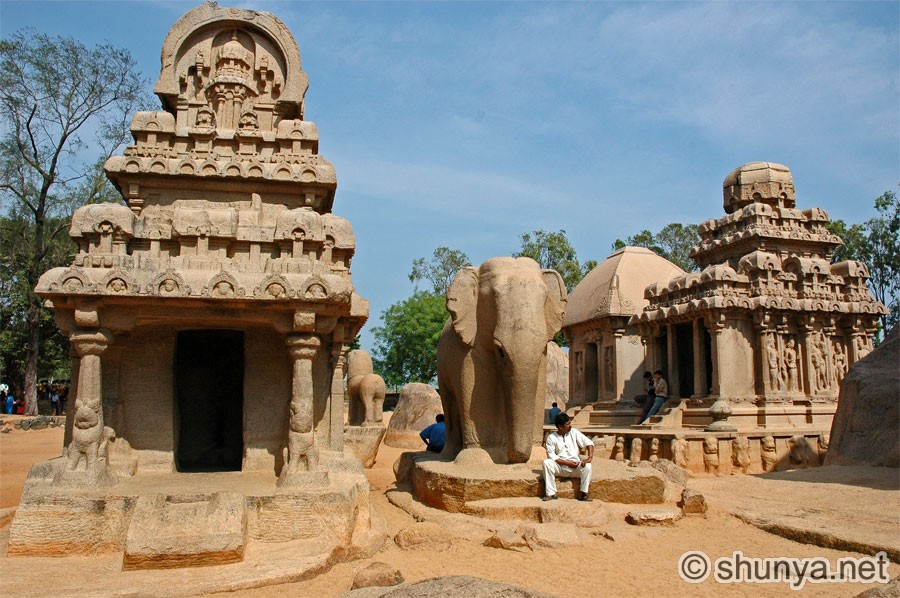 |
Elephant sculpture 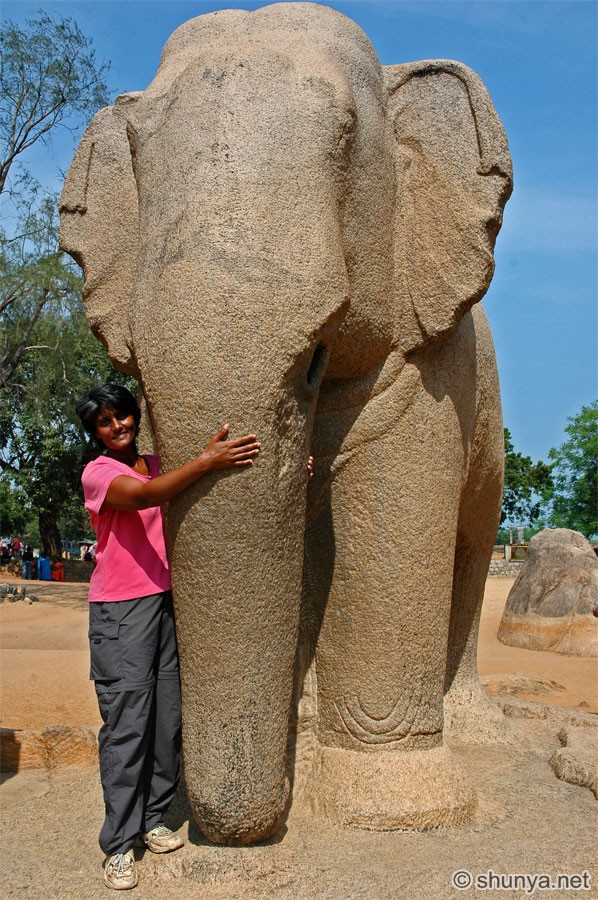 |
Temple wall detail 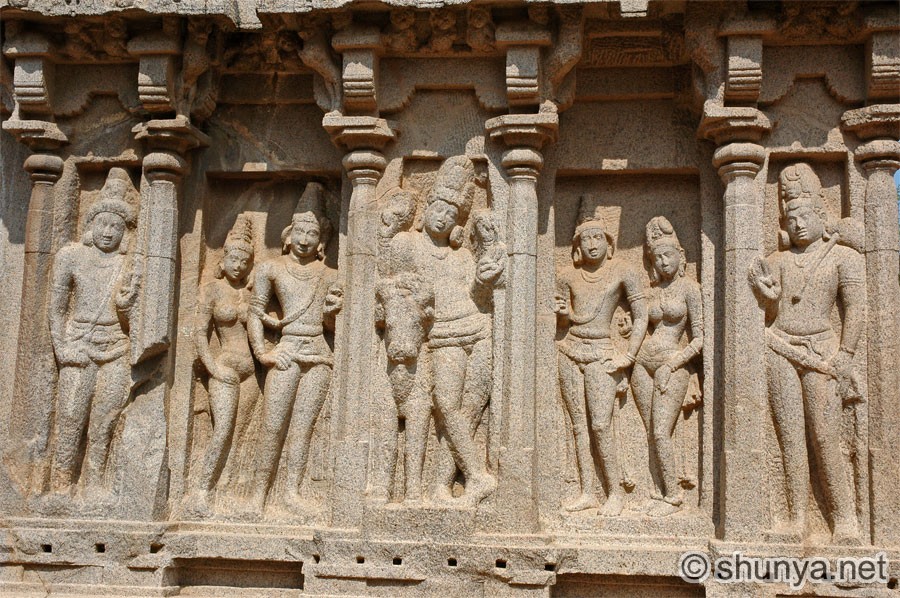 |
Inner sanctum 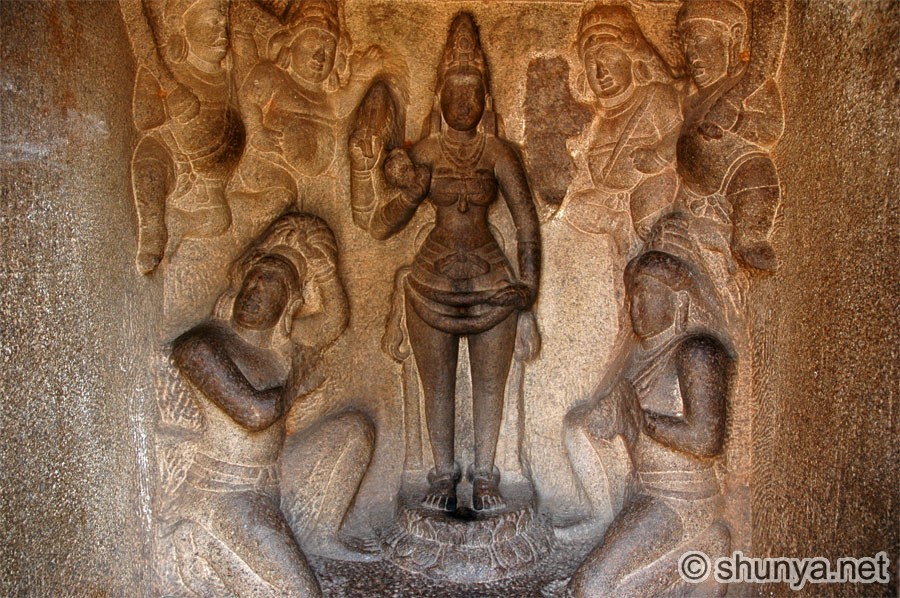 |
Goddess of nothing 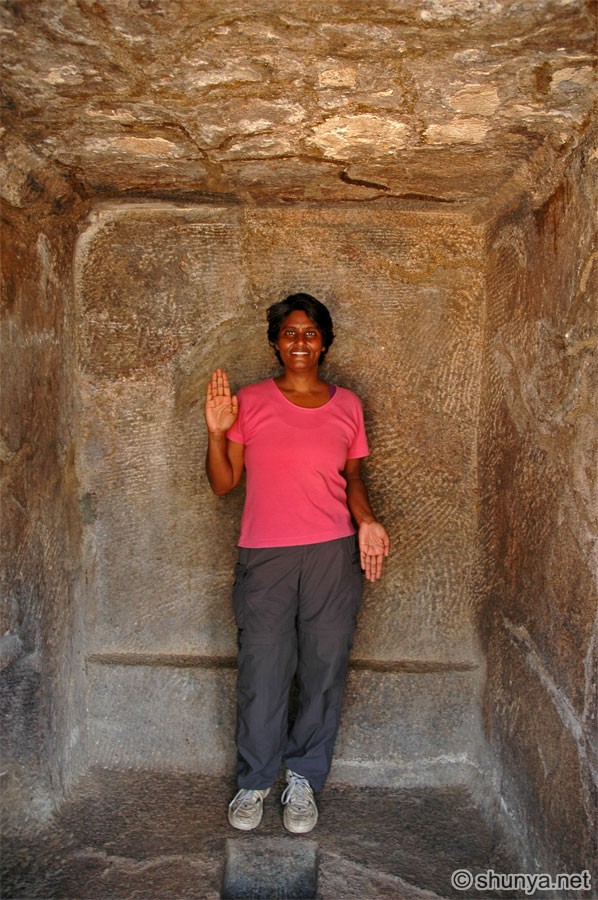 |
|
|
|
|
|
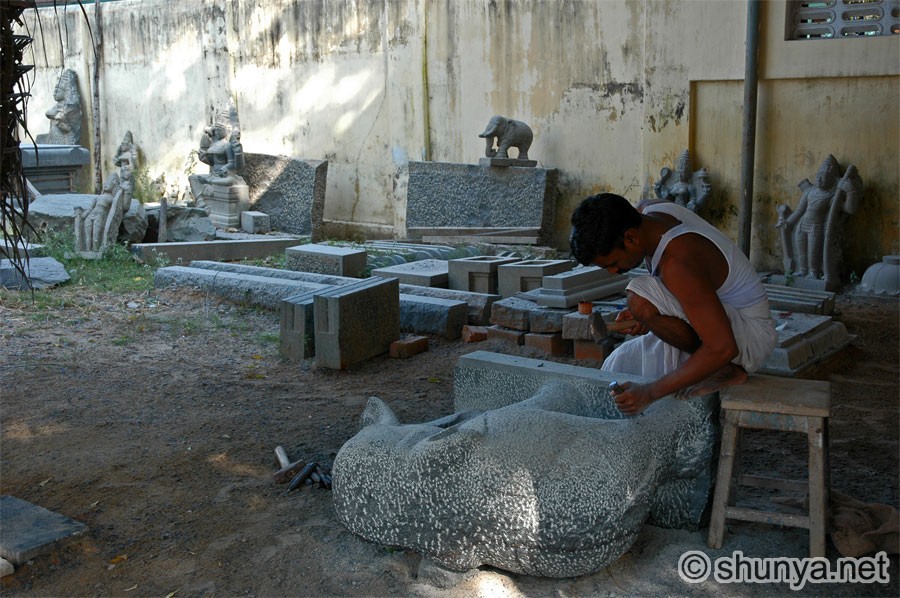
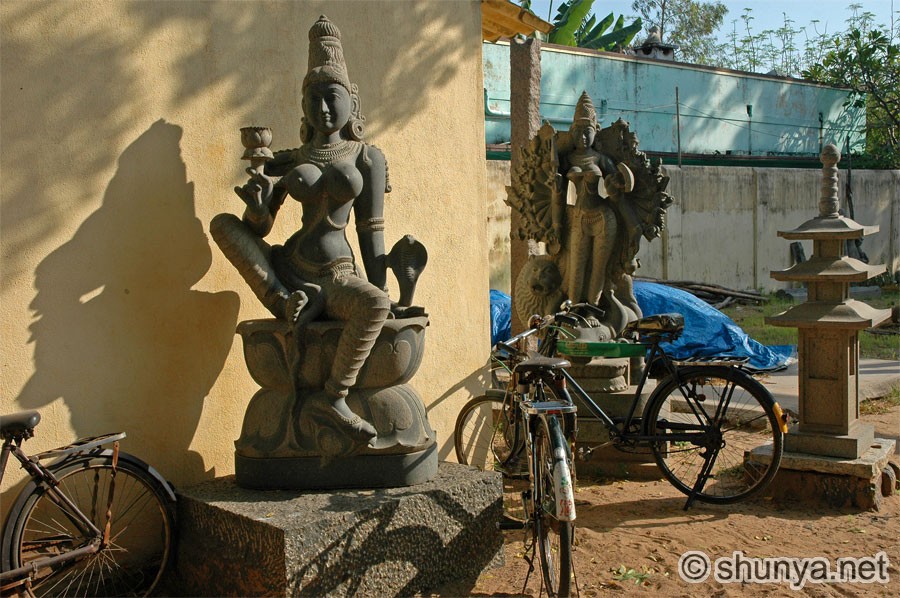
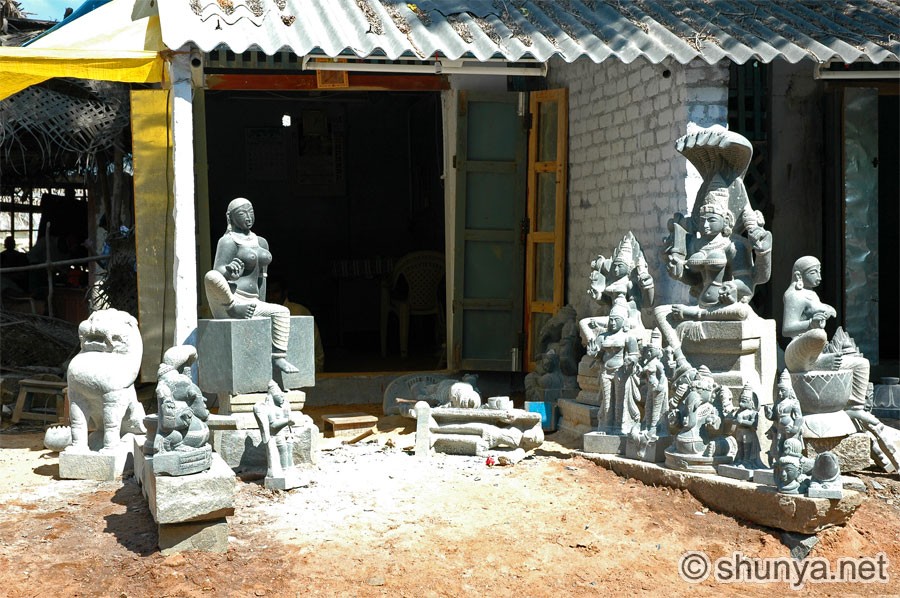
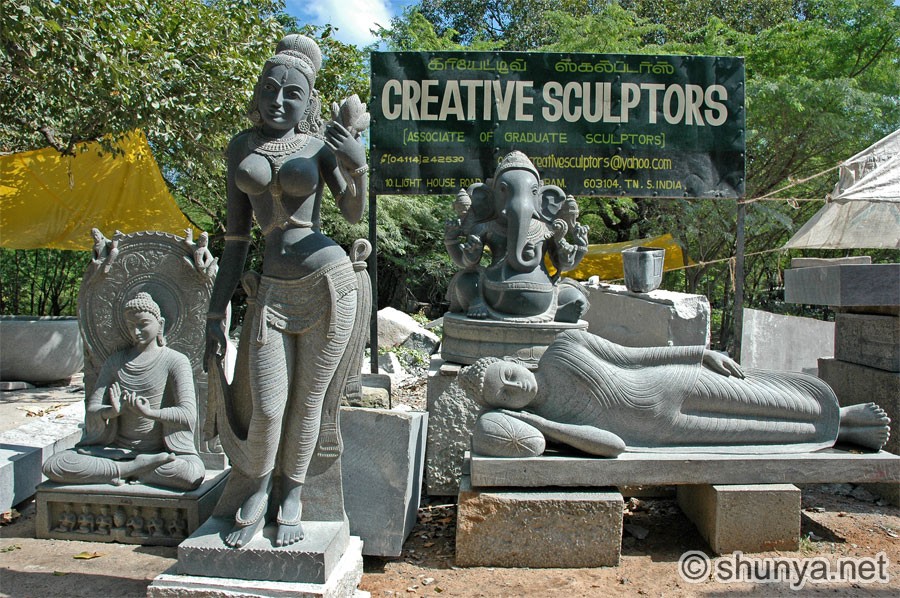
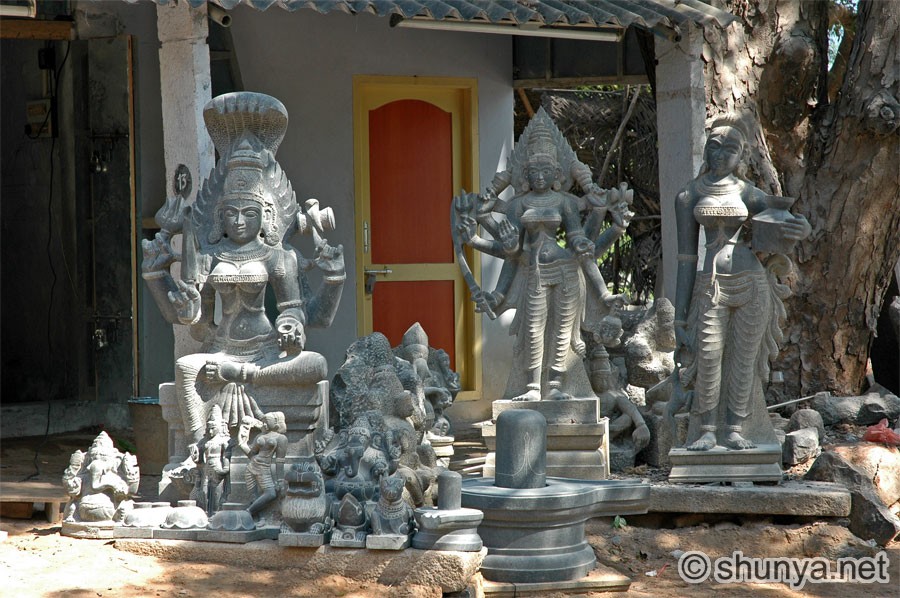
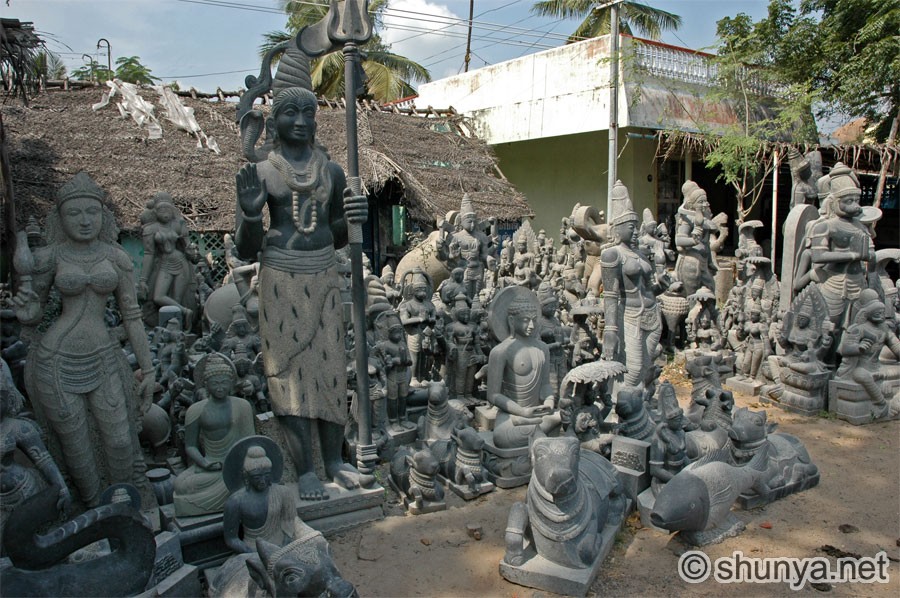
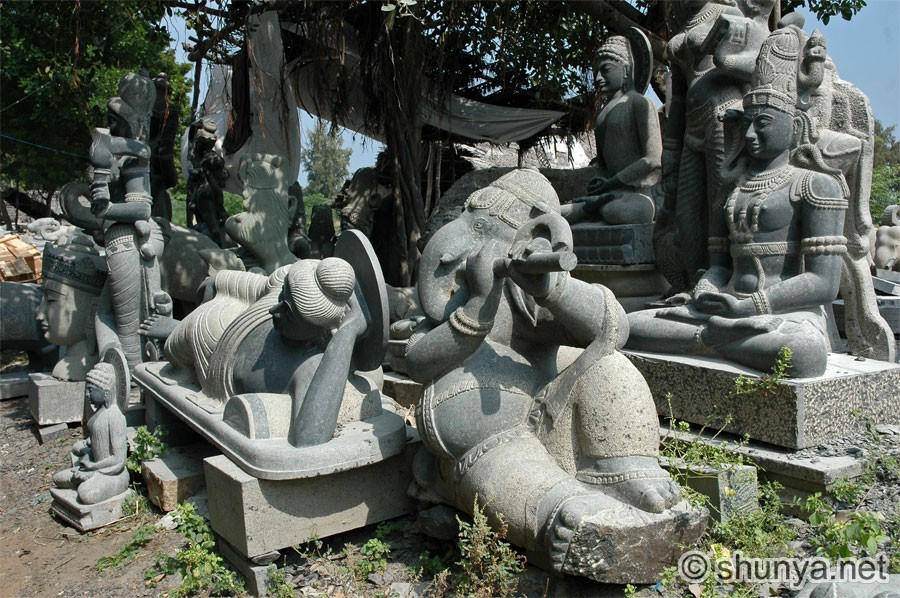
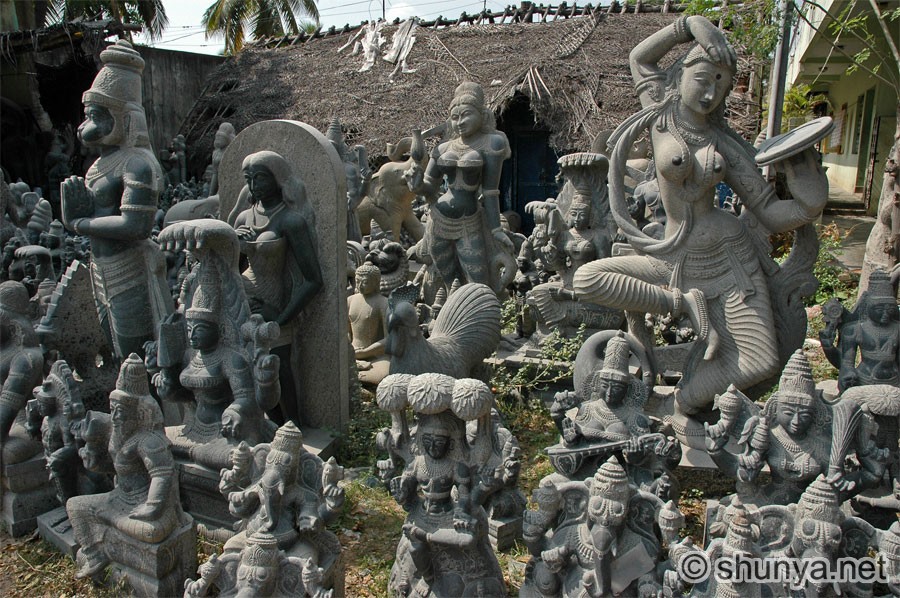
The sculptors of Mamallapuram |
|||
|
|
|
|
|
|
|
|
|
|
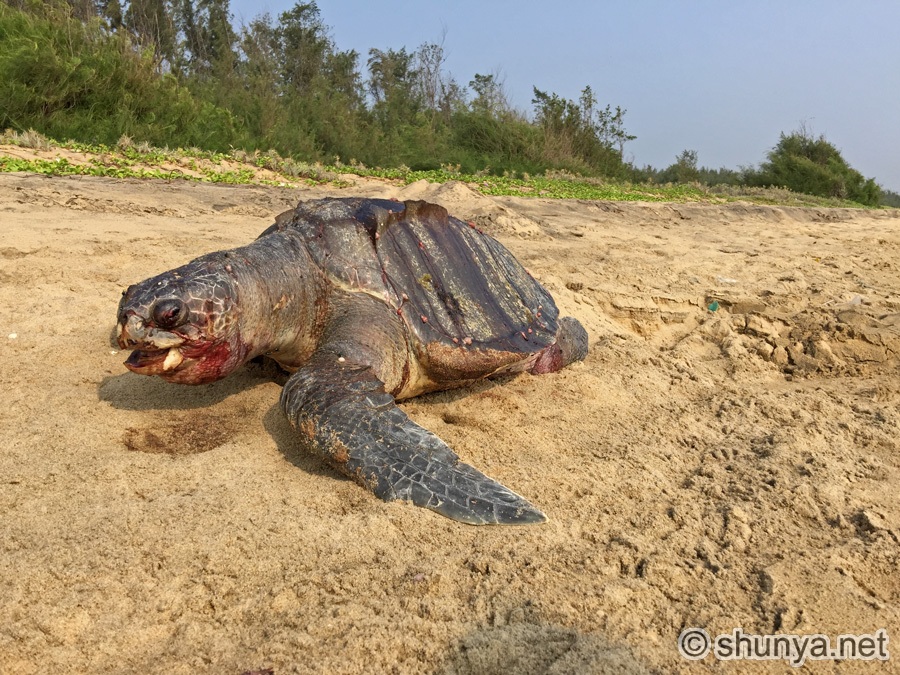
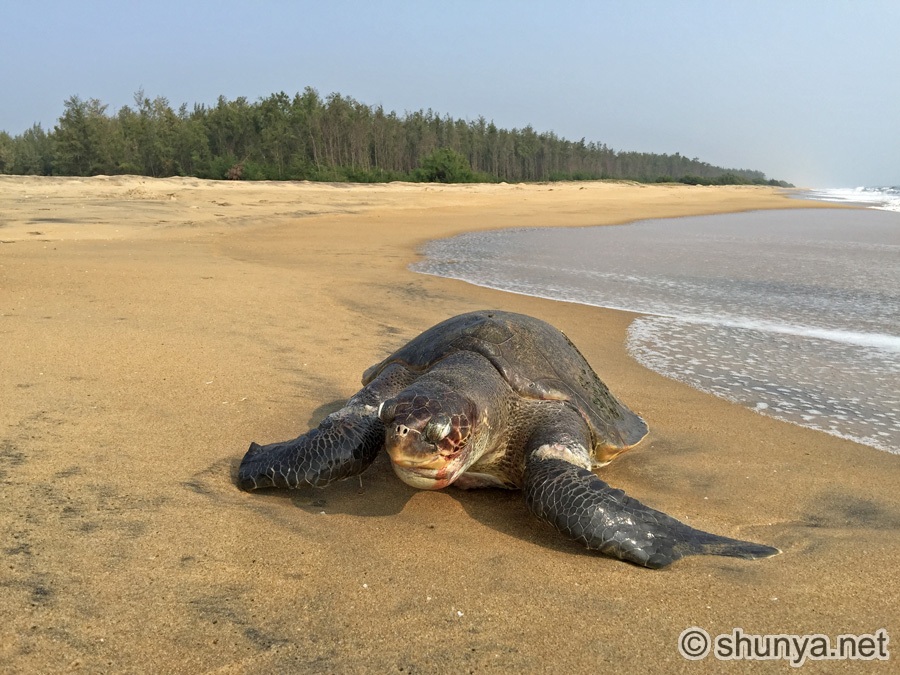
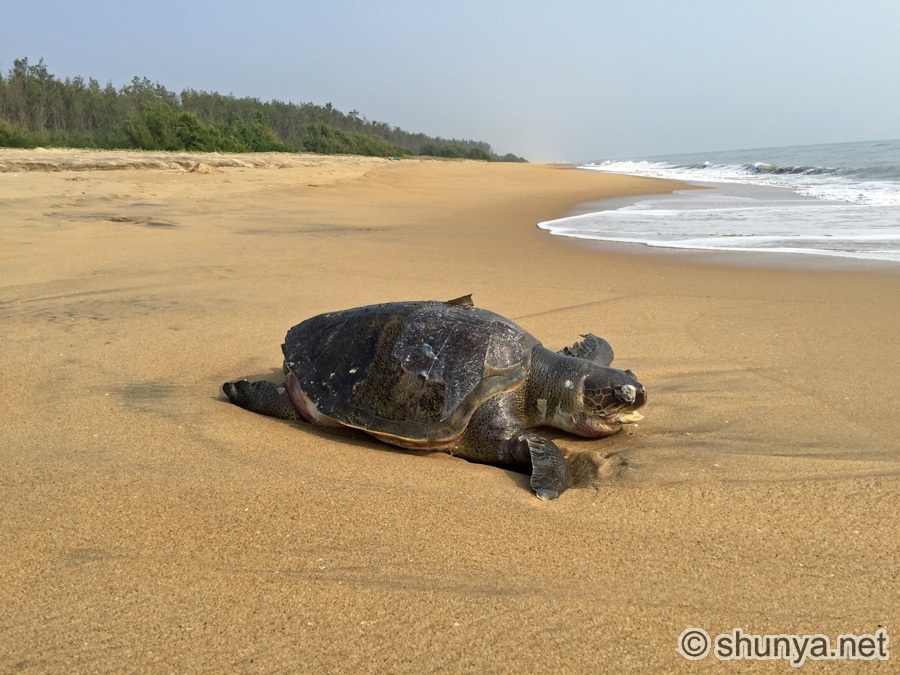
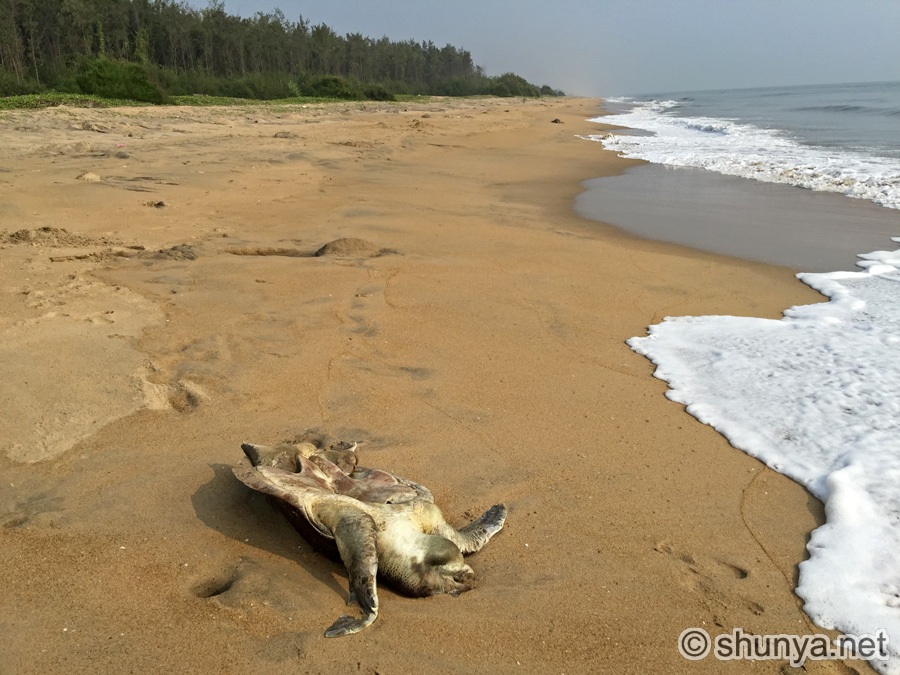
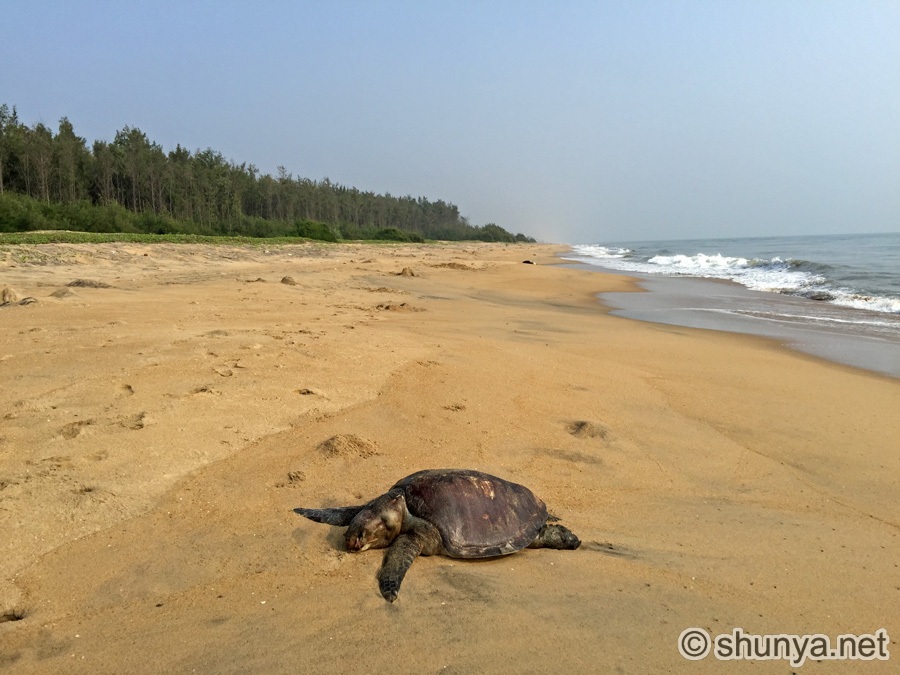
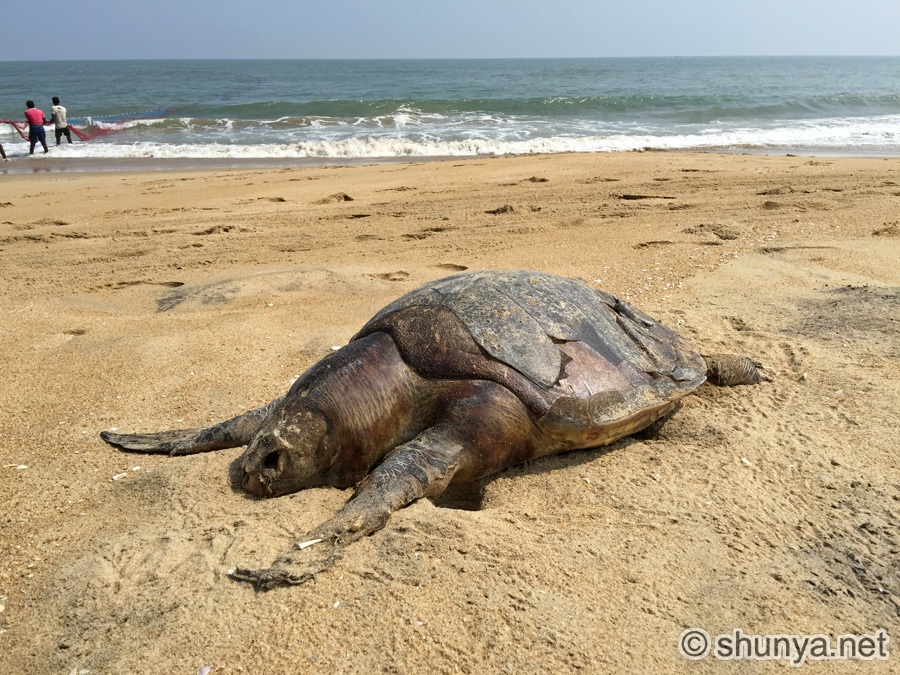
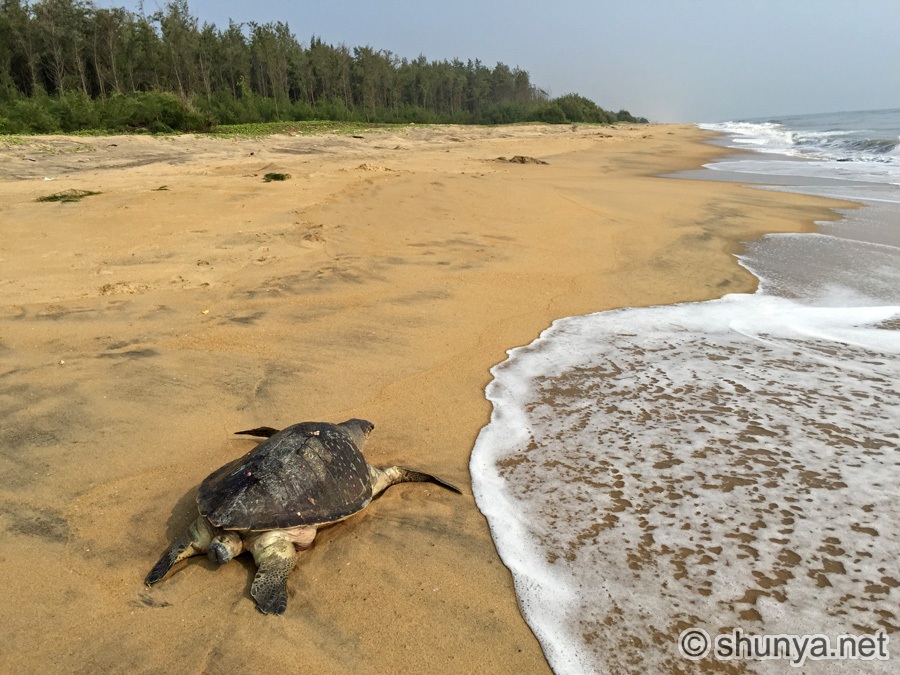
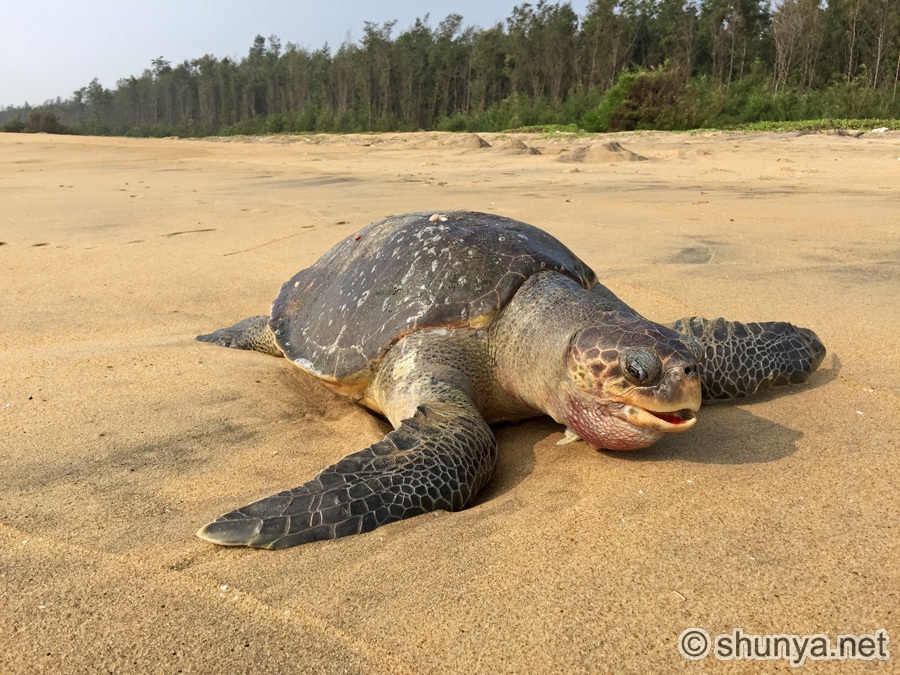
Dead Turtles on the Beach On the Coromandel Coast just north of Mahabalipuram, we found a sad spectacle in early January 2015. Dozens of Olive Ridley Turtles had washed up dead on a desolate, beautiful stretch of beach; more came in the days ahead. The most recent corpses seemed bloated and were oozing blood from various parts. Further investigation revealed that this was collateral damage from fishing trawlers. Read more about it here. |
|||
 |
 |
 |
 |
 |
 |
 |
 |
Designed in collaboration with Vitalect, Inc. All rights reserved. |