





Shantiniketan, West Bengal, India
Shantiniketan ("Abode of Peace") began as a meditation centre founded and endowed in 1863 by Maharishi Debendranath, the father of the Nobel laureate Bengali poet Rabindranath Tagore, who, in turn, established the Brahmo Vidyalaya (school) and in 1901 another open-air laboratory school. By 1921 the latter had expanded into Vishva Bharti University, which sought a basis for a common fellowship between the cultures of East and West. A residential university with an international student body, hostels, and extensive grounds, it includes colleges for fine arts and crafts, Sino-Indian studies, music and dance, research in Asian languages, teacher training, technology, and postgraduate studies and research. Rabindra-Sadana is the university's museum and academy for the study of Tagore. The town also contains Udayana, Tagore's residence. Another Nobel laureate, Amartya Sen, studied at Shantiniketan, as did Satyajit Ray and Indira Gandhi. At nearby Sriniketan is an institution founded in 1922 by Tagore and an associate that is concerned with rural reconstruction, health, social welfare, and the revival of ancient arts and handicrafts. Many outstanding Indian painters have studied there. [Adapted from Encyclopedia Britannica; Dec 05]
Vishva Bharti University 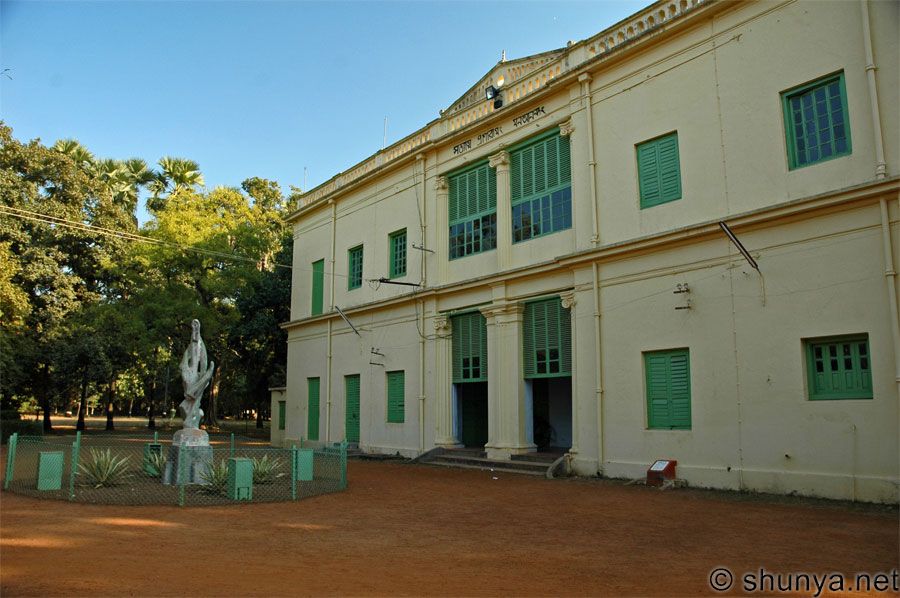 |
Founded by Tagore 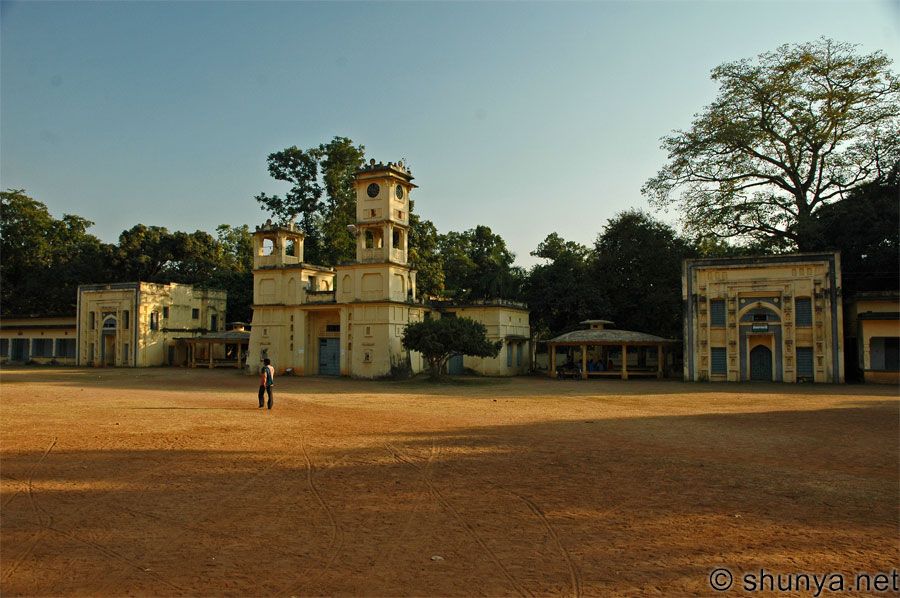 |
One of Tagore's homes 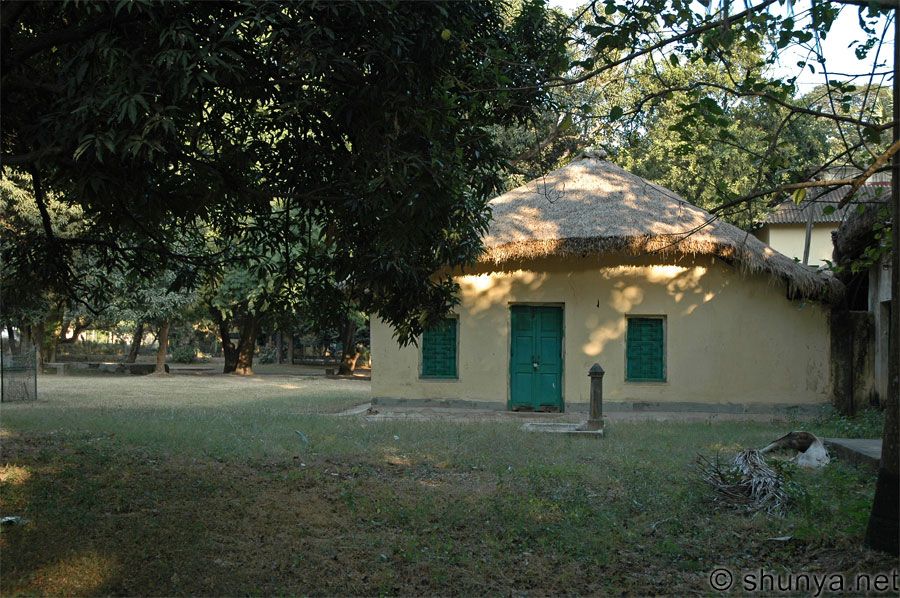 |
Typical university road 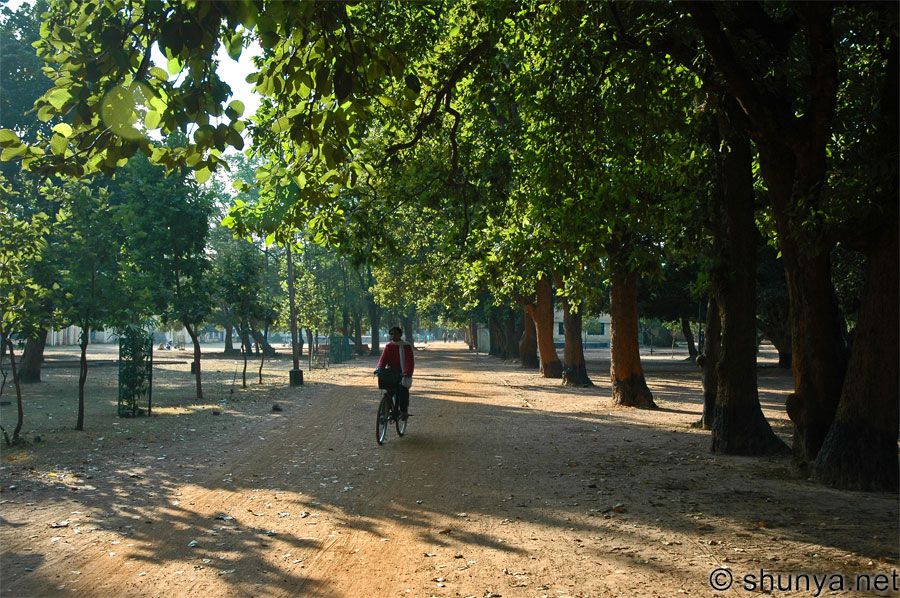 |
Open air classroom 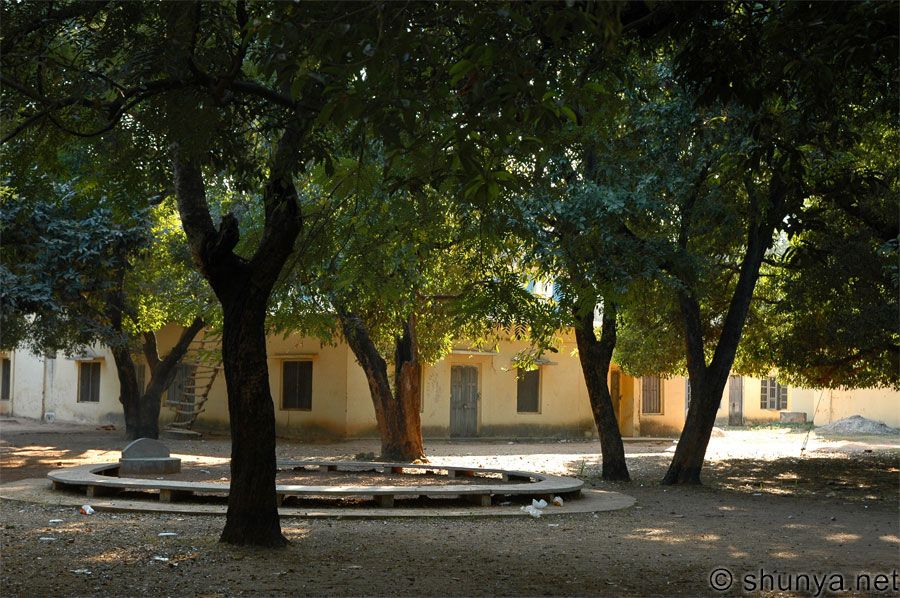 |
Open air classroom 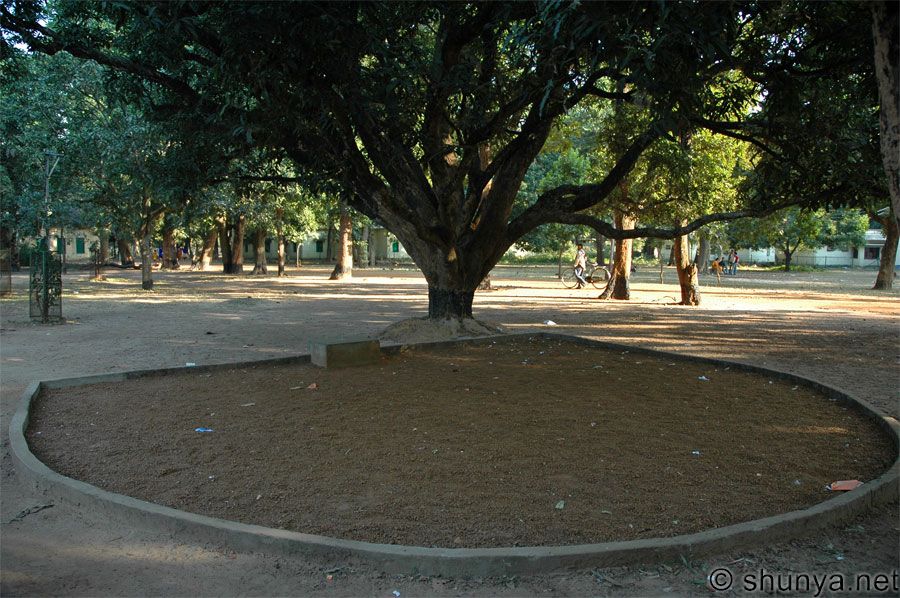 |
||
Open air classroom 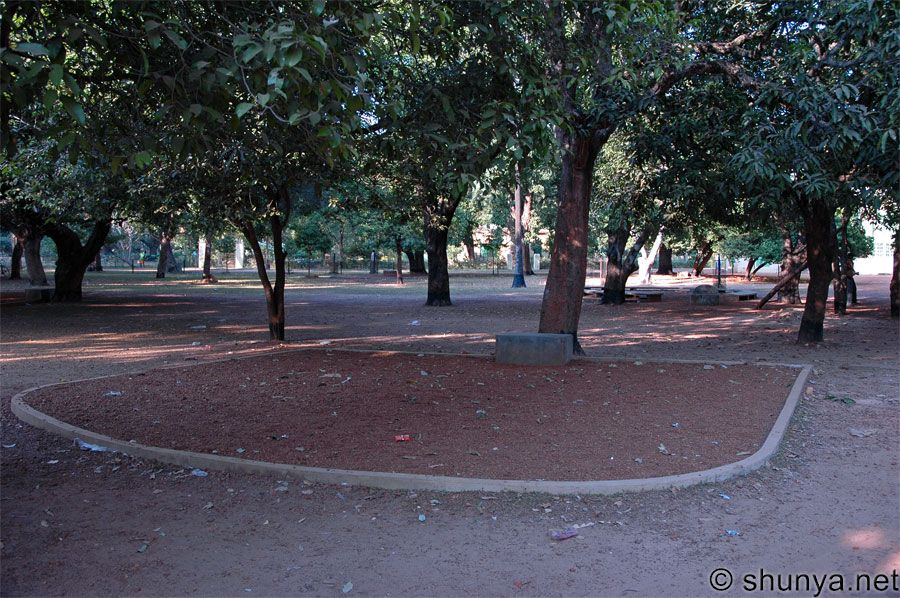 |
Open air classroom 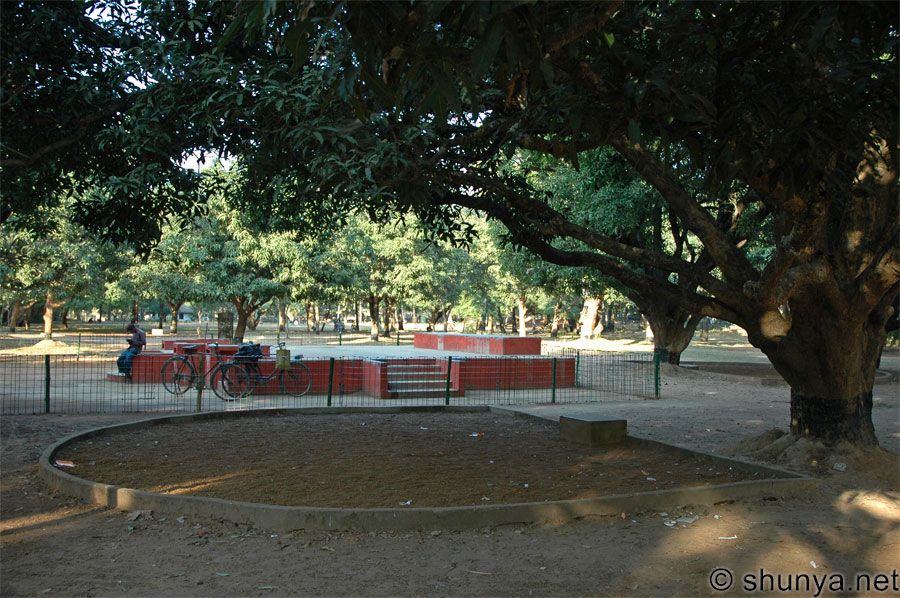 |
||
Carvings at the university 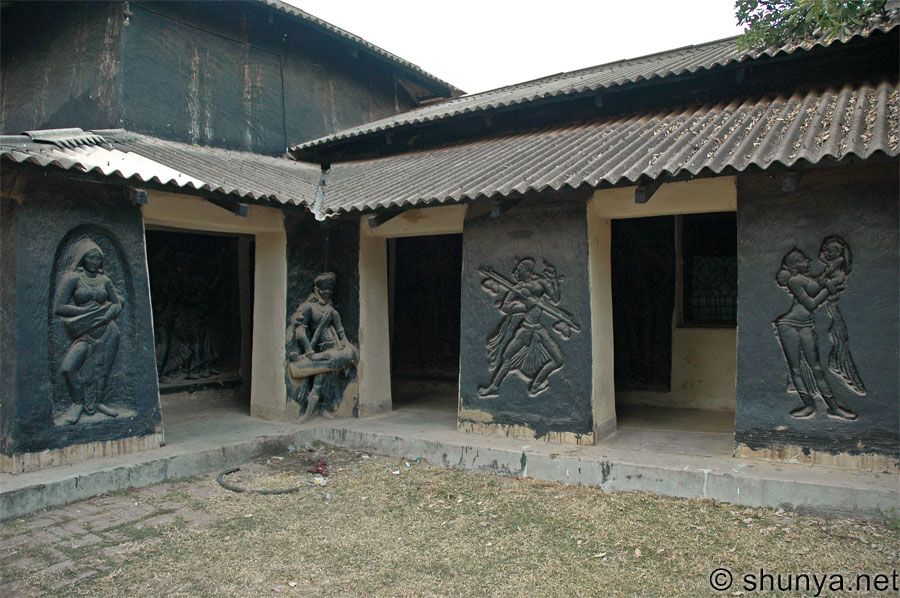 |
A village near the university 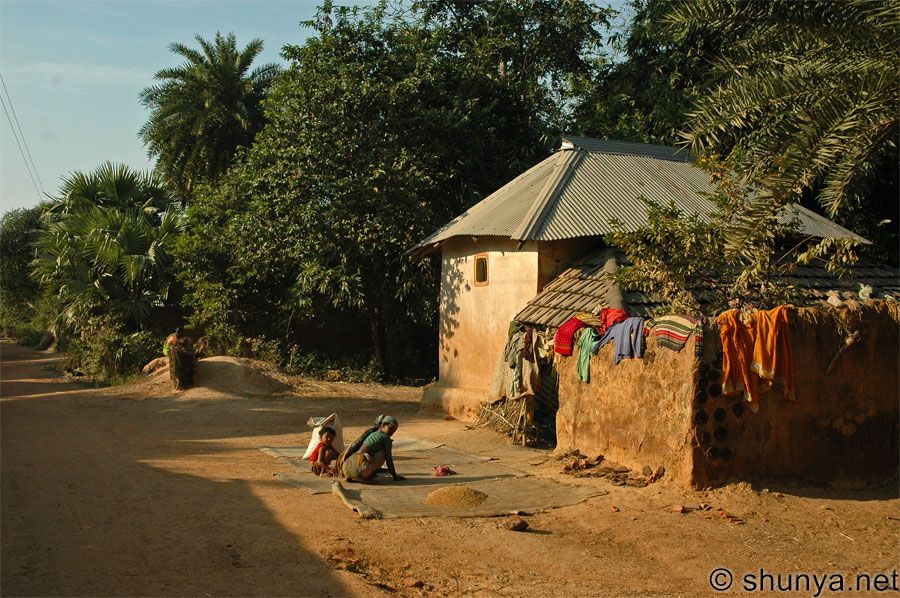 |
Village women 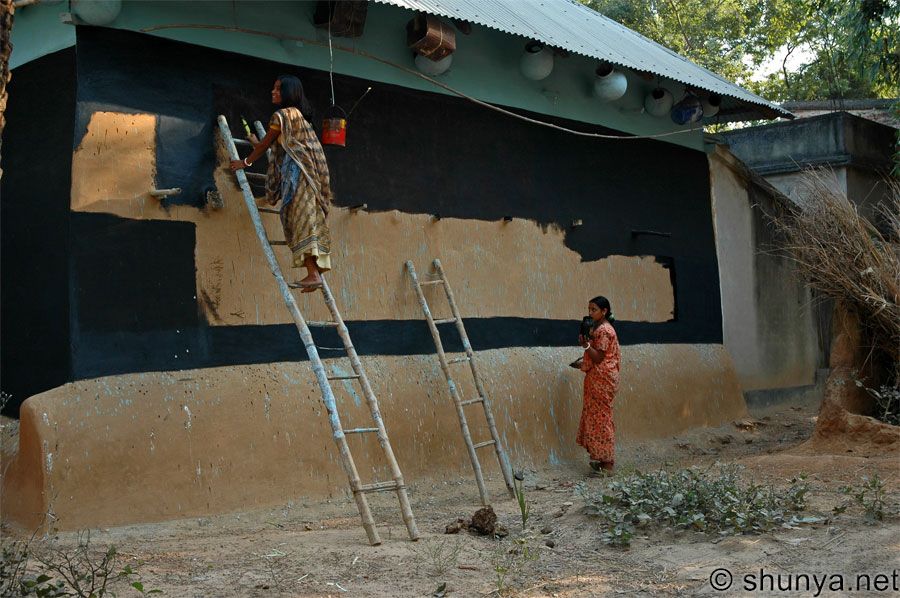 |
Country home, Bolpur 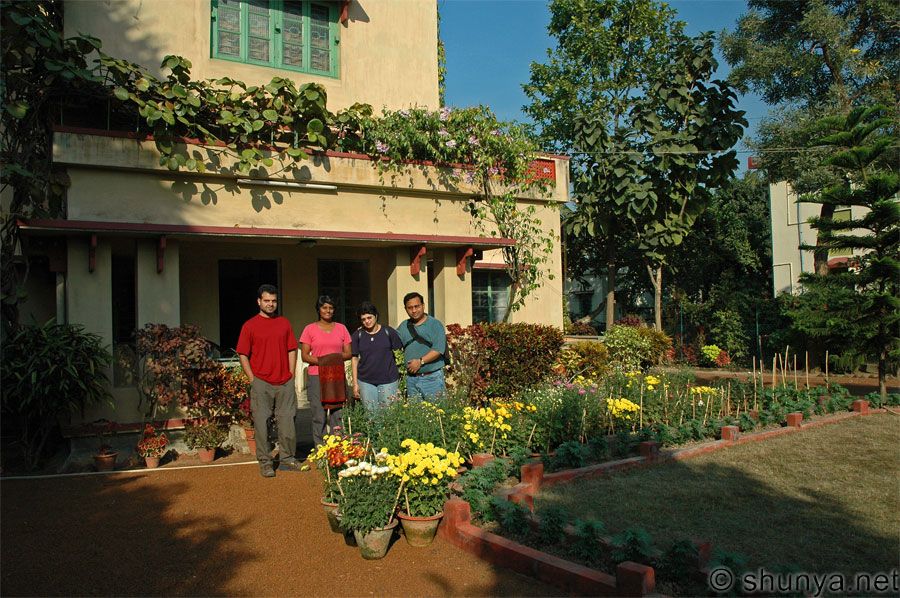 |
Sculpture by Ramkinkar Baij 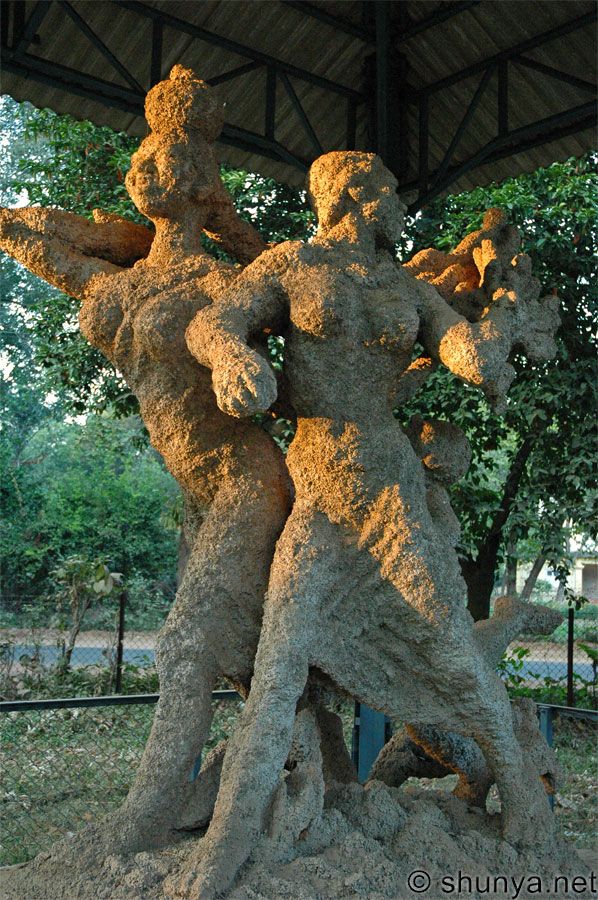 |
Baul musician 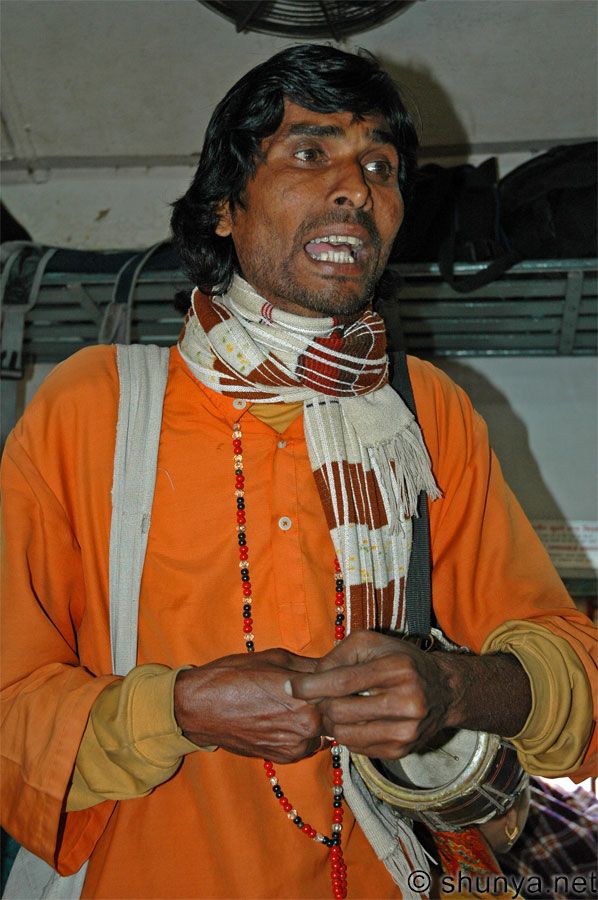 |
||
Baul musician 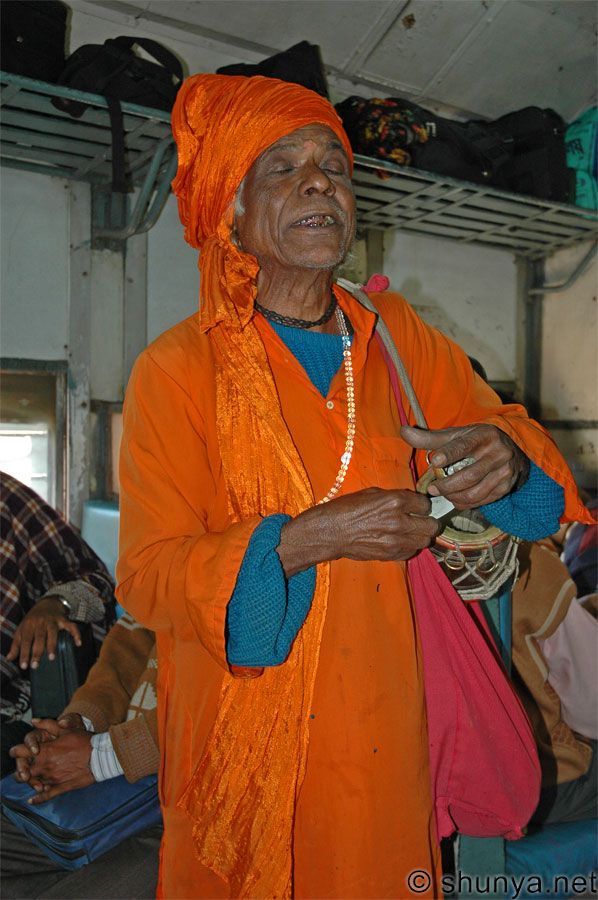 |
Smiling hijra 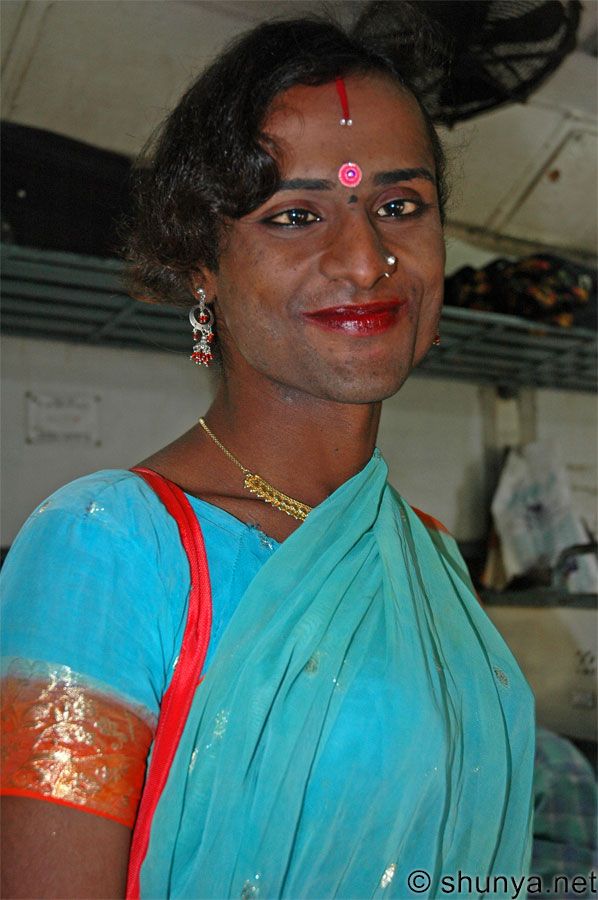 |
||
|
"I am partial to seeing Tagore as an educator, having myself been educated at Shantiniketan. The school was unusual in many different ways, such as the oddity that classes, excepting those requiring a laboratory, were held outdoors (whenever the weather permitted). No matter what we thought of Rabindranath's belief that one gains from being in a natural setting while learning (some of us argued about this theory), we typically found the experience of outdoor schooling extremely attractive and pleasant. Academically, our school was not particularly exacting (often we did not have any examinations at all), and it could not, by the usual academic standards, compete with some of the better schools in Calcutta. But there was something remarkable about the ease with which class discussions could move from Indian traditional literature to contemporary as well as classical Western thought, and then to the culture of China or Japan or elsewhere. The school's celebration of variety was also in sharp contrast with the cultural conservatism and separatism that has tended to grip India from time to time." [-Amartya Sen in The Argumentative Indian, pp. 115, Penguin 2005] "I consider the three years I spent in Shantiniketan as the most fruitful of my life ... Shantiniketan opened my eyes for the first time to the splendors of Indian and Far Eastern art. Until then I was completely under the sway of Western art, music and literature. Shantiniketan made me the combined product of East and West that I am." [-Satyajit Ray, as quoted by Amartya Sen in The Argumentative Indian, pp. 115, Penguin 2005] |
|||
Designed in collaboration with Vitalect, Inc. All rights reserved. |